


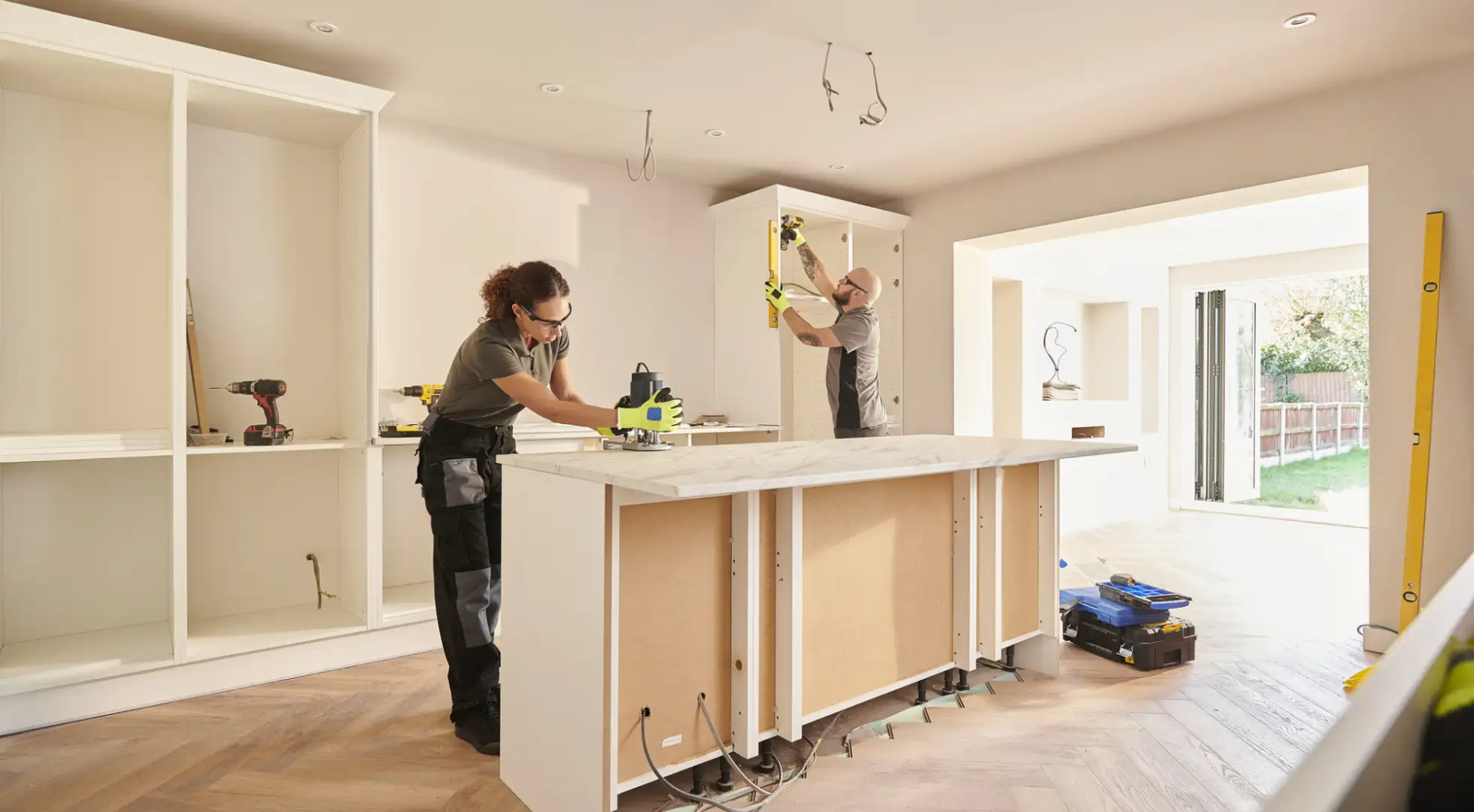
A move-in-ready house is easy to imagine living in, which is exactly why it can attract a crowd. A home with dated finishes, needed repairs, or an awkward layout may draw fewer offers and carry a lower asking price. For an owner-occupant, that can open a path to homeownership and future equity. For an investor, it can create the spread needed for a resale or long-term rental strategy.
However, the discount is only the beginning of the analysis. Renovation costs can climb, financing can add carrying expenses, and a property that looks inexpensive can become a costly lesson if its finished value or rental potential was overstated.
“You really have to know your numbers,” said Charles Goodwin, Vice President and Head of Bridge and DSCR Lending at Kiavi, on a recent episode of the Real Estate Update podcast.
Goodwin has worked in lending for about a decade and has personally completed roughly 50 single-family projects since 2018, using both fix-and-flip and fix-to-rent strategies. His experience points to the same principle for buyers and investors: the right renovation can create value , but enthusiasm should follow the math rather than replace it.
Why Fixer-Uppers Can Create Opportunity
Fixer-uppers can offer a meaningful price advantage. In July 2025, the median fixer-upper list price was $200,000, compared with $436,250 for all single-family homes, according to listing data research by Realtor.com. The gap is not a pure renovation discount: fixer-uppers in the analysis were typically smaller and older. Still, the figures show why buyers who can tolerate a project may access a different part of the market.
These homes also represented just 5.2% of listings in the analysis and spent a median 53 days on the market, slightly longer than comparable older, below-median-price homes. That is not a guarantee of an easy negotiation, but it can mean less competition than a freshly renovated listing in the same area.
The Potential for Owner-Occupant Buyers
A buyer who plans to live in the home may be able to trade convenience for a lower entry price. Cosmetic projects can be completed over time, while more substantial improvements may be financed through a renovation mortgage. Another advantage: The homeowner also controls the design choices instead of paying a premium for someone else’s selections.
Goodwin said renovated, move-in-ready homes were still attracting strong competition, while less-ready properties could sit longer, especially when priced too aggressively. Buyers willing to put in sweat equity may therefore have room to make an offer that is both more competitive and more disciplined.
The appeal is not entirely financial. “I found a lot of joy and just passion in turning something ugly into something beautiful,” Goodwin said. A thoughtful renovation can improve a buyer’s daily life while also removing a neglected property from the neighborhood.
The Potential for Real Estate Investors
Investors generally approach the same property with a defined exit. A flipper is looking for enough room between total project cost and resale value. A fix-to-rent investor is balancing the renovation budget against achievable rent, ongoing expenses, and the property’s value after the work is complete.
The margins are not as forgiving as television can make them appear. ATTOM reported that 64,348 homes were flipped in the first quarter of 2026, representing 8% of all home sales. The typical flip produced a $66,000 gross profit and a 25.4% gross return on investment. Those figures were down from a year earlier, and “gross” does not subtract rehab, financing, taxes, insurance, or selling costs.
That distinction matters. A deal can show an attractive headline spread and still produce little profit after the full cost of buying, improving, holding, and selling the property is counted.
Start With the Numbers, Then Evaluate the Property
“I think about flipping as just an equation,” Goodwin said.
One common investor framework starts with the after-repair value, or ARV: a supportable estimate of what the home could sell for after the planned renovation. Goodwin described multiplying ARV by 75% and then subtracting the rehab budget to estimate a maximum purchase price. The percentage is a rule of thumb, not a promise of profit, and it should be adjusted for the market, scope, financing terms, and investor’s required return.
For example, a $300,000 ARV multiplied by 75% produces $225,000. Subtracting a $60,000 renovation budget would suggest a purchase ceiling near $165,000 before testing every assumption. Owner-occupants may not use the same profit target, but they still need an all-in comparison between the fixer-upper and a similar move-in-ready home.
A realistic project budget should account for:
- Purchase and closing costs. Include the down payment, lender charges, title expenses, and cash due at settlement.
- Labor and materials. Use a written, line-item scope rather than a single rough allowance.
- Permits and inspections. Requirements and fees vary by municipality and project type.
- Financing and carrying costs. Count interest, property taxes, insurance, and utilities for the full expected timeline.
- Temporary living or storage. Owner-occupants may need to live elsewhere during major work.
- Selling costs. Investors should estimate brokerage, concessions, staging, and transfer-related expenses.
- Contingency funds. A reserve helps absorb hidden damage, price changes, and schedule delays.
Goodwin recommends getting more than one opinion on the expected value and reviewing contractor costs line by line before making an offer. The danger is allowing a compelling vision of the finished home to outrun the evidence. As he put it, “You want to make sure that narrative doesn’t override logic or objectivity.”
Inspect the Expensive Parts First
Paint, flooring, and fixtures are easy to notice. The systems behind the walls and outside the house can be more important to the budget. Goodwin recommends focusing on “the big-ticket items,” including heating and cooling equipment, electrical panels, and water heaters.
Equipment age is a useful starting point, although condition, maintenance history, and local climate also matter. ENERGY STAR advises homeowners to consider HVAC replacement when an air conditioner or heat pump is more than 10 years old, or a furnace or boiler is more than 15 years old, particularly when repairs are frequent or energy bills are rising.
A general home inspection can identify warning signs, but some properties warrant specialist evaluations. Depending on the house and region, that may include a roofer, structural engineer, electrician, plumber, HVAC technician, sewer-scope provider, or environmental professional. Buyers should also verify permit history and determine whether previous work was completed legally.
Look Beyond the Property Lines
A renovated house is still tied to its block, its access, and its surrounding uses. Traffic, noise, drainage, nearby vacancies, difficult parking, and neighboring property conditions can affect both resale demand and rental performance.
Goodwin recommends seeing the property in person and paying attention to the full setting: “Not just the home itself, but everything around it also matters.” Visiting at different times of day and checking comparable sales on nearby streets can reveal risks that listing photos do not.

Choose Financing That Matches the Project
A standard mortgage is designed primarily to finance the property in its current condition. A renovation loan can combine the purchase and approved improvement costs, but it generally requires more documentation, contractor oversight, and lender involvement. The right option depends on occupancy, property condition, timeline, equity, and the borrower’s qualifications.
Options for Owner-Occupant Buyers
Common routes include:
- FHA 203(k). HUD’s program combines acquisition and rehabilitation financing. The Limited 203(k) option can finance up to $75,000 of eligible work, while the Standard version is intended for larger projects and requires at least $5,000 in rehabilitation.
- Fannie Mae HomeStyle Renovation. This conventional option can finance a broad range of improvements, with no minimum renovation amount, subject to program rules and lender review of the contractor and project.
- Freddie Mac CHOICERenovation. Another conventional loan program that allows fixer-upper homebuyers to include renovation costs into their mortgage.
- Standard low-down-payment mortgages. If the home is already habitable and the buyer can pay for improvements separately, qualified borrowers may find conventional programs with down payments as low as 3% or FHA financing with a 3.5% minimum down payment. Eligibility, mortgage insurance, and property standards apply.
- State and local assistance. Housing finance agencies and municipalities may offer down-payment or closing-cost help. Terms can depend on income, location, first-time buyer status, and homebuyer education.
Renovation financing can solve a cash-flow problem, but it does not eliminate project risk. Before choosing a loan, buyers should ask how draws are released, which repairs are eligible, whether a contingency reserve is required, how change orders are handled, and how long the work may take.
Options for Real Estate Investors
Investors may use cash, a bridge loan, private financing, or other business-purpose credit to acquire and improve a non-owner-occupied property. A bridge loan is typically short-term and may be sized around the purchase, renovation, and expected completed value. A rental investor may later refinance into a debt-service coverage ratio, or DSCR, loan that is underwritten largely on the property’s rental cash flow.
Speed and flexibility can be valuable, but the cost of capital must be built into the deal from the start. Investors should compare interest rates, points, extension fees, draw procedures, appraisal assumptions, prepayment terms, and the cash required at closing. The best financing structure is the one the project can support even if the renovation takes longer or the exit value is lower than expected.
Build the Team Before You Need It
“Build your team is my top piece of advice,” Goodwin said.
For an owner-occupant, that team may include a buyer’s agent familiar with renovation properties, multiple lenders, a home inspector, and a contractor who can provide a usable scope before contingencies expire. Investors may also need a property manager, insurance broker, tax professional, title or closing professional, and reliable trades.
Shopping lenders is part of the preparation. The Consumer Financial Protection Bureau says requesting and comparing multiple Loan Estimates could save a borrower $600 to $1,200 per year. Buyers should compare the interest rate, annual percentage rate, lender fees, mortgage insurance, cash to close, and any assumptions built into the offer.
Borrowers are not required to accept the first terms presented. “Rates are negotiated,” Goodwin said. “You definitely can negotiate, and you should.” A competing Loan Estimate can give that conversation a concrete starting point.
Where Buyers May Find More Breathing Room
Price and competition vary sharply by region. Goodwin identified Indianapolis, Columbus, Chicago, and Pittsburgh as examples of Midwest or Rust Belt markets where the affordability equation can look more favorable for both first-time buyers and investors. He contrasted those areas with parts of the Northeast, where appreciation and buyer competition can make entry more difficult.
Recent regional figures support the broad affordability gap. In August 2026, the National Association of Realtors reported a median existing-home price of $340,400 in the Midwest, compared with $556,900 in the Northeast and $619,100 in the West. The national median was $429,100.
Regional medians are only a starting point. A buyer still needs neighborhood-level evidence for resale values, rents, taxes, insurance, contractor availability, and time on market. A lower purchase price does not automatically produce a better deal if demand is weak or renovation costs are unusually high.
Is a Fixer-Upper the Right Move?
A fixer-upper may be a strong fit for a buyer who has financial reserves, realistic expectations, and enough flexibility to live through a project. It may be a poor fit for someone stretching to cover the purchase, relying on an optimistic renovation schedule, or expecting every improvement to return its full cost.
Investors face the same test with a different objective. The acquisition should still work after conservative assumptions are applied to value, rent, carrying time, and repairs. If the project only produces a return when everything goes right, the price is probably too high or the plan is too fragile.
The right fixer-upper is not simply the cheapest house or the one with the most dramatic before-and-after potential. It is the property whose purchase price, renovation scope, financing, and exit strategy remain workable after the excitement is replaced by a line-item budget and a thorough inspection.