


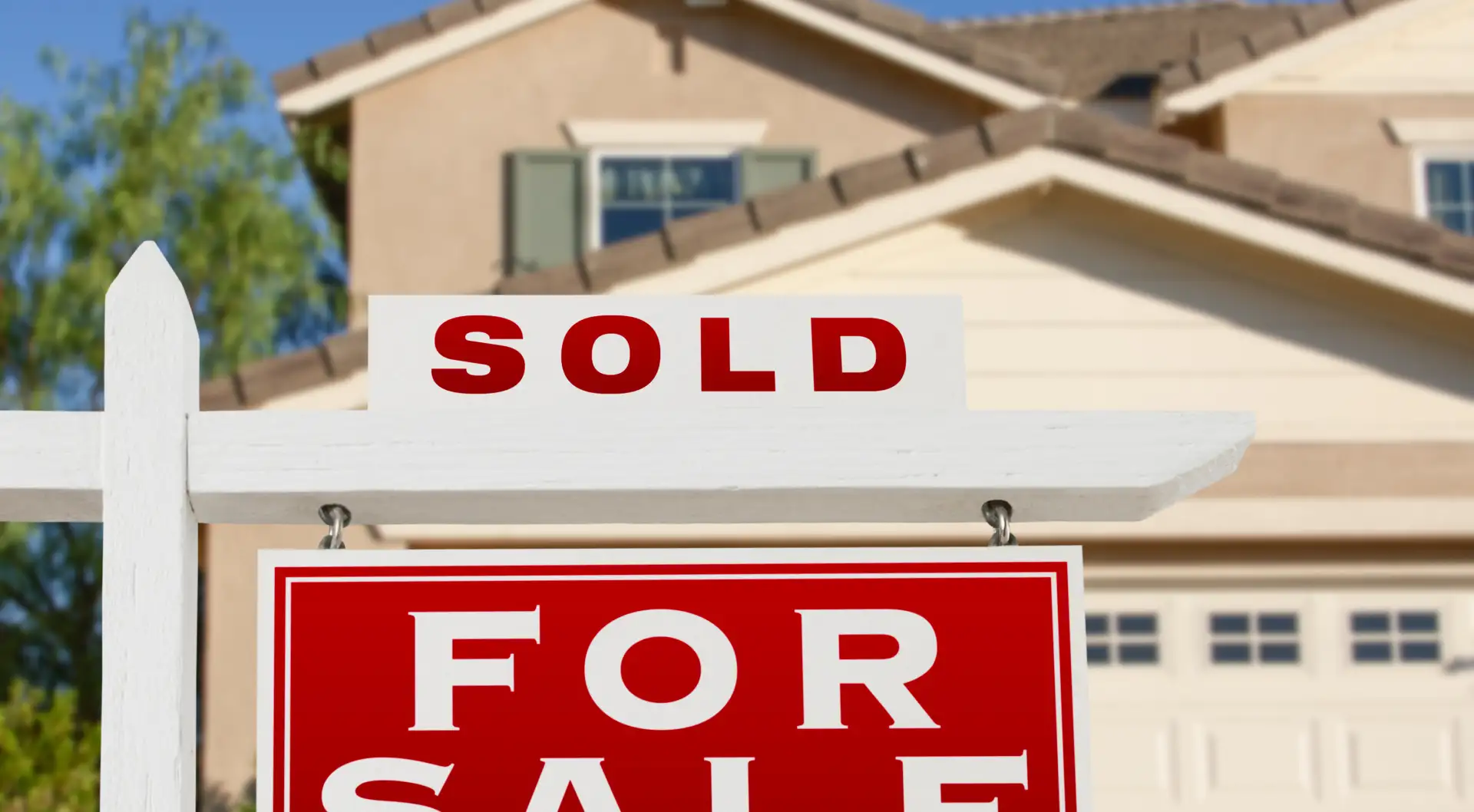
Existing Home Sales Declined in July
The number of sales of existing homes dipped in July by 1.7%, according to a National Association of Realtors (NAR) report on Tuesday. That was disappointing and was likely a result of stubbornly high mortgage rates.
As a weekly average, those rates briefly touched 5.98% for a 30-year fixed-rate mortgage (FRM) at the end of February, says Freddie Mac. But, just days later, the Iran conflict began, and that average has moved relentlessly higher since.
True, we've seen some short breathers when markets had grounds for hope that a peaceful resolution in the Middle East was in sight. But last week, that rate was 6.69%, its highest in a year, according to Freddie.
"Home sales have been remarkably stable, even amid the rising mortgage rate environment of the past few months," said NAR Chief Economist Lawrence Yun in a statement. "Year-to-date sales are up 2.4% and there’s no doubt that the housing market would be thriving if average mortgage rates were to return near 6%."
"Though the national data shows stabilization, there are notable local market variations," Yun said. "In smaller cities, and particularly in the Midwest, an annual household income of $60,000 would be sufficient to buy a median-priced home."
The NAR's report contained some better news for owners of condos and co-ops. Earlier this week, we wrote about condo owners facing higher dues, but they may be cheered up by the new sales data.
Unlike single-family homes, condo and co-op sales held steady, not only in July but also over the previous 12 months. And sale prices rose 2.2% year over year, which was better than single-family homes' 1.9%.
The bad news? On Wednesday, the consumer price index revealed, "Over the last 12 months, the all-items index increased 3.4 percent before seasonal adjustment."
So, home prices may be rising but not as quickly as inflation is eating their enhanced value.
Slowing Household Growth
Also on Wednesday, the Harvard Joint Center for Housing Studies (JCHS) unveiled its new report on household growth. That's important because the number of households being formed each year affects new demand for housing, an important driver of both rents and home prices.
The study focused on how tumbling numbers of international immigrants might affect household formations. Apparently, only some such immigrants establish a household during the year they arrive in the United States, but most do in their second and third years.
So, plunging international immigration rates in 2025 are yet to show up in demand for housing. Rents and home prices are more likely to be affected this year and next.
"The sharp drop in immigration that began in 2025 contributed only modestly to the slowing of household growth in that year, but, according to our new analysis, the effects will likely be larger in 2026 and 2027," says the JCHS report. "Examining historical data, we find that while many immigrants form households in their year of arrival, most of their net household formation occurs one to two years after they enter the country."
And that lag could bring some big numbers. " ... estimates suggest that current immigration cutbacks are on track to lower the pace of household growth from recent immigrants by another 420,000 households per year in 2026 and 2027," says the report.
The JCHS report went on to estimate that the resulting decline in household formations from 2024 to 2027 would be nearly 500,000 per year and that adjusted predictions for overall household growth would drop to around the Center's low projection of 690,000 new households for 2027.
"This is absent any change in native-born household growth which is also slowing due to structural, long-term factors as documented in our most recent household projections," concludes the JCHS. "A slowdown of this magnitude would mark a significant shift in near-term household formation trends with broad implications for housing markets."
Of course, many readers — especially renters and prospective first-time homebuyers — will welcome this news. New construction has seriously lagged household formation for many years, creating a supply-and-demand imbalance that has driven rents and home prices higher.
However, landlords and existing homeowners may be forgiven for taking a different view
More Housing Near Transit Could Help California Meet Climate Goals
The Terner Center for Housing Innovation at the University of California, Berkeley, seems to imply that California stands a lower chance of attaining its environmental goals because the state isn't planning enough housing alongside mass transit hubs.
"California has ambitious climate targets set in state law: reducing carbon pollution by 40 percent below 1990 levels by 2030, and by 85 percent by 2045," says the Terner Center's report, published last week. "However, bringing down people’s reliance on cars and vehicle miles travelled (VMT) has proven difficult, especially when most Californians continue to live in neighborhoods far from jobs and services."
The solution? Concentrate new housing developments in places that are near mass transit hubs.
Given that the 2022 Statewide Housing Plan envisions building 2.5 million new homes by 2030, wooing drivers onto buses and subways could make a big difference. Indeed, the Terner Center estimates "it could reduce statewide VMT by 6 percent, per capita — a meaningful fraction of [the California Air Resources Board's] 25 percent target.
Some may question whether the car culture in big cities such as Los Angeles is too ingrained for drivers to switch to public transport. But many must be fed up with sitting in endless jams and would welcome a swift and efficient alternative (which may involve investing in the current one).
That's certainly the case in other world-class cities, such as New York, London, Paris, and Berlin. There, mass transit systems whisk people around the city, freeing up both road space and parking facilities.
Londoners place considerable value on having access to Underground (the subway, universally known as the "Tube") and above-ground stations.
"Londoners pay a £42,700 ($57,590) premium to live close to a train or Tube station, new research suggests," reported the BBC last September. "A property in the capital that is 500m (0.31 miles) away from a station is 8% more expensive than a similar property 1,500m (0.93 miles) from one, a study by Nationwide found."
Are Angelenos too different from Londoners for a similar phenomenon to arise on this side of the Atlantic? We may soon find out.