


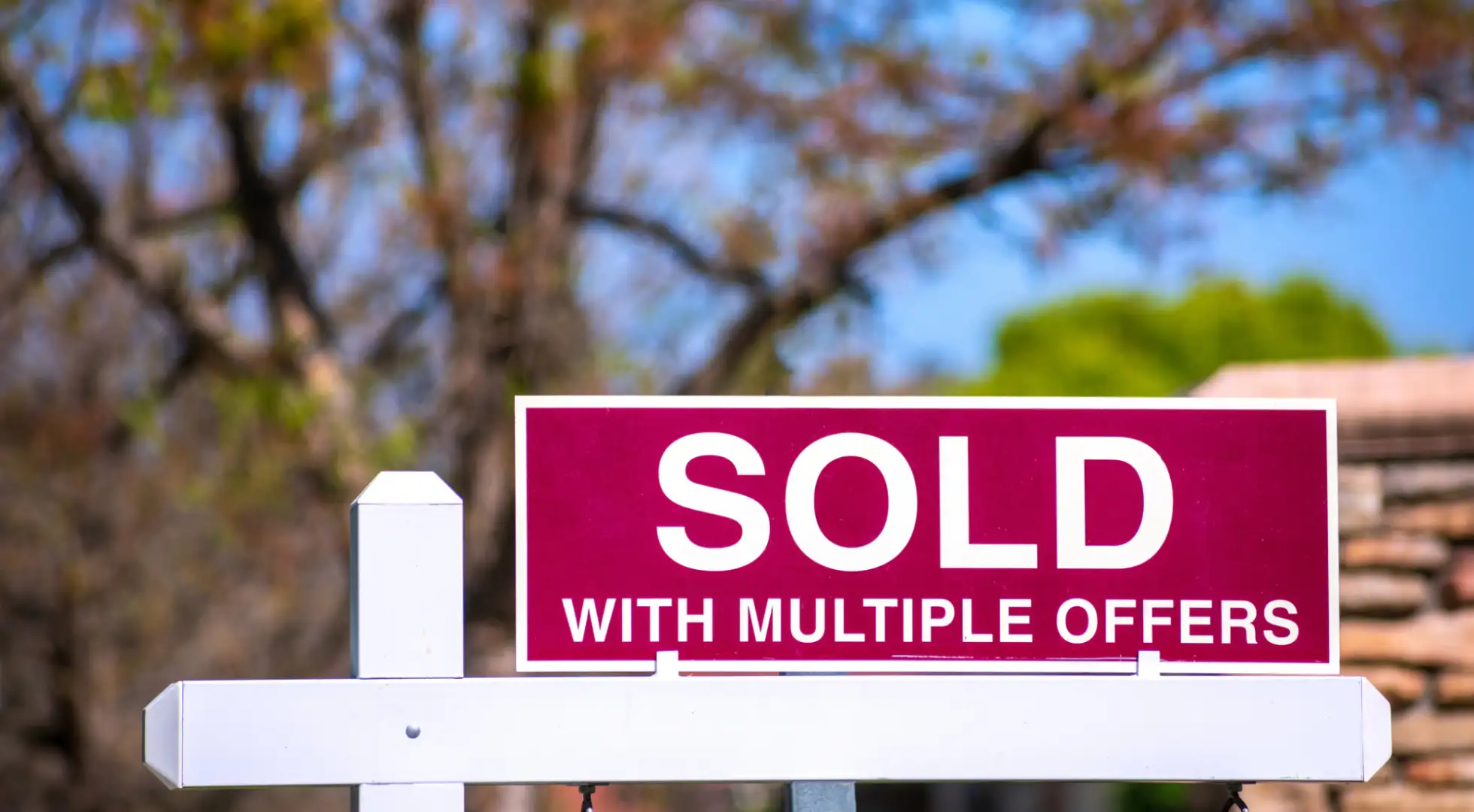
"After years of sellers holding the upper hand, the US housing market is subtly shifting in buyers’ favor," wrote CNN Business on Monday. "Nationally, there are significantly more sellers than buyers in the market. Sellers outnumbered buyers nationwide by 58% in August — the widest gap since Redfin began tracking the data in 2013."
This switch in the power dynamic between buyers and sellers has significant implications for both parties. However, it's sellers who must now deal with a new reality: They must cherish prospective buyers and work hard to satisfy their reasonable needs.
Of course, this isn't a nationwide phenomenon. Still, it's pretty widespread.
"There are just five seller’s markets in the U.S., led by New York City suburbs," said Redfin last week. "San Francisco is also a seller’s market — just the second time in 4 years it has been classified as such."
Redfin went on to call it the strongest buyer's market on record. And it said the shift was led by the Sun Belt.
Seller Strategies When Mortgage Rates Are at 7%
Also last week, The Wall Street Journal suggested four ways in which sellers need to adjust to being in buyer's markets if they wish to sell quickly — and sometimes at all.
1. Don't Think Your Home Is Special
Sellers often think their home is better than their neighbors' properties. And sometimes it is.
But buyers are unlikely to value the differences as highly as they once might have. A corner lot, some remodeling, tasteful decoration, more curb appeal, better maintenance ... they may all still earn a premium, but probably not as big a one as previously.
Remember, buyers are facing 7% mortgage rates (7.05% on the morning this was written), so they're exceptionally sensitive to prices. Sellers should work with their real estate agent to market the home at a price that optimizes its appeal.
2. Expect to Make Concessions
Most sellers should expect offers below the listing price in a buyer's market. Of course, one doesn't have to accept such an offer, but be aware that, for some properties, it could be a long time before another comes along. So, try to work with the buyer.And concessions are becoming increasingly common. Redfin reported that sellers provided concessions in 44.7% of U.S. home sales in August, up from 42.6% a year earlier and the highest August share in records dating back to at least 2020.
The Journal offered an example: "Bill Kowalczuk, an agent for Christie’s International Real Estate New York, was representing a buyer considering a property listed for $379,000 in Jersey City, N.J. The buyer originally wanted to offer $370,000, but he suggested the buyer offer $385,000 with a 20% down payment, while also requesting a $12,320 seller contribution toward buying down the mortgage rate from around 7%."
That worked, leaving the seller with roughly $2,680 more (before transaction costs) than the $370,000 would have returned, and the buyer with a mortgage payment that was $123 a month lower. A win-win.
Other concessions might include offering to pay some or all of the buyer's closing costs. Or a seller might throw in carpets, window treatments, kitchen appliances, home warranties, and so on, suggests Realtor.com. Cash-strapped buyers may value those as much as a price reduction. Yet more possible concessions are covered below.
3. Never Walk Away From a Deal
Turning down an offer flat often ends the dialogue between the buyer and seller. So, sellers should avoid doing that.
Instead, they should have their listing agent maintain negotiations, probing for common ground and trying to come up with a deal that satisfies both parties. In many cases, buyers are too rare for a seller to walk away from a live one, meaning someone who's been pre-approved for a mortgage and actively searching for their next home.
Yes, negotiations might eventually lead to a complete impasse. But let it be the buyer who ends them.
4. Make the Home Buyer-Ready
Fix all defects — even minor ones — so that the home is as pristine as possible. It's basic marketing to make one's product as attractive to the target market as is cost-effective. Again, the listing agent should advise on the sort of improvements that could generate a return on investment.
If the buyer commissions a home inspection, the seller should expect requests to fix issues the inspector uncovers or pay for some or all of the costs of repairs. Work to find a mutually acceptable arrangement.
North Carolina Realtors suggests the seller should consider commissioning a home inspection before marketing the home and then fixing any issues uncovered before it is listed. That provides documentary evidence that the home is move-in ready, adding value and reassuring buyers.
Sellers Buying Change
Some sellers will find it tough to adjust to their diminished power. And those who don't need to sell quickly may choose to wait until their local housing market rebalances. Keep in mind, though, that most home sellers then become buyers themselves. This allows them to leverage the benefits of the buyer's market, too.
Of course, buyer's markets and seller's markets come and go often. However, the last seller's market lasted several years, and the new buyer's market is already the strongest on record.
There's no point stressing about it. We're all helpless in the face of markets. All we can do is learn to live with the new conditions.