


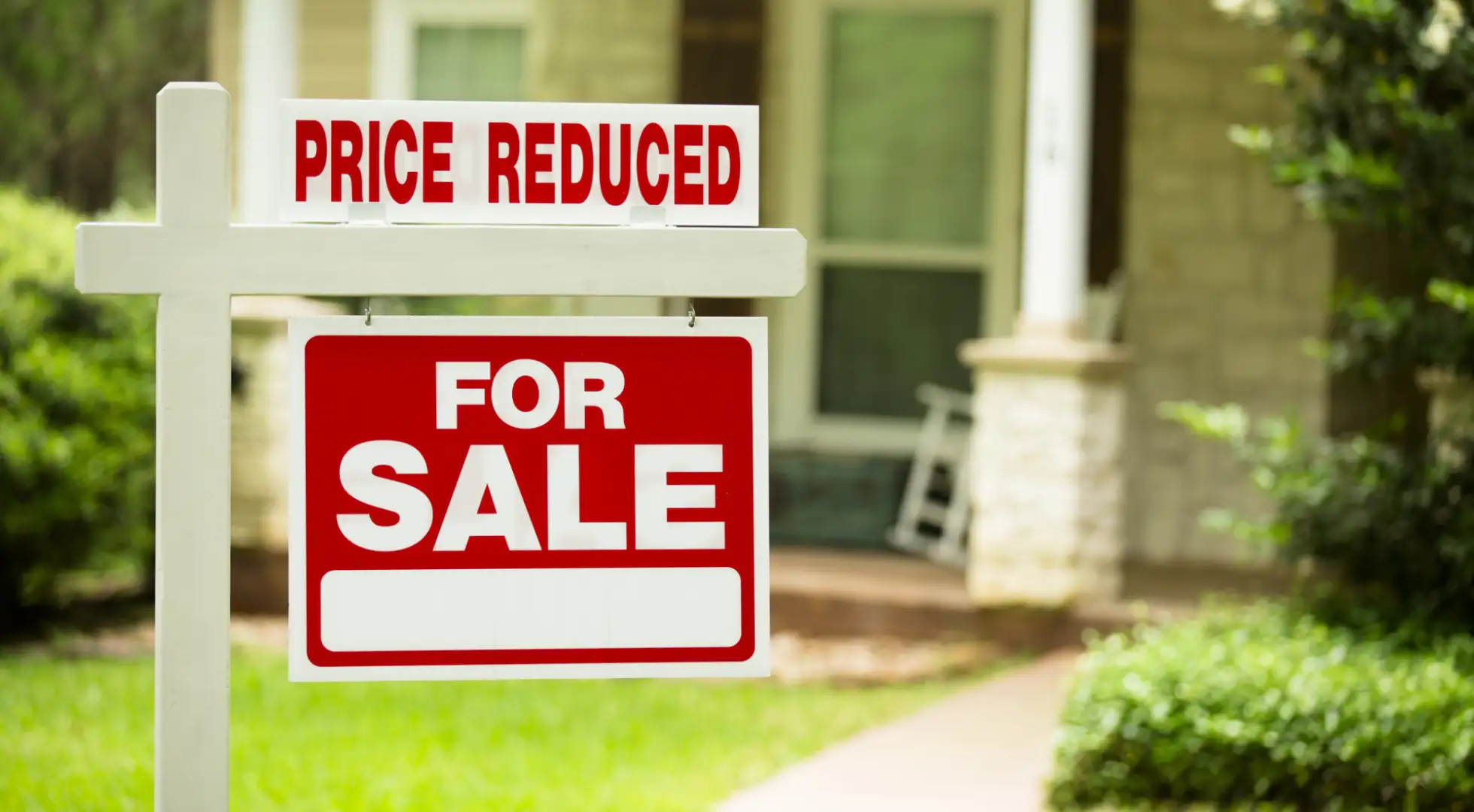
Homeowners tend to dread crashes in the housing market because the latter destroy home equity (the positive difference between the home's market value and its current mortgage balance) and reduce net wealth. First-time homebuyers often hope for such crashes because there are rarely better opportunities to snap up bargains.
However, first-time buyers may have to be patient, according to two leading experts last week. National Association of Realtors (NAR) Chief Economist Lawrence Yun and Redfin Chief Economist Daryl Fairweather both separately explained why a housing market crash anytime soon is highly unlikely.
Of course, the housing market will inevitably retract one day. That's how markets work. But anyone who's fearful of (or excited about) an imminent one could have a long wait.
Now, as always, when we discuss the future of the economy, we must repeat our favorite quote. "The only function of economic forecasting is to make astrology look respectable," wrote the late Harvard economist John Kenneth Galbraith. In other words, nobody can be 100% sure about what's going to happen next.
Why an Imminent Housing Market Crash Is Unlikely
Lawrence Yun made his case in a short Facebook video. And he contrasted the current housing market with the one at the time of the last crash in 2008-10:
- "We don't have those funny fake mortgages with fake income documentation," says Yun. Today's mortgages were granted largely to creditworthy, financially secure borrowers who are much less likely to default.
- Back during the last crash, there was "massive overbuilding; too much supply," Yun says. "Today, if anything, we have a housing shortage."
- During the Great Recession, there were 8 million job losses, which is very different from today when the economy continues to add jobs.
- "Foreclosure rates are at historically low levels," concludes Yun.
These are compelling arguments, and we can only concur that an imminent housing market crash looks highly unlikely. Still, that doesn't mean that the housing market is in good shape.
Housing Market Blues
Indeed, the housing market is far from thriving right now. Some key indicators include:
- Existing-home sales dipped 2.0% in August, according to the NAR.
- U.S. house prices rose 2.1% between the second quarter of 2025 and the second quarter of 2026, according to the FHFA house price index. That's slower than the current annual inflation rate of +3.7%, meaning homeowners experienced, on average, small losses on their homes' values in real terms.
- In July, the median sales price for new homes fell to $393,800 from $403,100 in June, says FRED.
If that's not a crash, what is it? Daryl Fairweather of Redfin explains:
"We’re in the middle of an uneven and long-term housing market correction, not a housing market crash. After the pandemic-era frenzy sent prices soaring and inventory to historic lows, the market needed a reset. What we’re seeing now is not a sudden collapse but a yearslong comedown: slower sales, flatter prices in many metros, and buyers getting leverage. A volatile economy is throwing a wrench in things, but the market is still just largely unaffordable, not crashing."
Some Caveats
But suppose AI fails. Investors have put trillions of dollars into the technology, and a near-total loss would likely see an extreme stock market crash, with portfolios and 401(k)s all but wiped out. And that could create a deep economic recession or depression with mass unemployment — together with mass foreclosures and a housing crash. Hmm.
If we somehow have a Goldilocks AI transformation (not too hot, not too cold; just right), there are other risk factors. If global oil prices rise sharply soon, as some expect, that could trigger a worldwide recession, which could ultimately impact the United States.
Separately, there are signs that investors are losing patience with out-of-control government spending in the United States and in almost all advanced nations. If "bond vigilantes" suddenly rein that in, borrowing for governments, businesses, and consumers could become prohibitively expensive. And that (readers have already guessed) could trigger a recession and a resulting housing market crash.
It's way too soon to worry too much about these threats. Back in 1966, Paul Samuelson, an MIT economics professor and Nobel laureate, famously quipped, "the stock market has predicted nine out of the last five recessions."
In other words, doomsday scenarios are a dime a dozen and only occasionally become real. Still, they serve a useful purpose: They remind us why economists use so many qualifying words (might, may, could, should, and so on) when laying out their forecasts. Nobody knows the future.