


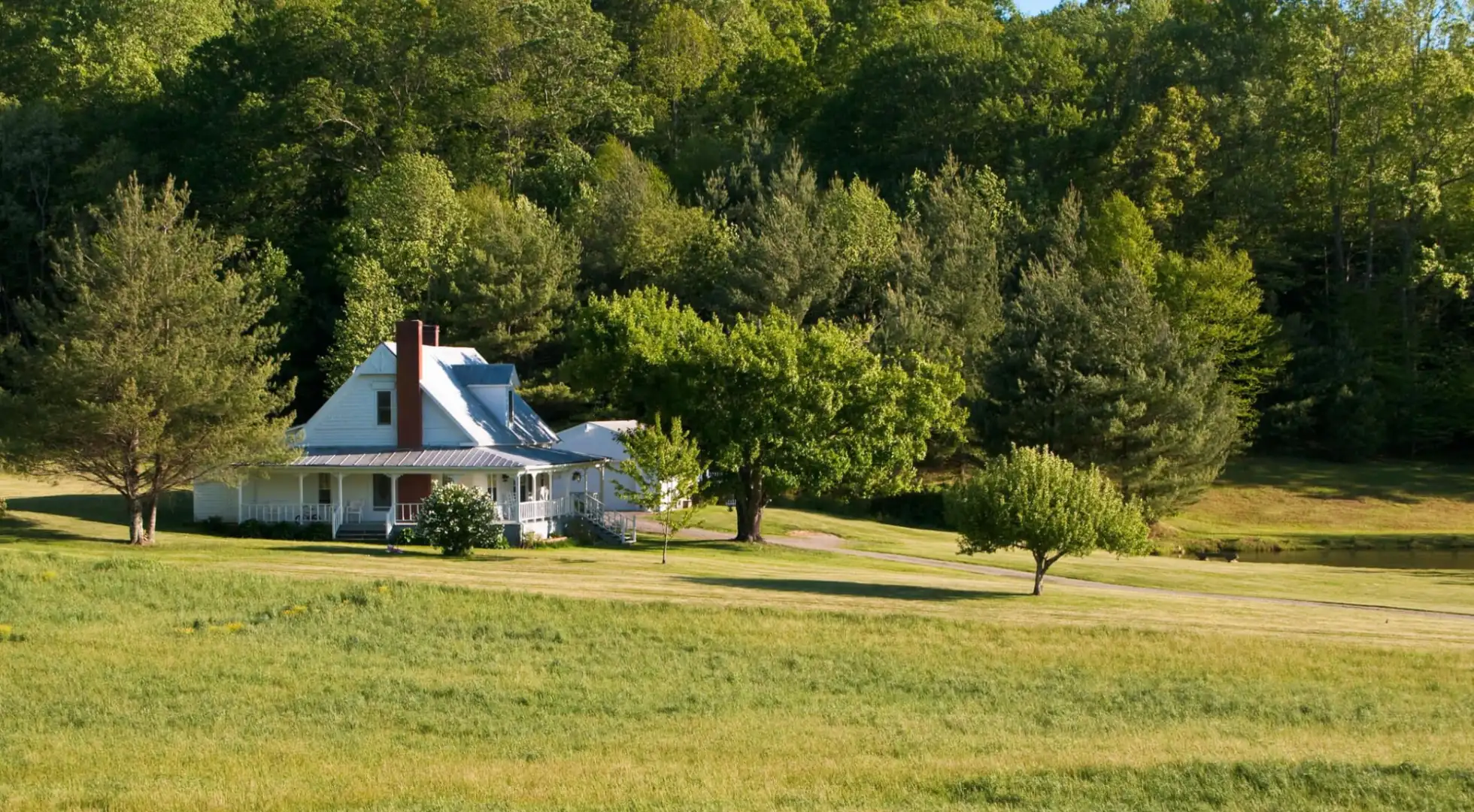
USDA direct loans are more challenging to qualify for but offer lower monthly costs. USDA guaranteed loans are more widely available but have slightly higher, although still competitive, interest rates and payments.
USDA home loans are divided into two categories: direct loans offered through the US Department of Agriculture itself and guaranteed loans offered through approved private lenders. Both types of mortgages have pros and cons, with eligibility requirements varying based on the program you're applying for.
We’ll highlight the similarities and differences between USDA direct loans and USDA guaranteed loans to help you determine which program may be the best fit for your needs.
Comparison of USDA Direct and Guaranteed Loans
Here's a chart comparing some of their most essential features. We'll go over all of these topics in more detail later in this article.
USDA Direct | USDA Guaranteed | |
Lender Type | USDA | Private lenders |
Down Payment | 0% down | 0% down |
Credit Score | No minimum | Many lenders require 640 |
Income Limits | Up to 80% AMI | Up to 115% AMI |
Loan Length | 33 or 38 years | 30 years |
Property Location | Designated rural areas | Designated rural areas |
Interest Rates | Established by USDA | Established by lender |
Guarantee Fees | n/a | 1% upfront & 0.35% annually |
Are USDA Direct or Guaranteed Loans Better?
Determining whether USDA direct or guaranteed loans are better depends greatly on your situation and financing needs. USDA direct loans can offer better rates and lower monthly payments, while USDA guaranteed loans are more widely available and easier to qualify for.
If you are eligible for a USDA direct loan and are in no rush to buy, the government-set interest rate and lack of guarantee fees can often result in significant savings. However, if you’re ready to purchase now, you’ll likely find the process of obtaining a USDA guaranteed loan simpler and faster while still offering rates lower than conventional mortgage alternatives.
“USDA loans, direct and guaranteed, can be a fantastic resource. They help improve the accessibility of homeownership. Though they do limit things like where you can buy a home (it has to be in a qualified rural area), these loans do allow families with lower incomes to become homeowners,” says Adam Hamilton, CEO of REI Hub.

“USDA loans, direct and guaranteed, can be a fantastic resource. They help improve the accessibility of homeownership. Though they do limit things like where you can buy a home (it has to be in a qualified rural area), these loans do allow families with lower incomes to become homeowners.”
Similarities Between USDA Direct and Guaranteed Loans
Before we get into the differences between USDA direct and guaranteed loans, let's cover a few things that both mortgage types have in common.
Down Payment
For most borrowers, the primary benefit of the USDA single-family housing loan program is the ability to buy a home with no money down. All USDA mortgages, direct and guaranteed, allow for 100% financing of your purchase. This alleviates the need to save up for a down payment, which is often one of the biggest limitations for prospective homebuyers.
Credit Score
The USDA does not set a required minimum credit score for either of the direct or guaranteed loan programs. If you otherwise meet the criteria for a USDA loan, it’s possible to be approved regardless of your reported credit score.
However, many lenders offering guaranteed loans set their own minimum score requirement at 640, which is the cutoff for automated approval via the USDA’s Guaranteed Underwriting System (GUS).
Debt-to-Income Ratio
All USDA loans allow your total monthly debt obligations, including your proposed mortgage payments, to comprise up to 41% of your qualifying monthly income. However, borrowers with compensating factors such as sizable savings, a strong employment history or likelihood of increased earnings, or plans to purchase an energy-efficient home may qualify for a higher DTI limit on a case-by-case basis.
Property Location
The USDA single family housing program is designed to increase homeownership in qualifying rural areas. As such, all properties must be situated within a USDA-designated rural community. In most cases, this is a location with fewer than 20,000 residents. However, some areas with a population of up to 35,000 may qualify so long as they still retain rural characteristics.
Property Type
Regardless of whether you're applying for a USDA direct or USDA guaranteed mortgage, all loans are limited to properties that you plan to occupy as your primary residence. You cannot use either type of USDA loan to purchase a second home or investment property, nor can you buy real estate designed to generate income, such as a working farm.
You can, however, choose from a variety of property types with either loan program, including:
Site-built homes
Modular or new manufactured homes
Condos
Homes within planned unit developments (PUDs)
Recently-completed homes
Income Limits for Direct vs Guaranteed Loans
One of the primary differences between USDA direct and guaranteed loans are the income limits you must meet to qualify. USDA direct loans are available to very low-to-low earners, while USDA guaranteed loans are offered to borrowers with up to moderate income levels.
Actual USDA income limits vary based on your location and household size, but in general, you must have a cumulative household income no greater than:
80% of your area median income for USDA direct loans
115% of your area median income for USDA guaranteed loans
How to Apply for USDA Loans
The process of applying for a USDA loan will differ significantly depending on whether you're qualifying through the USDA direct or USDA guaranteed loan program.
USDA Direct Loans
As the name implies, USDA direct loans are offered directly through the USDA. Standard lenders and mortgage companies are not able to provide these types of loans. Instead, you will have to contact your local USDA Rural Development Service Center to apply and begin the mortgage approval process.
USDA Guaranteed Loans
USDA guaranteed loans, on the other hand, are insured by the USDA but offered through private lenders such as banks, credit unions, and mortgage companies. Like other types of mortgages, these loans can be applied for online with far wider availability than the USDA direct program.
This means that if one company is not able to qualify you for a loan, you still have the ability to shop around with other USDA-affiliated lenders who may be able to get you approved.

Other Differences Between USDA Direct and Guaranteed Loans
What else sets USDA direct loans and USDA guaranteed loans apart besides income limits and the application process? Here are some of the other core differences.
Loan Terms
USDA direct loans are available with a repayment term of 33 years. Very low earners with a need for even lower monthly payments may qualify for a repayment term of 38 years. In contrast, USDA guaranteed loans are only offered with a 30-year repayment schedule.
Interest Rates
Interest rates for direct loans are established by the USDA and reevaluated every month in accordance with market trends. The rate you'll qualify for will be the lower of the published rates when you apply for and when you close on your loan. This rate will not change once your loan has been funded.
USDA guaranteed rates are also fixed for the life of your mortgage but are established by the lender you choose to work with based on current market trends, your credit score, and your financial profile. While guaranteed loans have higher rates than direct loans, they typically remain lower than comparable conventional mortgages.
Note: USDA direct borrowers may be able to qualify for payment subsidies which can lower their effective interest rate to as little as 1%, according to USDA. These subsidies are not available with agency-backed guaranteed loans.
Upfront & Ongoing Fees
Neither USDA direct nor guaranteed loans require borrowers to pay for mortgage insurance like conventional and FHA-backed alternatives. However, USDA guaranteed loans do assess two separate guarantee fees: an upfront guarantee of 1% of your loan amount and an annual guarantee of 0.35% of your remaining loan balance.
USDA direct loans do not have these upfront and annual fees, which can help reduce your monthly payments even further.
Size of Allowable Homes
Both single-family direct and guaranteed loans require homes being purchased to be modest and appropriate for the area in which they're located. USDA direct guidelines, however, establish a maximum size of 2,000 square feet for residences financed through the program.
It’s worth mentioning that while the USDA guaranteed loan program recently updated its terms to allow properties with inground swimming pools to be financed, USDA direct loans still prohibit these “luxury amenities.”
USDA Direct Loans: Pros & Cons
Are you considering applying for a USDA direct loan? Here's a quick breakdown of this federally-funded mortgage program's most significant pros and cons.
Pros: | Cons: |
Lower interest rates with some borrowers qualifying for additional subsidies | More difficult to qualify for due to the lower income limit |
Mortgage repayment periods of up to 38 years are available | Cannot apply online; you must visit your local USDA Rural Development office |
No minimum credit score is required by the USDA | Funding time can be slower than USDA guaranteed loans |
USDA Guaranteed Loans: Pros & Cons
Do you think a USDA guaranteed loan may be right for you instead? Here are some pros and cons to consider before applying with a USDA-approved private lender.
Pros: | Cons: |
Easier to qualify for with a higher income limit of 115% area median income | Many lenders, but not all, required a credit score of at least 640 |
Can choose between numerous private lenders offering USDA loans | Interest rates are higher than direct loans but generally lower than conventional mortgages |
Funding time can be faster than with USDA direct loans | Upfront guarantee fee of 1% and ongoing annual fee of 0.35% |
Is a USDA Loan the Right Type of Mortgage for Me?
Both USDA direct and guaranteed loans offer a variety of benefits, most significantly the ability to purchase a home with zero money down. However, each program is different, with unique restrictions and eligibility requirements. The best-suited option often depends on your homebuying needs and unique financial situation.
To see if you qualify for a USDA direct loan, visit your nearest Rural Development office and speak with an agency loan officer. For USDA guaranteed loans, apply today with a USDA-approved lender that funds purchases within your community.