



Just because you qualify for a mortgage doesn’t mean you’re ready. Sometimes, waiting for financial stability is the best way to buy a home that you can keep.
Buying a home today has become more difficult than I can ever remember because of the extraordinary increase in house prices since 2000. As many people know, buying a home is the largest purchase in their life and continues to be the American dream for many people.
Although the mortgage industry has generally done a good job qualifying potential homebuyers for a mortgage (except for the years immediately before 2008), the homeowner needs to step back and make sure they are completing the transaction with their “eyes wide open.”
You Can Buy a House Without Much Money – But Should You?
The fact is, you can qualify for a mortgage with little to no down payment from borrower funds, have zero dollars in the bank after closing, and have an overall negative net worth due to other loans, such as student, auto, and credit cards, when you get the keys to your new house. Plus, you may be unaware of the responsibilities of homeownership.
This should not, on its face, stop you from becoming a homeowner. However, as a senior mortgage finance professional with over 30 years in the housing finance industry, I ask borrowers to take a deeper personal assessment before they purchase a home to make sure they are truly ready.
Let me explain.
Since first-time homebuyers (FTHB) have never experienced the homebuying process up close, some are not asking themselves certain questions before moving forward with the biggest purchase of their lives.
Borrower mortgage qualification is very standard and many times does not consider your personal circumstances. Examples include household size relative to disposable income, retirement savings goals, and the ability to fund required repairs (like a new furnace in the middle of winter).
Is the Home Loan Industry Doing Enough to Support First-Time Homebuyers?
My opinion is yes – because the industry has to ensure it originates mortgages that borrowers can repay. If not, it's bad for borrowers, bad for mortgage lenders, and bad for neighborhoods.
Therefore, the industry continues to manage lower down payments and credit scores, among many other risk attributes, to help as many people purchase homes as is practicable. When I started in the mortgage finance industry, 3% down payment mortgages were not even an option.
As for those homebuyer courses that some loan programs require? They are good, but they are generally given way too late into the qualification process. They really should be taken before the homebuyer even begins looking for a house.
That is why I encourage anyone buying their first home to take a homebuying class before starting the process. Some students decide they are not ready to purchase a house just based on the course and will wait until they are ready.
Three Questions You Should Ask Yourself Before You Buy a House – Especially With Little or No Money Down
Before buying a home with little or no money down and/or minimal cash reserves after closing, there are three questions I ask potential homebuyers to think about before home shopping.
1. Are You in the “Homeowner State of Mind”?
It is all you! If something goes wrong, there is no landlord to call. You have to pay someone to fix it or fix it yourself, which involves time, money, and some stress. You have ongoing maintenance such as cutting the grass, cleaning out the gutters, and painting. Not the most exciting stuff. Are you ready to do that?
2. Are YOU Financially Ready to Be a Homeowner?
Although you qualify for the mortgage, does your monthly cash flow make sense to YOU? If you have an unexpected repair, where will you find the money? Do you have a plan to start building a cash reserve for those unexpected repairs and/or if one borrower suffers a job loss? Do you still have enough money left at the end of the month to save for retirement or provide required medical care for a family member (these are not in the mortgage qualification process).
3. Are You Prepared for the Real Qualification Process?
TV shows where people tour a few houses (and criticize the wall paint color – really, it's just paint) have done us a disservice in that it makes the homebuying process look so easy. It is more complex than just walking around, looking at a few houses, and then making an offer and celebrating. You need to prepare yourself for the real process.
The process involves verification and documentation. You need to prove your income using pay stubs, W-2s, bank statements, and sometimes federal tax returns. You should know your FICO credit score before you start home shopping. There are lots of terms you need to learn and absorb quickly. Once you make a contract offer, things move very quickly – so be ready.
The other downside of these TV shows is that you may think you will buy your dream house. But it generally does not work that way, especially for your first home. You cannot go in thinking you are going to redo the bathrooms and kitchen, and buy all new furniture. Instead, accept that your first house doesn't have to be perfect on move-in day – it just needs to be safe.
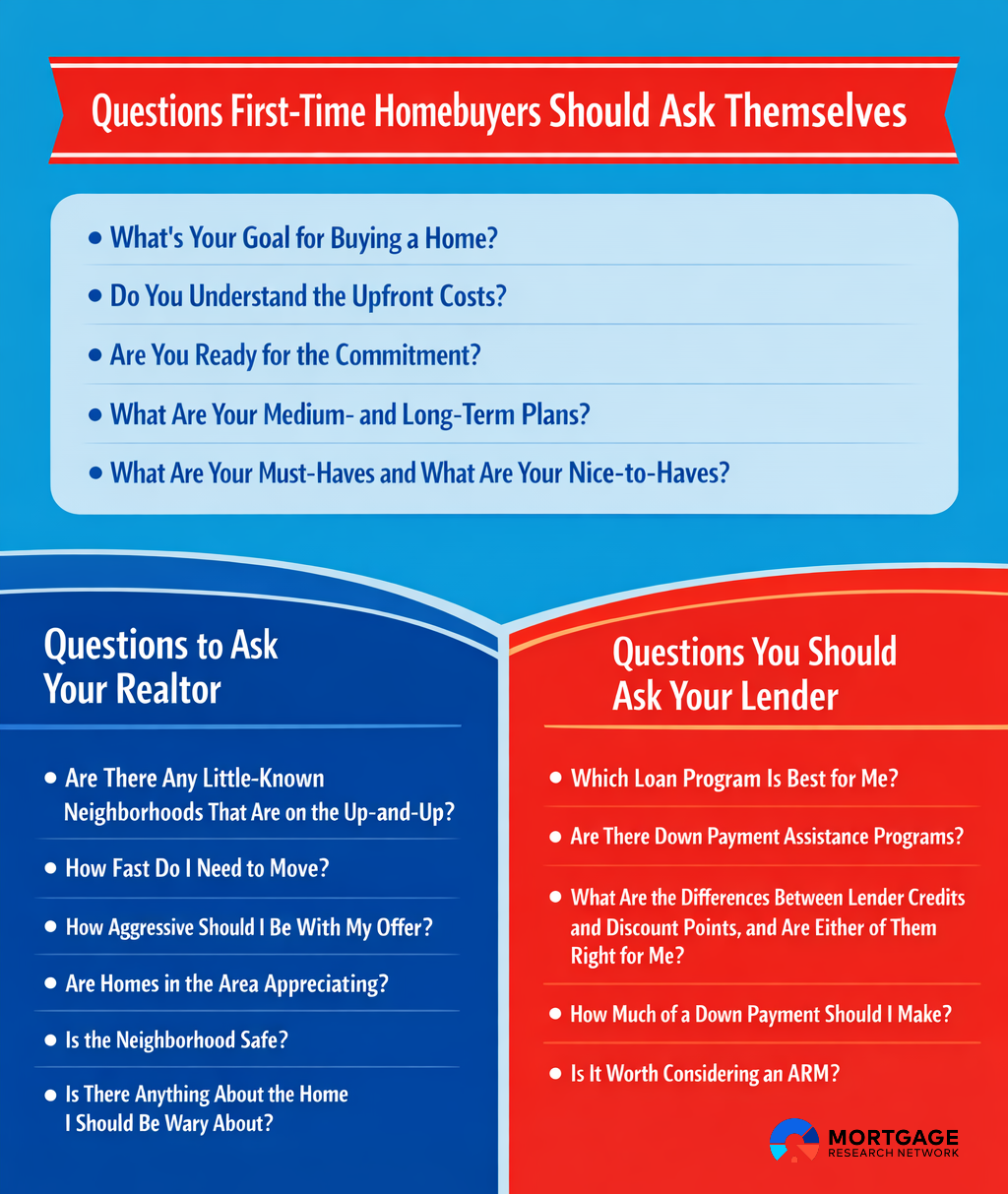
Move Forward With Confidence, or Take a Pause
After answering these three key questions, if you can truly say you understand what is involved, and you are ready, that’s great!
Becoming a first-time homebuyer is no doubt challenging today, as money for down payment and closing costs continues to be a significant barrier. But just because your mortgage lender qualifies you for a mortgage with little to zero down payment and zero dollars in the bank after closing, does not mean you should rush into that decision.
Instead, think about the three questions carefully and put together a plan beyond your mortgage qualification that can help make your first home purchase a success.