

Affordability issues for homeowners have pushed the foreclosure rate to a seven-year high, according to a report published Tuesday by Realtor.com®. Of course, that rate remains low by the standards of the Great Recession that began in 2007.
However, this higher rate represents a return to the days before Covid. Successive governments intervened massively to protect consumers and homeowners from the financial ravages of the pandemic, but that assistance has now largely evaporated.
Every foreclosure is a tragedy for the affected homeowners and their families. But it's a fact of life that every one also presents an opportunity for a homebuyer to acquire a home for well below its market value.
What Happens After Foreclosure
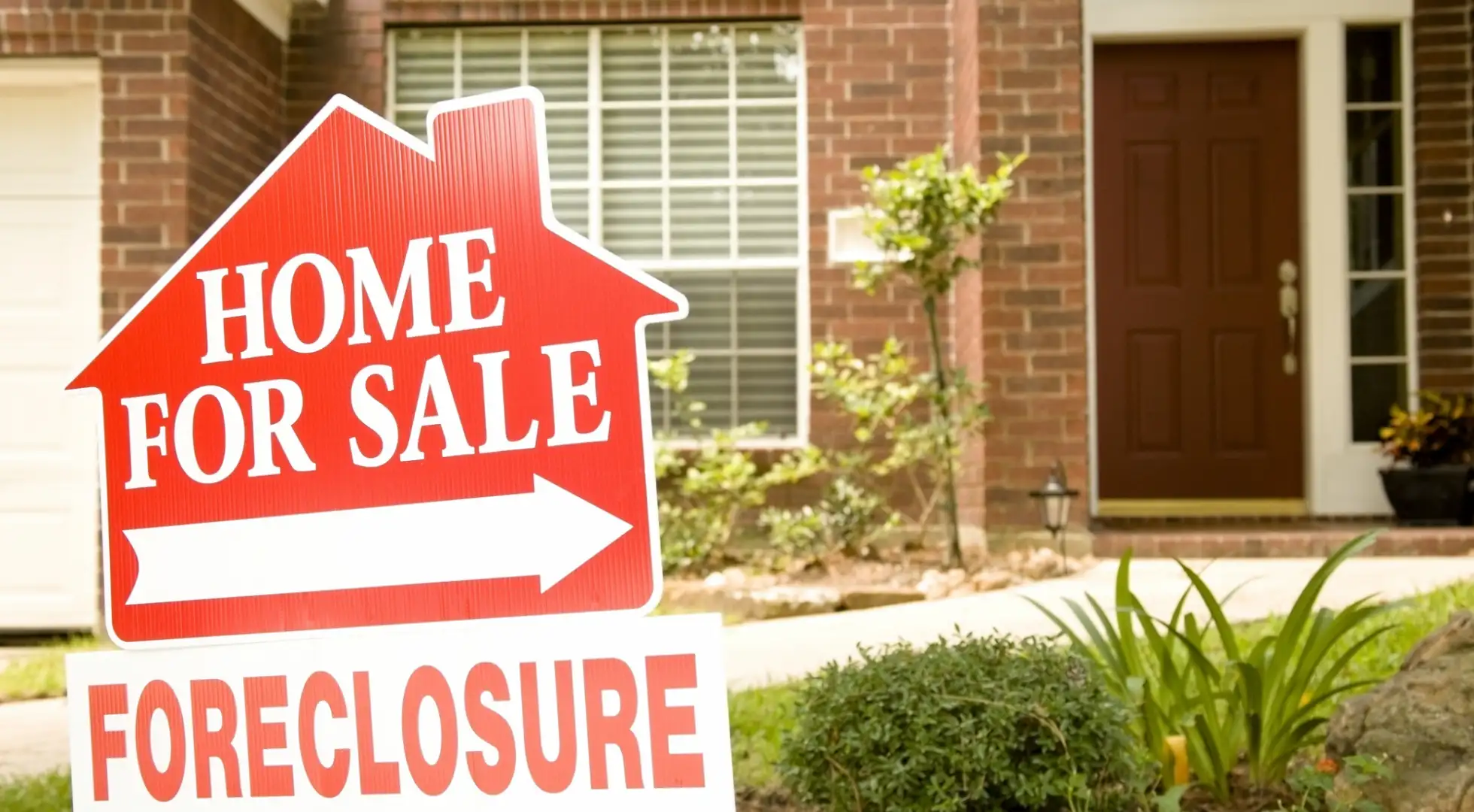
Foreclosure happens when a lender repossesses a home as a result of a breach of the mortgage contract. It normally occurs when a homeowner fails to keep up with loan payments.
When arrears build up beyond what's reasonable, and the owner and lender can't agree on a way forward, the loan defaults and ultimately the home is repossessed. The legal procedure for this varies from state to state.
Once a lender repossesses a home, it becomes known as "real estate owned" (REO), or a bank-owned home, and is typically listed for sale on multiple listing services (MLSs) and websites like Zillow and Redfin. Eventually, if the property doesn't sell that way, it's often offered at auction.
Remarkably, Realtor.com says the median sales price of an REO home is 27.2% lower than its estimated market value. So, those who purchase foreclosed homes can have significant built-in equity at purchase.
"Buyers since 2023, when home prices flattened off, are most at risk," says Realtor.com senior economist Joel Berner in a statement. "They’re newer to their mortgage and don’t have as much of an equity stake in their home, partly because the first few years of mortgage payments are made up of significantly more interest than principal and partly because their home has not appreciated as much as those that were purchased before the price surge of 2021 and 2022."
Where REOs Are Most Common
As is usual with real estate, regional, state and local markets often buck national trends. In raw numbers, the most REOs are to be found in these metros:
- Chicago-Naperville-Elgin, IL-IN — 611 REO listings
- Philadelphia-Camden-Wilmington, PA-NJ-DE-MD — 586
- Houston-Pasadena-The Woodlands, TX — 579
- Baltimore-Columbia-Towson, MD — 360
- Phoenix-Mesa-Chandler, AZ — 347
- Miami-Fort Lauderdale-West Palm Beach, FL — 319
- Pittsburgh, PA — 290
- Washington-Arlington-Alexandria, DC-VA-MD-WV — 285
- St. Louis, MO-IL — 218
- Austin-Round Rock-San Marcos, TX — 214
Readers interested in those cities and are seeking an affordable home or an investment opportunity might be wise to take note.
But what about the local markets where foreclosed homes represent the greatest percentage of all listings? They tend to be in places where home prices are below the national average.
Here, according to Realtor.com, are the five markets with the highest concentrations of REOs:
- Lake Charles, LA — 10.2% of all listings are REOs
- Tuscaloosa, AL — 7.7%
- Dayton-Kettering-Beavercreek, OH — 6.0%
- Davenport-Moline-Rock Island, IA-IL — 5.7%
- Montgomery, AL — 5.7%
To make up the top 10, the remaining five all have concentrations of REOs between 5.4% and 5.1%. They are Redding, CA, Pittsburgh, PA, Erie, PA, Baltimore-Columbia-Towson, MD, and Mobile, AL.
Guilt Dogs Some Foreclosure Buyers
There are good reasons why Lake Charles heads that last list. "After Hurricanes Laura and Delta, many homeowners found themselves in lengthy battles with insurance companies," local agent Danette McManus told Realtor.com.
"Claims often took months — or even years — to settle, and in many cases, insurance proceeds weren't enough to cover the actual cost of repairs," continued McManus. "With hurricane deductibles commonly around 5% of a home's insured value, many families were suddenly responsible for tens of thousands of dollars out of pocket."
Lake Charles's hurricane victims could tell heartbreaking tales about their struggles to keep their homes. And some prospective purchasers feel like vultures feeding off another's misery.
Our hearts are inclined that way. But our heads tell us it's too late to help the owners whose homes have been repossessed, and that our free market means we can buy a foreclosed property without guilt.
Practical Reasons to Be Wary of REOs
However, there are other, more practical reasons why some hesitate to buy an REO. Most importantly, they're often in dire condition.
In the run-up to a repossession, homeowners rarely have the money or the motivation to maintain their properties properly. Indeed, in their frustration, a few actively vandalize their homes.
Meanwhile, after repossession, homes can sit vacant for months or years. And, especially in some climates, that can lead to serious issues that are costly to repair. Often those issues aren't immediately apparent, and some buyers shy away from the risk of purchasing a money pit.
This can be seen in Realtor.com's monitoring of its listings. In the first six months of this year, bank-owned homes got 26.5% more page views than non-REO listings in the same places.
And yet REO listings last longer than the average one. Homebuyers look, but they don't touch.
That's not helped by lenders who often cut corners when marketing these listings. Their main motivation is to get the home off their books. And they often list with many fewer photos and much shorter sales copy.
Foreclosed properties often present real bargains. But there are good reasons so many go to professional investors and home flippers who recognize the money pits and are experts at costing repairs and renovations.