

We were excited when we read a Wall Street Journal headline last week: A New Type of Mortgage Is Reviving Long Abandoned Neighborhoods. It was a little disappointing to discover that the mortgages in question were debt-service coverage ratio loans (DSCR mortgages), which have been around for about a decade.
But these can be great for certain borrowers in certain places, so let's share what they're all about.
What's Special About DSCR Mortgages?
With mainstream mortgages, borrowers have to jump through many hoops to prove their creditworthiness:
DSCR loans take a different approach. Rather than relying primarily on the borrower's personal income, lenders focus on whether the property's rental income can cover its mortgage payments.
Borrowers generally still need acceptable credit, a down payment, and sufficient financial reserves. But they may qualify without documenting their personal income or meeting conventional debt-to-income requirements.
Suppose an investor purchases a rental property that could generate $1,800 in monthly rent. If the mortgage payment, including principal, interest, taxes, and insurance, comes to $1,500, the property's DSCR would be 1.2.
That means the property generates $1.20 in rental income for every $1 in mortgage payments. The higher the ratio, the more comfortably the rental income can cover those payments and the more likely the lender is to approve the DSCR loan.
Where DSCR Mortgages Work Best
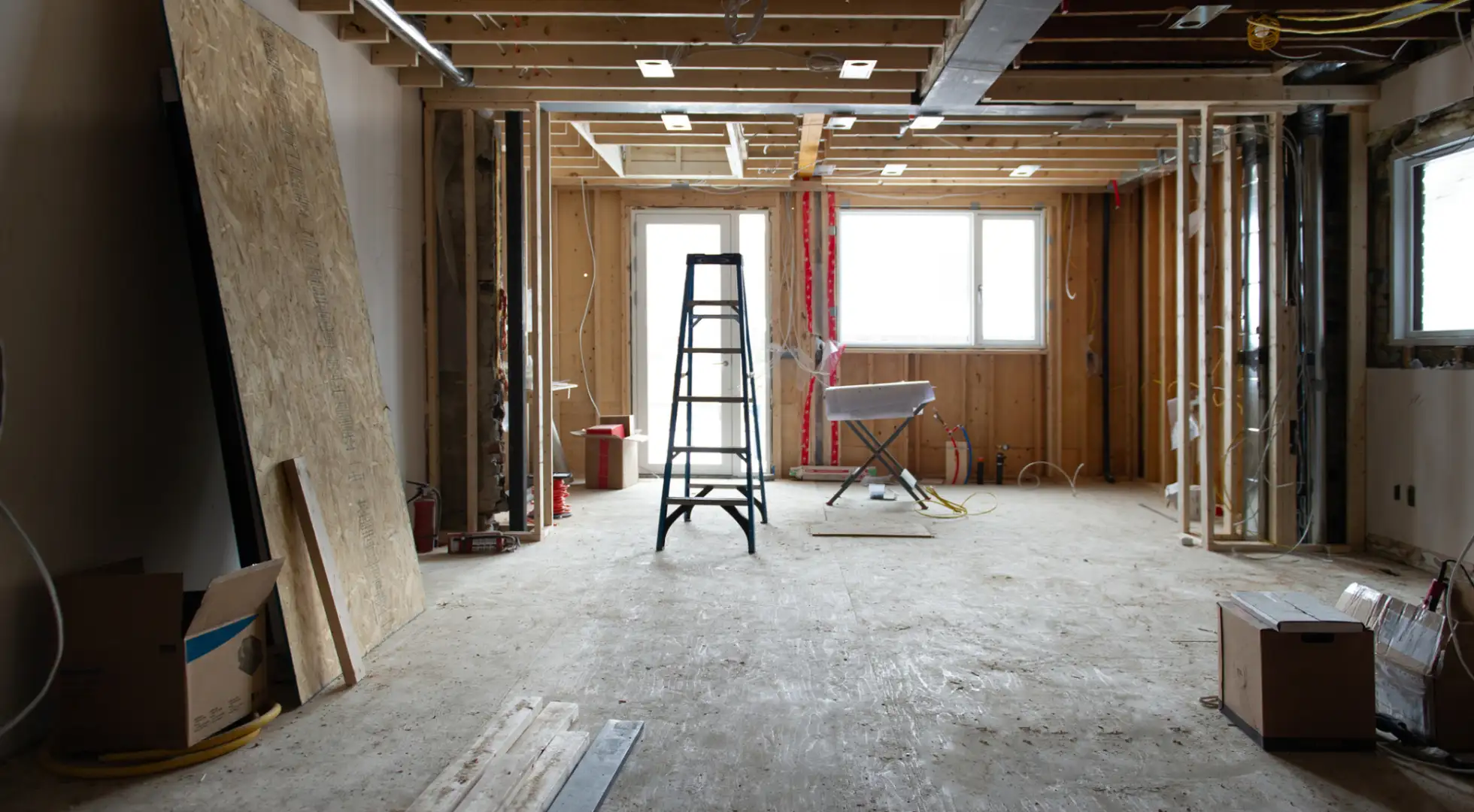
For some investors, the rental income math can work particularly well in run-down, "long-abandoned" neighborhoods where homes can be purchased at very low prices. Still, there are plenty of those, and The Journal notes that they are becoming increasingly popular as high housing costs force would-be renters to widen their search criteria.
"On every street, there’s somebody working on a house," Ashleigh Wilson, an investor from Florida who fixes and flips properties in East Cleveland, told The Journal. And she went on to say she'd never paid more than $24,000 for a home in that area. With purchase prices that low, it's easy to see how the rental income might cover the financing costs, even after substantial renovations.
The Journal mentions several places where DSCR loans are popular: parts of Baltimore, Detroit, East Cleveland, Indianapolis, and Memphis. In East Cleveland's case, the federal government has marked it down as declining for nearly a century. Others on that list have struggled for decades.
So, DSCR mortgages can help regenerate run-down neighborhoods as well as provide people who might not qualify for a mainstream loan with an opportunity to become a landlord. Additionally, as more properties are improved, those neighborhoods may see an overall increase in home values and rental rates, making DSCR loans even more attractive.
The Dangers of These Mortgages
Most consumers get "qualified mortgages" (QMs) and receive significant protections through a mass of federal regulations. DSCR loans, however, are typically non-QM, business-purpose mortgages, meaning some of those consumer protections don't apply.
So, it's important that applicants take great care to understand every word of their loan agreements. We'd recommend consulting an independent attorney before signing.
But it's not just the borrowers who are vulnerable. Lenders, too, are having to look more closely at those with whom they're doing business.
"DSCR and investor loan lock volume skyrocketed 130% between January 2022 and August 2026, becoming the primary growth engine for the non-QM market," said HousingWire last month. "The loan's structure makes it uniquely vulnerable to bad actors, with fraud risk indicators now firing on 1 in 44 investment property applications."
Importantly, that figure covers investment property applications as a whole, not just DSCR loans, and indicates potential fraud risk rather than confirmed wrongdoing.
"The heightened scrutiny comes roughly a year after a fraud scheme came to light in Baltimore, where a group reportedly purchased hundreds of homes — predominantly in majority-Black neighborhoods — at heavily inflated prices," continued HousingWire. "The deals were financed by hundreds of millions of dollars in DSCR loans from dozens of private lenders and more than half of them ultimately defaulted."
DSCR mortgages aren't necessarily right for everyone. Rental properties can involve unexpected expenses, prolonged vacancies, and uncertain returns. And because underwriting requirements vary from lender to lender, borrowers need to understand exactly what they're agreeing to.
Still, for investors with adequate savings, a sound business plan, and a realistic assessment of rental income, DSCR loans can open doors that traditional mortgage financing might leave closed.