

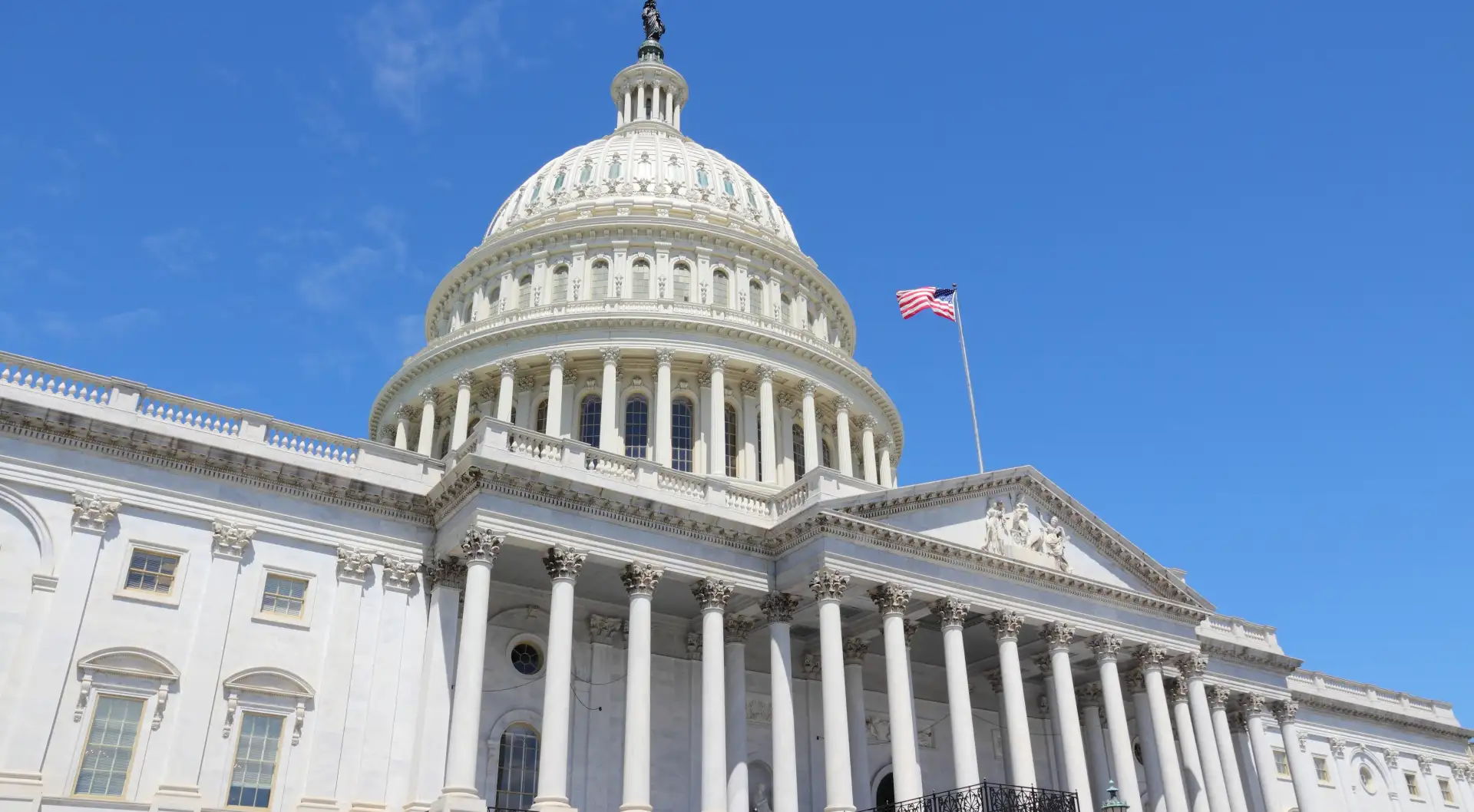
"Midterm elections are the elephant in the room. But not in financial markets," said The New York Times last Friday. "Instead, what’s driving the markets are interest rates, inflation, artificial intelligence, tariffs, the Iran conflict, and the price of oil."
Of course, mortgage rates are largely determined in the corner of the bond market where mortgage-backed securities (MBSs) are traded. So, what might be the impact of the midterms on bond markets specifically?
On the morning of the elections, The Wall Street Journal answered that question by citing a note by Laura Cooper, head of macro credit and global investment strategist at Nuveen: "For the bond markets, the midterm elections are likely to trigger short-term noise rather than a sustained repricing," said The Journal.
We're writing this on Nov. 3, hours before the first election polls open. So, we know nothing beyond what opinion polls have told us.
They suggest that the Democratic Party is likely to enjoy a blue wave that gives them control of the House, the Senate, and several governors' mansions. However, yesterday evening, The Daily Show ran a video montage going back to 1969 of many shaken TV news anchors expressing shock at just how wrong opinion polls had been in the elections they were reporting.
Mortgage Rates and the Midterms
Once Laura Cooper's "short-term noise" is out of the way, a Democratic victory might slow current spending plans.
On Monday, the U.S. Treasury announced that it plans to borrow $618 billion in privately held net marketable debt in the current quarter (Q4/26) and $800 billion in the following quarter (Q1/27). Those are big sums for bond markets to digest, especially when tech companies are borrowing vast sums to fund data centers and AI development.
And there are only so many investors with so much money available to lend in bond markets. So, such high demand creates competition between borrowers and tends to push up bond yields across the board, including those for MBSs. The higher the yield on MBSs, the higher mortgage rates are.
However, the big question is how susceptible President Donald Trump will be to Congressional pressure from his political opponents. Or if he has any at all.
It would take a major rebellion by Republican legislators on Capitol Hill to secure enough votes to drive veto-proof laws to constrain Mr. Trump. And that's not likely.
Democrats may be able to exert more leverage when it comes to limiting the deficit. They could refuse to pass the annual appropriations bills or a temporary continuing resolution to force a government shutdown.
But Mr. Trump has already presided over the two longest shutdowns in history, suggesting he may not worry much about these. And they're unlikely to be able to overturn existing laws, including the One Big Beautiful Bill.
Housing Market and the Midterms
It's not hard to imagine a state of total non-cooperation between a Democratic Congress and the White House. However, things may be different out in the states.
Where new governors can work with their state legislators, there could be real changes that could help first-time buyers. Those might include decreasing limits on lot sizes, making down payment assistance programs more generous, encouraging more multi-family developments, and scrapping bans on some construction techniques.