


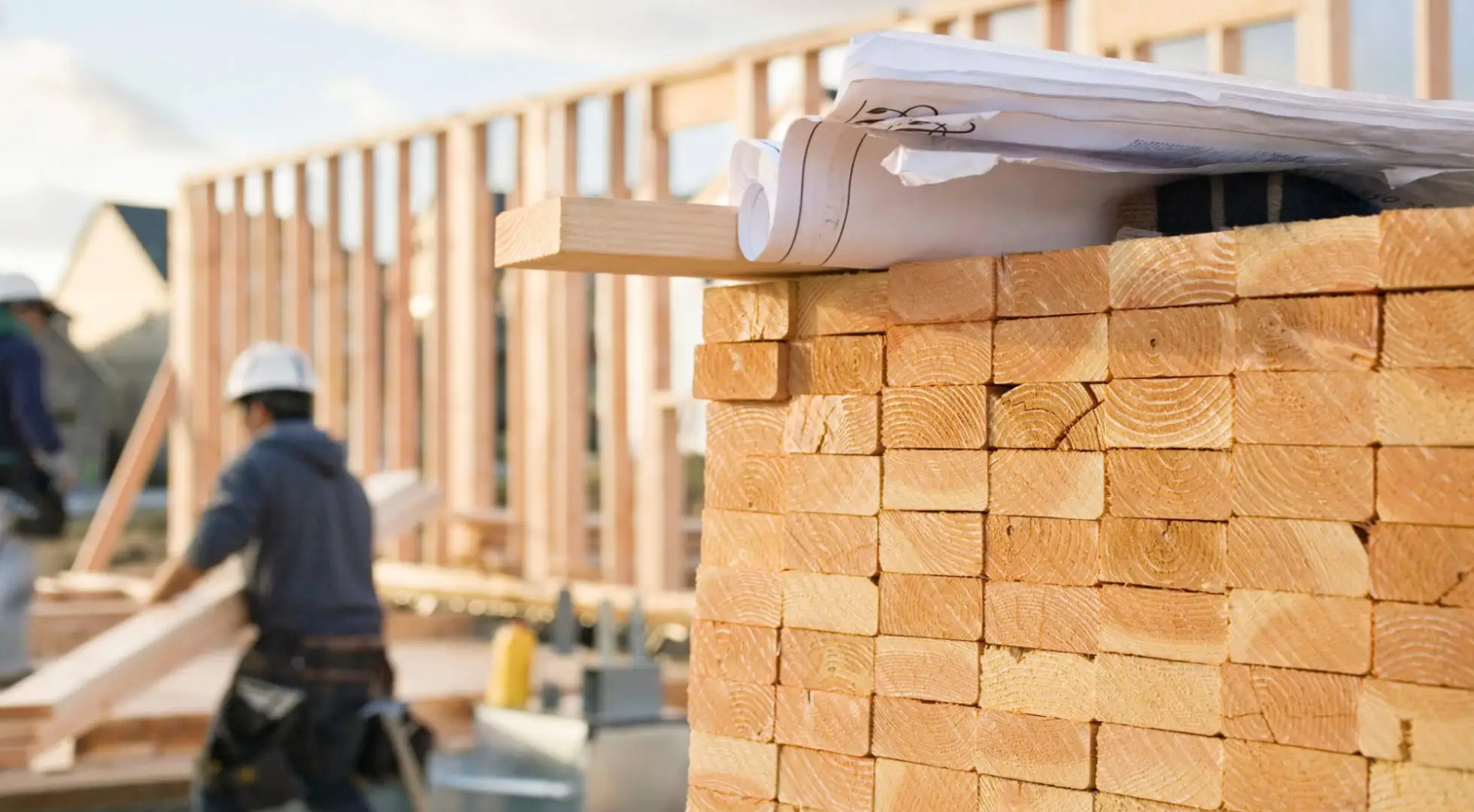
"Spending on data centers and other information-processing hardware now exceeds housing investment," said a Fortune magazine headline last week. And, with tight timetables and virtually unlimited budgets, those constructing the centers are easily outbidding home builders for land and scarce resources, such as skilled labor and some construction materials.
This is happening at a bad time for the housing sector. In April, White House economists estimated that the U.S. would have 10 million or more additional single-family homes today if homebuilding had continued at its historical pre-2008 pace. Estimates of the current housing supply shortfall are lower, generally ranging from roughly 2 million to 5.5 million units, according to a speech last week by Federal Reserve Governor Michael S. Barr.
Whichever estimate is correct, most of us are aware we're in the midst of a housing crisis. But polls suggest we're at best ambivalent about data center construction. Indeed, earlier this month, we cited a poll by Heatmap that suggested that three in four Americans oppose building a data center near them.
That may explain why The Wall Street Journal reported on Sunday that one developer was offering every family in Hazle Township, PA, $10,000 if the town would back its proposed data center. "I think it works the opposite way, because most people have the opinion that, 'Hey, are they trying to bribe us here?'" Ed Negra, a retired homeowner who'd benefit from the offer, told the Journal.
How Data Centers Are Driving Up Land Prices
In July, the National Association of Home Builders (NAHB) published a paper exploring how data center land acquisitions are disrupting land prices where they build. "As AI use has grown, so has demand for the facilities that make it possible," the NAHB said. "That demand is being met with land, and much of it is land that would otherwise have become housing. And in Northern Virginia, the self-proclaimed 'data center capital of the world,' it has completely skewed the market for buildable land."
The NAHB went on to give four examples of the crazy prices data centers are paying for land in Virginia, and three more in other states.
"In March 2026, a data center developer reportedly began offering homeowners in Ashburn’s Regency neighborhood [in Loudoun County] about $4.4 million per acre to assemble a roughly 130-acre site," said the NAHB. A year earlier, a land price analysis reported median land prices of about $125,000 per acre in that county.
Data Centers Are Adding Pressure to Construction Costs
"The cost of key materials used for building homes has increased by 6.7% over the previous year, according to a new survey," reported Realtor.com near the end of August. "Homebuilders who responded to the National Association of Home Builders/Wells Fargo Housing Market Index (HMI) survey for July 2026 reported steep increases in material costs, with smaller builders absorbing the biggest hit."
And that was before new tariffs were implemented on Canadian imports. "Changes in U.S. tariff policy increase uncertainty in construction pricing, and this move is no exception. The covered categories that matter for contractors include cement and concrete products, softwood lumber and engineered wood, plywood, kitchen cabinets, certain steel products, and selected electrical components used in commercial work," said Associated Builders and Contractors at the end of July.
Meanwhile, a new threat looms for home builders in the form of copper prices.
Yes, the domestic demand for copper wire is enormous as data centers need it for their own wiring, and energy suppliers re-engineer their transmission networks to satisfy the centers' voracious appetite for electricity. Meanwhile, the future supply of copper is unlikely to meet this surging demand.
"Mining company executives' preference for safe, short-term returns has led to a massive underinvestment in new copper mines and exploration, jeopardizing the metal-intensive energy transition," reported a 2022 S&P Global Market Intelligence analysis. "The shift toward decarbonization will require vast amounts of copper to extend transmission lines, install new wire in renewable power sources, and electrify existing appliances and cars."
New copper mines can take many years, sometimes decades, to reach commercial production. That 2022 analysis projected major supply deficits emerging later in the decade and estimated that the world could be short 1.6 million tonnes of copper in 2035. In its most pessimistic scenario, the shortfall could reach 9.9 million tonnes.
Data centers won't be responsible for all of that demand. But they're likely to add further pressure as builders compete for copper needed both inside the centers themselves and for the electrical infrastructure required to power them.
The Competition for Skilled Construction Workers
"As artificial intelligence data center expansion explodes across the country, technology executives have placed a greater emphasis on recruiting workers in the skilled trades," reported The Center Square last month. "Nvidia CEO Jensen Huang predicted the next wave of six-figure jobs would come from tradespeople who help build data center infrastructure."
That's great for those workers, and six-figure salaries might allow many of them to buy their own homes. But how are home builders supposed to compete with those salaries, and still deliver homes at affordable prices?
Ed Brady, CEO of the Home Builders Institute at the National Association of Home Builders, reports his industry is already short 300,000 skilled workers. And he says five people retire for every two who join. "The market is not as strong, and so today many of those people that were in housing are going to these data centers," Brady told The Center Square.
Of course, high salaries will likely attract more workers into skilled construction jobs. And the data center boom won't last forever.
So, in the long term, home builders might be able to boost their workforces, although those employed by data centers might be reluctant to take the inevitable pay cuts. But as long as the boom continues, home builders may struggle to maintain even the current pace of construction while keeping new housing affordable.
What the Data Center Boom Means for Housing
Perhaps, in a decade, we'll look back on this and see data centers as a price well worth paying. The U.S. might have maintained its leadership in AI, and we'll be living in a true golden era of greater prosperity and leisure.
That's if AI insiders' predictions of mankind's extinction or oppression by the technology are proved wrong.
In the meantime, it's hard to see how data centers will do anything but exacerbate the housing crisis.