

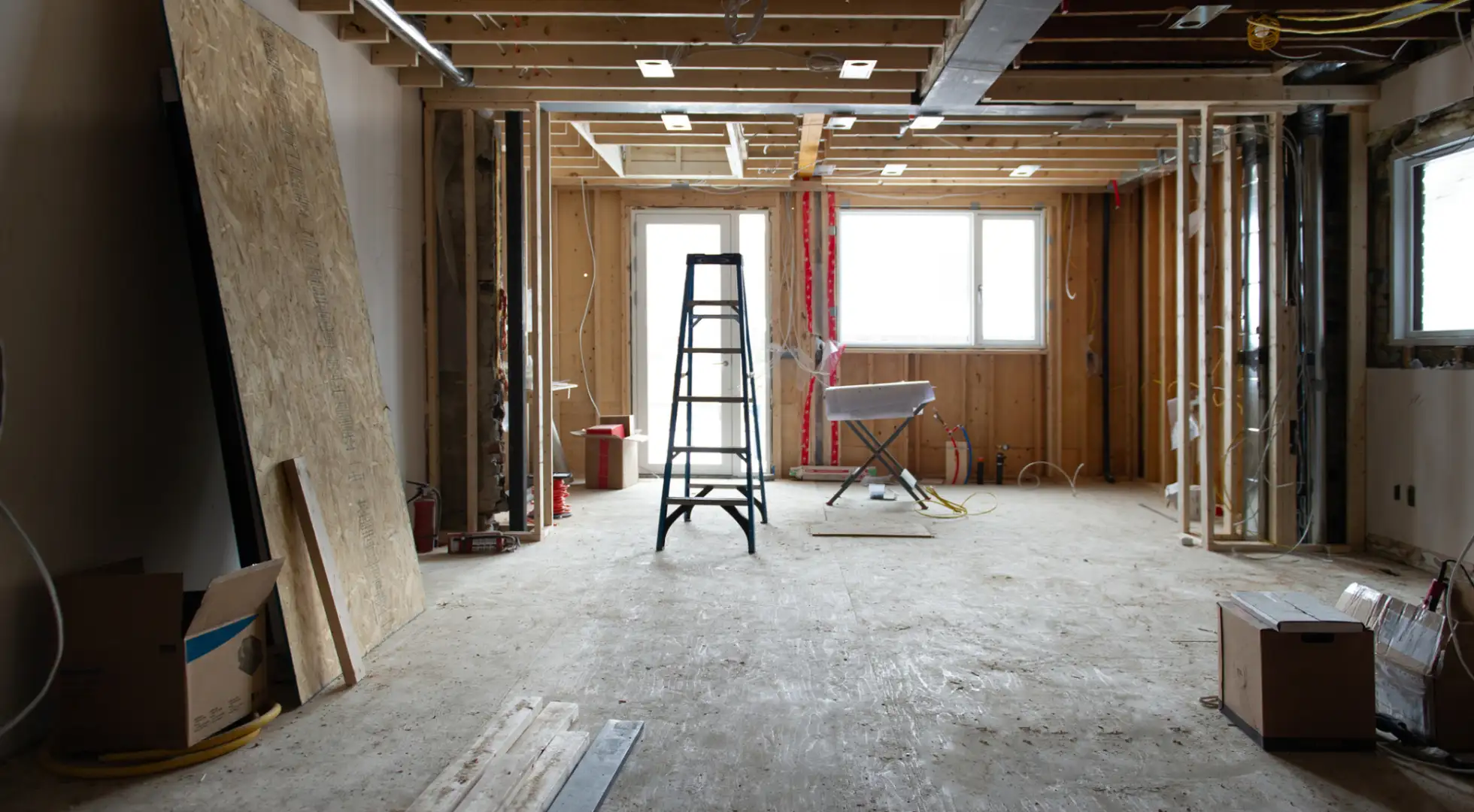
"Annual spending on home improvements and repairs is expected to remain relatively flat through late 2027, according to the latest Leading Indicator of Remodeling Activity (LIRA) from the Remodeling Futures Program at the Joint Center for Housing Studies of Harvard University," says Harvard. "Year-over-year growth in renovation and repair spending is expected to reach just 1.5 percent by the third quarter."
Of course, 1.5% is still growth. Or is it? With year-over-year inflation running at 3.6%, according to the Federal Reserve's favorite inflation gauge, the amount spent on remodeling is actually falling in real terms.
"Retail spending on building products has been flat to negative, and remodeling permits have stagnated, which points to continued sluggish renovation activity," said Rachel Bogardus Drew, Director of the Remodeling Futures Program at the Center, in a statement.
What Counts as Remodeling Activity?
"Home remodeling involves changing a home’s layout, structure, or function. Renovating, by contrast, means restoring or refreshing what already exists," says Ruby Home.
For example, installing new hardwood floors is a remodel, while sanding and refinishing the existing floors is a renovation. Both fall under the broader category of home improvement, which includes repairs, upgrades, and modifications to a residential property.
Most Remodels Lose Money
Homeowners rarely get an immediate return on investment (ROI) from remodeling. In other words, the market values of their homes don't rise by as much as the projects cost.
A few exceptions exist, according to Ruby Home. Done well, a minor kitchen remodeling might deliver an immediate 113% ROI. But "minor" implies things like painting or replacing cabinet and drawer fronts, fitting a new faucet, and maybe updating countertops with inexpensive new ones. The more one spends, the smaller the ROI is likely to be.
Meanwhile, replacing an aging garage door with a new one can provide an immediate 268% ROI. But most remodels come with negative ROIs, at least in the short and medium term.
So, Why Should Homeowners Remodel?
Homeownership is a marathon, not a sprint. And it's worth some occasional discomfort to stay in the race.
There are three main ways in which homeowners benefit from remodeling activity:
- They get to live in a nicer home. They're the ones who first enjoy the fruits of their remodeling.
- Their home is more marketable when they come to sell. A fresh, modern home will typically command a higher price and be bought more quickly than one with dated decor and amenities.
- An ROI might emerge over time. Assuming the market value of the home continues to rise, the sunk costs of remodeling come to represent a smaller and smaller proportion of the sale price. In the end, one may get back all the money invested in remodeling for the reason shown in point 2 above.
Point 3 explains why investing heavily in home improvements immediately prior to selling a home is so often a mistake. Of course, fixing defects, redecorating in neutral colors, and small upgrades such as a minor kitchen remodel or replacing shower curtains and worn bathroom faucets may well pay back immediately.
It's worth asking the listing agent to help target such a refresh budget in ways that deliver the biggest bang for the buck. Agents should know what attracts home buyers and what they care little about.
In March, the National Association of Home Builders reported that 47% of owner-occupied U.S. homes were built before 1980. And the median age of these homes climbed to 42 years old in 2024. Failing to keep these older properties up to date presents a special threat to resale values.
How Homeowners Finance Remodeling Activity
A Harvard study published on Nov. 4 revealed how homeowners are funding remodeling activity. And, perhaps surprisingly in the midst of the current affordability crisis, cash is king for most.
Roughly 74% pay cash for projects below $10,000, while 60% do so when budgets are between $10,000 and $49,999. Even when budgets are $50,000 or higher, cash is used by 57%.
Even more surprisingly, the use of home equity lines of credit (HELOCs) or home equity loans for remodeling has remained flat. "Equity’s role in financing improvements generally, however, has held steady even as owners’ equity has soared in recent years," says Harvard. "Aggregate home equity grew by 74.9 percent to $31.7 trillion between 2019 and 2023, according to our tabulations of Federal Reserve Board data, and the average homeowner gained $143,000 in equity during this period."
"Along with project size, funding sources also vary by project type," continued the report. "Home equity financed 24.3 percent of spending on room additions — the most expensive category of improvement — and about 15 percent of spending on kitchen and bath remodels and outside attachments.
"By contrast, home equity accounted for only 7.5 percent of spending on systems and equipment replacements, such as plumbing, HVAC, and electrical work. Because these projects are often essential to maintain a home’s habitability and functionality, they are difficult to defer, and owners may rely more on savings or other readily available funding sources."
We would never advise a financially secure homeowner to borrow when they can comfortably afford to pay cash for a project. But our eyebrows shot up when we saw how few were tapping their equity.
That was especially true when we saw that credit cards accounted for more spending than home equity in projects below $10,000. Credit cards are a great way to buy things because they come with unbeatable consumer rights. But they're terrible ways to borrow.
A HELOC, on the other hand, provides a line of credit, and one pays interest only on the balance. Yes, the same applies to credit cards. But the interest rates on HELOCs tend to be a small fraction of those on plastic. And repayment can be more flexible.
Other sources of funds for remodeling activity include post-claim insurance payouts and contractor-arranged financing. Again, it's worth comparing a contractor's annual percentage rate (APR) with that of a HELOC.
And it's also worth considering the trade-off between unsecured types of debts such as credit cards, and debts like HELOCs which are secured by your home.
In Summary
Homeowners should do their best to keep their homes up to date in all ways, including remodeling projects. Of course, few of us can afford to do so consistently, so it's important to make improvements when one can.
For most people, paying cash for anything is almost always better than borrowing. But when that's not possible, it's important to minimize one's borrowing costs. For creditworthy homeowners who have built up significant equity in their homes, HELOCs and home equity loans are often good options..