


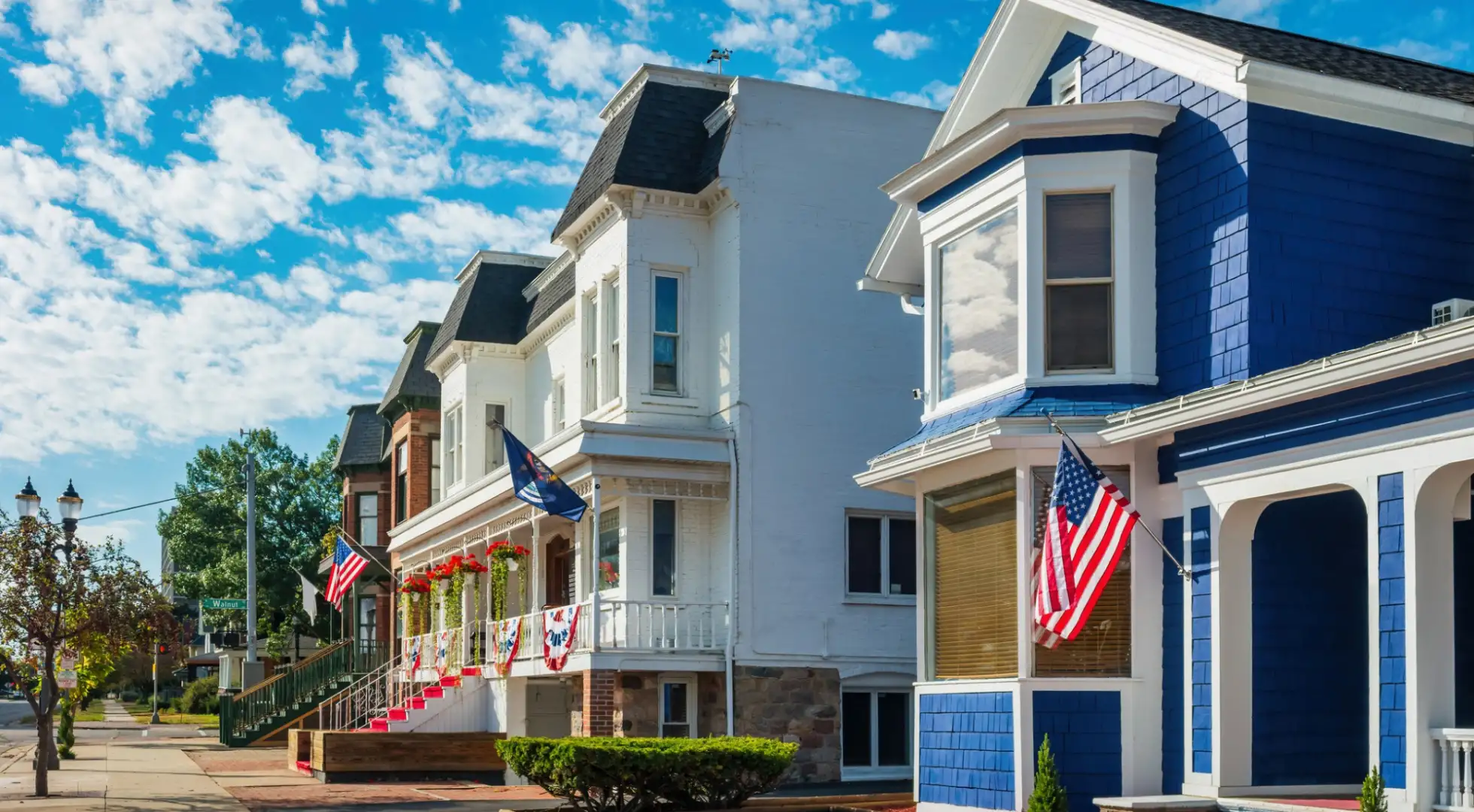
Michigan’s housing market is diverse, with prices and availability varying across the state, from fast-growing cities like Grand Rapids and Ann Arbor to more affordable areas in Metro Detroit and beyond. For many buyers, the challenge lies not only in choosing the right community but also in finding the financial support needed to help cover the upfront costs of purchasing a home.
One important resource is Michigan’s selection of down payment assistance (DPA) programs offered at the state, county, and city levels. These programs may take the form of grants, forgivable loans, or low-interest second mortgages that help reduce the initial cash required to buy a home.
This guide highlights some of the most accessible and well-supported DPA programs available in Michigan today. While it does not cover every option, it focuses on those that are active, widely used, and beneficial to buyers. We’ll continue updating this page as programs expand or change.
What Is AMI?
AMI, or Area Median Income, is the median household income within a specific area. Many down payment assistance programs use this metric to determine who's eligible for assistance, usually requiring you to earn at or below a certain percentage of AMI.
Example: A DPA program requires that you make 80% or less of AMI. You find a house where AMI is $95,000 per year, meaning applicants must earn no more than $76,000 to qualify. You make $74,000 per year, so you may be eligible for the program.
You can look up AMI by property address using Fannie Mae’s map tool.
>>>DISCOVER: 10 Most Affordable Housing Markets in Michigan
Statewide Down Payment Assistance Programs
Michigan offers several statewide programs, including assistance from the Michigan State Housing Development Authority (MSHDA) and the Federal Home Loan Bank of Indianapolis. These are some of the most widely used programs in the state.
MSHDA MI 10K DPA Loan
The MI 10K DPA Loan provides up to $10,000 in assistance for down payment and closing costs as a 0%-interest second loan with no monthly payments. The loan becomes due when the first mortgage is paid off, the home is sold or refinanced, or the property is no longer the borrower’s principal residence. To use this program, buyers must pair it with a MSHDA MI Home Loan, which is a 30-year fixed-rate mortgage.
Eligibility: Borrowers must be first-time homebuyers or repeat buyers purchasing in designated target areas, meet county-specific income limits, and must pair it with a MSHDA MI Home Loan. A homebuyer education certificate of completion is required for all homebuyers.
FHLBank Indianapolis Homebuyer DPA Programs
The Federal Home Loan Bank of Indianapolis offers two down payment assistance programs through participating member financial institutions in Michigan. Launch provides up to $20,000 or 20% of the purchase price, whichever is less, for qualifying first-time homebuyers. HomeBoost provides the same maximum assistance for buyers who are both first-time and first-generation homebuyers.
Eligibility: Launch generally serves households at or below 80% AMI, while HomeBoost serves qualifying households at or below 120% AMI. Both programs require homebuyer education, at least a $500 buyer contribution, and financing through a participating FHLBank Indianapolis member.
Down Payment Assistance Programs by County
Some Michigan counties run their own DPA programs with federal HOME funding. These programs typically help low- and moderate-income families.
Ingham County Down Payment Assistance Program
Ingham County’s DPA provides up to $30,000 as a 0% interest loan forgivable after 7 years.
Eligibility: Household income must be at or below 80% of area median income. Purchase prices must be under $219,000 for existing homes or $294,000 for new construction. Buyers must contribute at least $1,000 of their own funds, and cannot have more than $30,000 in liquid assets.
Oakland County Home Buyer Program
Oakland County’s Home Buyer Program, in partnership with Independent Bank, offers a $5,000 grant (not repayable) toward down payment and closing costs.
Eligibility: First-time homebuyers purchasing in Oakland County, with income at or below 120% of AMI, must contribute at least $1,000 of their own funds and complete homebuyer counseling, with financing through Independent Bank.
Genesee County Down Payment Assistance Program
Genesee County’s DPA provides up to $10,000 for first-time homebuyers outside the cities of Flint and Clio, and the villages of Otter Lake and Lennon.
Eligibility: Household income must be at or below 80% of AMI, buyers must not own any other real estate, and liquid assets cannot exceed $30,000. The assistance is forgiven after 5 years if the buyer remains in the home and does not sell during that period.
Down Payment Assistance Programs by City
Several Michigan cities also operate their own programs to boost homeownership among residents.
City of Detroit Down Payment Assistance Program
Detroit’s Down Payment Program offers up to $25,000 in assistance to first-time homebuyers who are Detroit residents with low to moderate incomes.
Eligibility: Buyers must have household income at or below 80% AMI, purchase within city limits, and complete homebuyer counseling.
Tobias Harris Homeownership Initiative
The Tobias Harris Homeownership Initiative provides qualifying Detroit first-time homebuyers with shared-appreciation down payment assistance of up to 40% of the purchase price. The assistance is a second mortgage with no monthly payments. When the home is sold or refinanced, the borrower repays the original assistance plus an agreed share of the home’s appreciation.
Eligibility: Buyers must be first-time homebuyers and current or former Wayne County residents, contribute at least 3% toward the purchase, and buy in an eligible Detroit ZIP code.
City of Grand Rapids Homebuyer Assistance Fund
Grand Rapids Homebuyer Assistance Fund provides up to $7,500 in assistance for low- to moderate-income buyers within the city.
Eligibility: Household income must be under HUD income limits (≤80% AMI), the home must be in city limits and meet property standards, and buyers must complete a homebuyer education course. The household must have $10,000 or less in assets.
City of Muskegon Homebuyer’s Assistance Program
Muskegon Homebuyer’s Assistance Program offers $1,000 to $24,999 in down payment, closing cost, and inspection assistance. The assistance remains secured by the home for five years.
Eligibility: Household income must be at or below 80% AMI, the home must be within Muskegon city limits with a purchase price under $219,000, and buyers must contribute their own funds and complete HUD-certified counseling.
City of Pontiac Down Payment Assistance Program
Pontiac’s Down Payment Assistance Program provides up to $20,000 to help cover up to 50% of the required down payment plus reasonable closing costs. Assistance carries a five-year affordability period for awards below $15,000 and a ten-year period for awards of $15,000 or more.
Eligibility: Buyers must be first-time homebuyers purchasing in Pontiac, have household income at or below 80% AMI, have no more than $20,000 in assets, and complete homebuyer education.
Additional Down Payment Assistance Programs in Michigan
Here are some additional programs, separate from those already mentioned, that may be useful.
Statewide Programs
- Chenoa Fund (Nationwide program available in Michigan)
County Programs
- Wayne County Down Payment Assistance (via National Faith HomeBuyers)
City Programs
Buying With Down Payment Assistance in Michigan
Michigan’s housing market has become increasingly competitive in many areas, but a wide range of assistance programs are available to help with upfront costs. With options offered at the state, county, and city levels, buyers can access meaningful support to make homeownership more attainable. If you are preparing to buy in Michigan, exploring these programs could significantly reduce your out-of-pocket expenses.
Use our loan calculators to estimate your monthly payments, and keep an eye on current mortgage rates to guide your planning.
Check with the organization directly for the most recent guidelines. While programs were fact-checked at the time of writing, requirements change often, and programs become unavailable when funds are exhausted.