

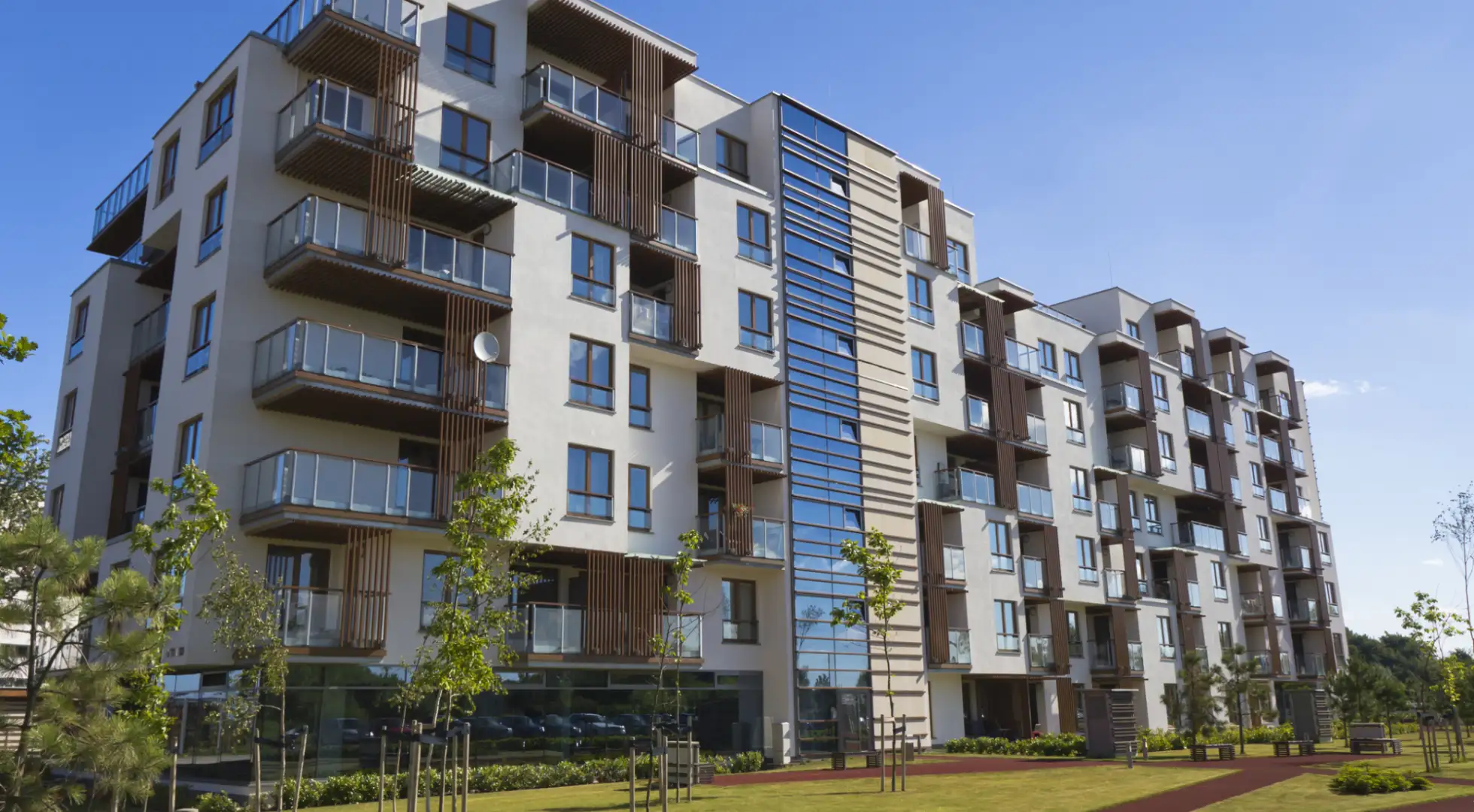
In its home price index for October, Intercontinental Exchange (ICE) revealed some startling facts. Year over year, prices of single-family homes rose 1.5% while those for condos fell 1.1%.
And single-family properties outpaced condos in 99 out of the 100 biggest housing markets in America. House owners may feel it's a difficult market, but at least the value of their homes is still rising on average.
An Oversupply of New Multifamily Dwellings
“Multifamily units completed reached 608,000 in 2024 — their highest level since 1986, according to NAHB analysis of the Census Bureau’s Survey of Construction. For the eighth consecutive year, most (54%) were high-density buildings comprising 50 or more units — a relatively new trend compared to early estimates in the series,” wrote the National Association of Home Builders (NAHB) in 2025.
While the vast majority of those units were in buy-to-rent or build-to-rent complexes, those, too, affect the condo market. Many first-time home buyers move from a rented apartment to a condo, and low rents due to an oversupply can deter them from purchasing.
"Condos tend to underperform in a softer market because they are often the entry point to ownership, where demand reacts first to higher rates and prices, and new condo supply can be added quickly where construction has been heavy," said Andy Walden, head of mortgage and housing market research at Intercontinental Exchange, quoted by Yahoo! Finance.
More than half of new condo buildings were in high-density housing developments.
Meanwhile, the geographical spread of new units was unhelpful. Seventy-five percent were in the South (48%) and West (27%) of the country, while the Midwest (14%) and Northeast (11%) accounted for only one quarter.
That naturally led to a glut of multifamily homes in the South and pockets of the West, which continues to affect local condo markets there.
Soaring Condo Ownership Costs
We’re used to the affordability crisis harming household budgets. But condo owners in many places have been facing soaring costs.
“Florida condominium owners are having to foot hefty bills for structural repairs because of laws connected to the 2021 Champlain Towers South collapse in Surfside that killed 98 people,” reported NewsNation in 2024. “While residents support changes being made to prevent similar tragedies, some of those living in the more than 900,000 condominium units in Florida say rising costs have made it hard for them to stay in the area.”
Now, Fannie Mae and Freddie Mac, who are together responsible for almost half of mortgages, are tightening their rules surrounding condo reserves nationwide.
“For many years, the general Fannie Mae and Freddie Mac standard has required condominium associations to allocate at least 10% of their annual budget to reserves,” says Canner Law. “Beginning January 4, 2027, the required reserve contribution will increase from 10% to 15% of the association’s annual budgeted assessment income.”
That’s almost bound to increase condo owners’ fees. Meanwhile, general operating costs for condo associations have been rocketing, too.
“Between 2019 and 2024, multifamily buildings in the U.S. experienced more than a 75 percent increase in property insurance costs on average ... Utility costs have also increased, as have building repair and renovation costs, due to high interest rates, increased transportation costs, tariffs, and higher labor costs,” says AFR.
Finally, high mortgage rates are a significant cost factor for first-time home buyers who wish to become condo owners. And that maintains downward pressure on condo values.
One can borrow a lot less with a high mortgage rate than with a low one. So, the pool of new buyers is not only small during times like these, but the amount individuals can spend when purchasing is constrained.
A Distant Hope for Condo Owners
All these pressures have created a miserable time for many condo owners. And that’s especially true for those caught in the mortgage rate trap.
Those who bought when mortgage rates were low (and they stayed below 4% from May 2019 to March 2022, according to Freddie Mac) can’t afford the significantly higher costs of a 7%+ mortgage. So, they can’t simply sell up, get a new mortgage and buy a house.
Instead, they’re stuck in their condos, facing falling home prices and soaring costs. And none of it is their fault.
This won’t go on forever. Mortgage rates and inflation rates will eventually fall. And the condo market will correct itself as supply and demand even out following a pause in new construction.
Unfortunately, in the meantime, there’s little condo owners can do except grit their teeth and hang on as tightly as they can.