


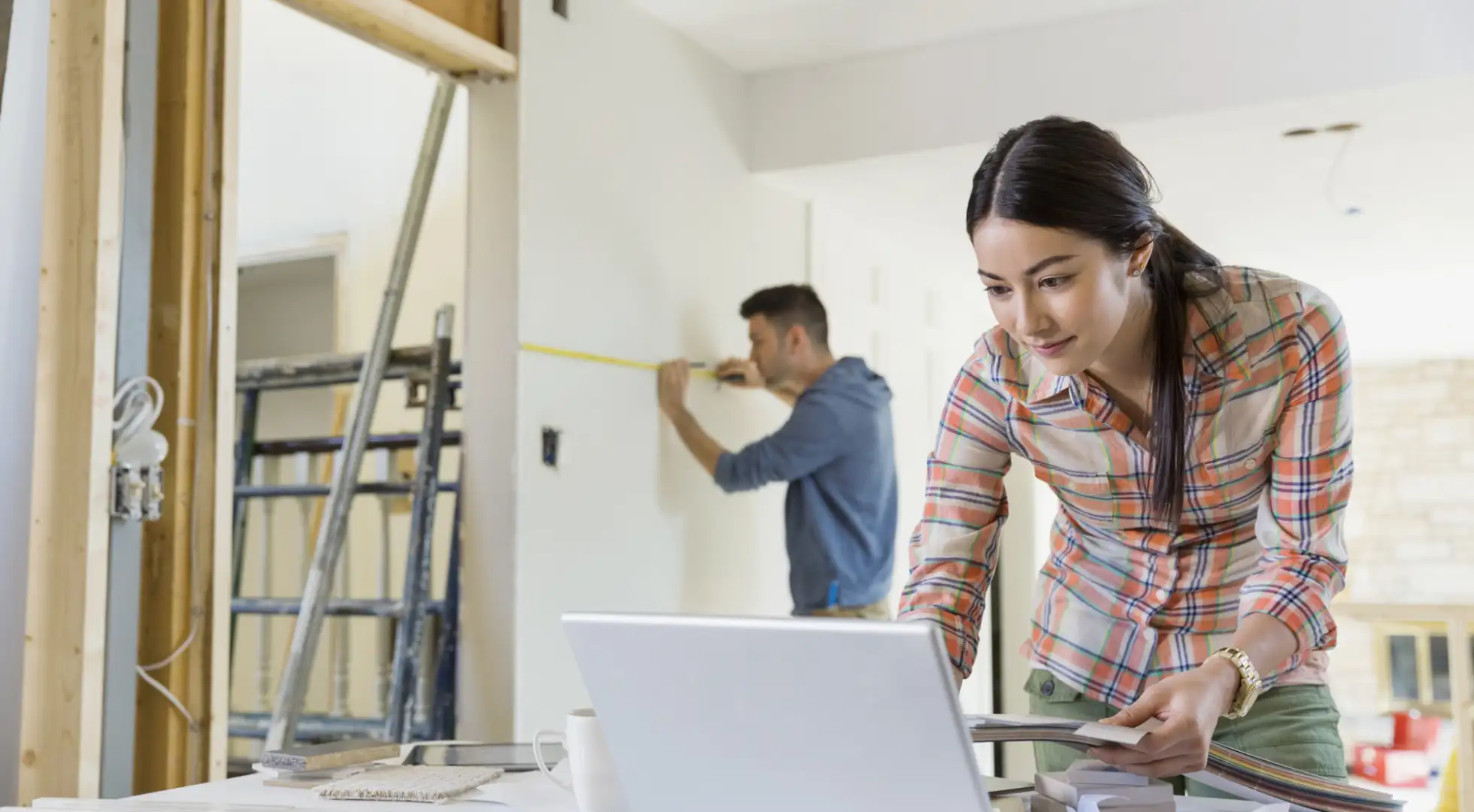
"The median age of a U.S. home is a record 44 years, leading to vast and rapidly increasing maintenance and modernization costs," said The Wall Street Journal over the weekend. In other words, it's getting ever more expensive to keep our aging housing stock in decent condition.
Soaring Costs
"Financial advisers now suggest setting aside 2% to 3% of a home’s value annually for upkeep, up from the traditional 1%," continued The Journal.
With the median sales price of houses sold at $405,300 in the fourth quarter of 2025, the average homeowner who sets aside 2.5% (the midpoint in the financial advisers' recommended range) is having to find a little more than $10,000 annually just to keep their home well-maintained.
Of course, wealthy homeowners have little trouble finding such sums. Last summer, the Harvard Joint Center for Housing Studies (JCHS) found that people in the highest-income quintile were spending 3.4% of their income on home improvement and repair costs. Those in the lowest quintile spent 16.3% of their income.
And there's little sign of these costs easing. Labor costs are rising as immigration dries up and mass deportations send undocumented workers home.
"While immigrants make up about one in five workers nationally, they make up one in three workers in the construction trades, defined here as those working in skilled trade occupations," said a January 2026 study from the JCHS. "Three-fifths of plasterers and drywall installers were foreign-born in 2024, as were half of all roofers, painters, and carpet, tile, and floor installers."
Meanwhile, the costs of construction materials are also rising. "After years of stability, construction materials costs are heating up again," ran a January 2026 headline in Construction Dive.
The Worst Possible Time
Rising home improvement and repair costs might be less of an issue were homeowners not already besieged by higher outgoings in most areas of their lives. Last April (a 2025 edition may land soon), ATTOM published its 2024 analysis of property taxes:
"The report ... shows that the average tax on a single-family home in the U.S. rose to $4,300 in 2024, a 5.8 percent increase over the previous year. In 2023, the average tax on a single-family home had increased 4.1 percent over the prior year."
Also last April, the Consumer Federation of America found "American homeowners saw their insurance premiums increase by an average of 24% over the past three years."
And homeowners' associations aren't helping. "One in three current homeowners — or 17.5 million people — across the 100 largest metros pays monthly homeowners association (HOA) or condo fees," reported Realtor.com last week. At least 15% of those people (2.6 million) pay $6,000 a year or more.
Meanwhile, homeowners are consumers like everyone else. They, too, went to fill up to find pump prices averaging $4.14 nationwide for regular gas, according to the AAA on the day this was written (4/7).
And their other purchases were already increasingly costly before the current rise in fuel prices began. Core inflation (excluding food and energy prices) was running at 3.1% year-over-year in January. February's data are due on Apr. 9.
A Lifeline for Homeowners
So, many homeowners are struggling financially. But homeownership provides privileges as well as problems.
Most can access what's typically the least expensive form of borrowing (besides mortgages), which comes in the form of second mortgages. These are commonly home equity loans and home equity lines of credit (HELOCs).
Providing one has plenty of equity (the positive difference between the market value of the home today and the current mortgage balance), a decent credit score and a good record of on-time mortgage payments, there's a good chance of getting approved. And such a loan could free up the money required to get a tired or even shabby home back up to the standards most homeowners want.