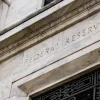


Professional and amateur forecasters agree that the Federal Reserve is unlikely to hike general interest rates on Wednesday, Oct. 28. But a large majority believes a rate rise is coming on Dec. 9.
So, we're likely looking at only a six-week reprieve. Most expect a small, 25-basis-point (0.25%) hike in December, although a few say a 0.5% rise is possible.
What Are the Odds?
We rely mostly on the CME FedWatch tool when we're assessing the likelihood of a Fed rate cut or hike. That's because it is "based on Fed Funds futures contract prices." In other words, it's specialist professional investors putting their money where their mouths are.
We visited the FedWatch tool when we were writing this, on Tuesday morning. And it revealed:
- 90.6% chance of the Fed holding rates steady on Wednesday
- 9.4% chance of the Fed hiking rates by 25 basis points (0.25%) on Wednesday
However, the chances of a hike six weeks later, on Dec. 9, are:
- 75.1% chance of the Fed hiking rates by 25 basis points (0.25%)
- 17.2% chance of the Fed holding rates steady
- 7.6% chance of the Fed hiking rates by 50 basis points (0.5%)
Users of Kalshi, "a federally regulated financial exchange and prediction market platform," put their money where their mouths are, too. They may not be specialists, experts, or professionals, but some believe in the wisdom of crowds.
According to Kalshi users, the chances of the Fed hiking rates before the end of the year are 100%.
Dicey Odds
Kevin Warsh was appointed Fed chair by President Donald Trump earlier this year. He was sworn in on May 22.
Warsh has a controversial opinion on "forward guidance," which is how the Fed communicates what it's expecting in the future. "He is worried, it seems, that too much talk about the future course of short-term rates will harm, not help, monetary policy," said The Wall Street Journal on Sunday.
The two most recent winners of the Nobel Prize in Economics (and many others) seem to disagree. Cited by The Journal, the Nobel committee wrote: "A central component in these models is that households and businesses are forward looking when making decisions about savings or product prices. When governments and central banks communicate their plans for economic policy, they can influence this view of the future and move the economy in the right direction. Since the new models’ introduction, they have been extremely helpful in dealing with the economic downturns that have affected us."
Whichever side one takes in this dispute, Warsh's policy on forward guidance makes it more difficult to predict what the Fed will do on Wednesday.
"Traders are betting overwhelmingly that the Federal Reserve won’t raise interest rates when it meets later this month," said CNBC on Oct. 16. "But that judgment rests in part on assumptions about how the Fed communicates that may no longer hold under its new chairman. Kevin Warsh has left room to maneuver toward a hike, should he choose to use it."
Why Hike at All?
Congress has given the Fed dual mandates:
- Maximum employment — "The highest level of employment or lowest level of unemployment that the economy can sustain in a context of price stability. Durably achieving maximum employment fosters broad-based economic opportunities and benefits for all Americans," says the Fed.
- Minimal inflation — "Prices are considered stable when consumers and businesses do not have to worry about costs significantly rising or falling when making plans, or when borrowing or lending for long periods," continues the Fed. To achieve that stability, the Fed has set a long-term inflation target of 2% annually, as measured by the Personal Consumption Expenditures (PCE) price index.
That all sounds sensible, and the Fed has done pretty well for many years at optimizing employment. However, its record is less impressive when it comes to inflation.
The consumer price index (CPI) for September showed prices rising 3.7% year over year, which isn't far off twice the Fed's target rate. And September's jobs report (aka the employment situation report) showed the economy still creating jobs and the unemployment rate at 4.2%, which isn't great but is far from worrying.
So, the Fed is doing OK with the employment half of its mandate but has real problems with the inflation half. And it's no surprise that it will be focusing on the latter at its imminent two-day meeting, which begins today and ends at lunchtime on Wednesday. The rate announcement is scheduled to land that day at 2 p.m. Eastern.
The Fed's main weapon in its arsenal when it's fighting to achieve its dual mandates is interest rates. It cuts them (as it did this century during the dot-com bust, the Great Recession, and the Covid pandemic) when it needs to stimulate the economy. And it hikes them when it needs to cool the economy to tame inflation.
What Are the Mechanics of a Fed Rate Hike?
The Fed's rate-setting body is the Federal Open Market Committee (FOMC), mentioned above, which meets roughly every six weeks. The FOMC actually controls only one interest rate, the federal funds rate, which is "an interest rate for overnight borrowing by banks."
However, the federal funds rate is a component of the base rates on which almost all variable-rate loans are calculated. So, when the Fed hikes its rate, consumers' borrowing costs increase as lenders adjust their base rates.
The Fed doesn't directly set the rates on new fixed-rate mortgages (FRMs). However, the same economic forces and circumstances that influence the Fed also influence the investors who do determine new FRM rates through their trading of mortgage-backed securities (MBSs), which are a type of bond.
Many argue that MBSs have a closer relationship with longer-term bonds than the federal funds rate. And it's true that MBSs often — though imperfectly — shadow such bonds, especially the 10-year Treasury note.
We reckon that it's likely true that 10-year Treasury yields are the biggest influence on new FRM rates. However, if the same influences that determine movements in the federal funds rate also determine 10-year Treasury yields and mortgage rates, whether we're looking at chickens or eggs is a somewhat academic argument.
We still think that the FOMC is unlikely to hike the federal funds rate on Wednesday. For one thing, it may prefer to avoid any appearance of influencing an election, with the midterms due just days later, on Nov. 3. However, we're also conscious that a partial absence of forward guidance could be making the odds of a holding-steady decision look greater than they are.