


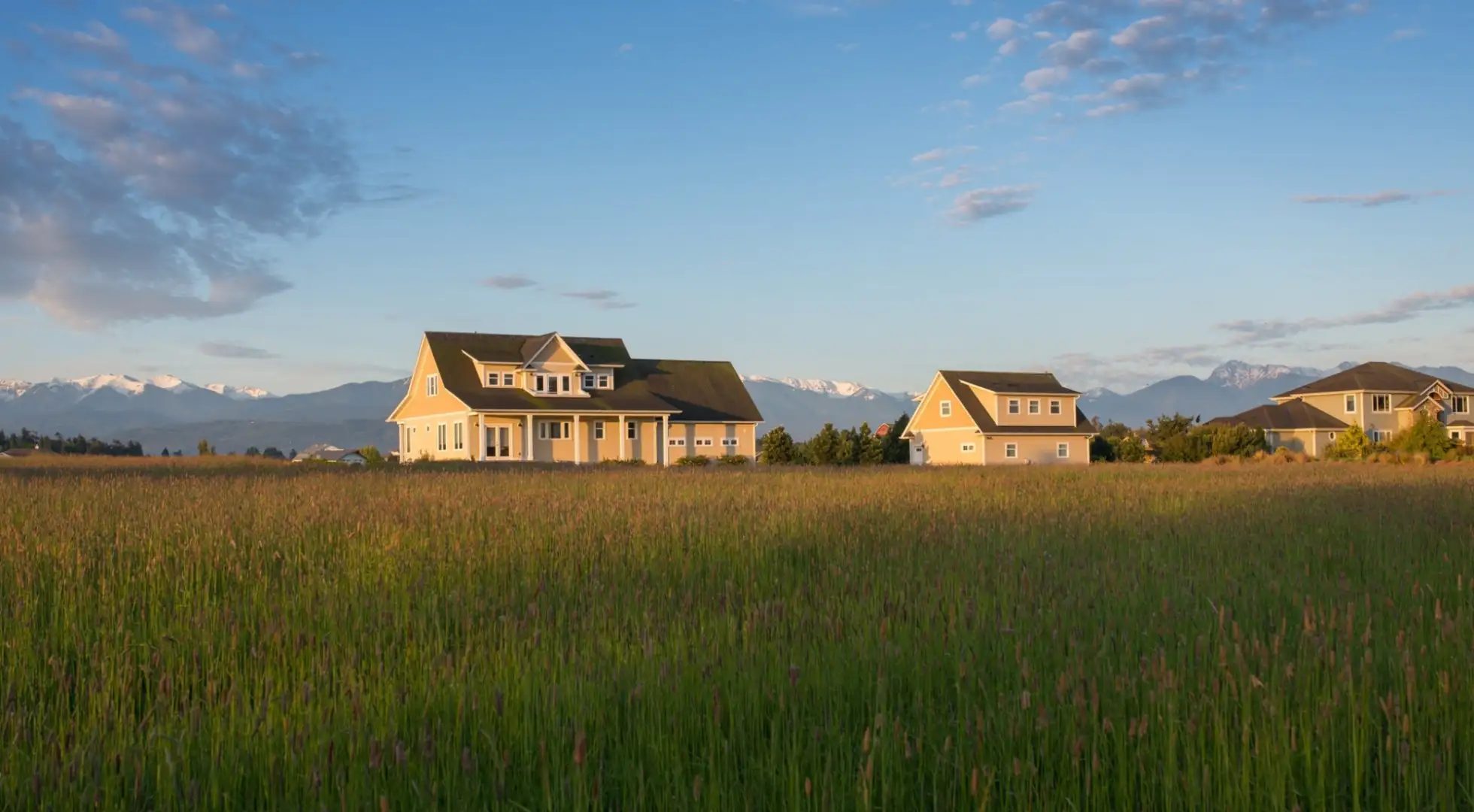
Home prices shot up in rural and vacation counties between March 2020 and March 2023, according to a new working paper from Harvard's Joint Center for Housing Studies (JCHS). This was a result of pandemic migration as urban dwellers fled densely populated cities for the relative safety and comfort of places with fewer people per square mile.
The migration had a dramatic effect on many rural counties' demographics. During 2017 and '18, these counties had been shedding residents at a rate of nearly 78,000 annually. From 2021 to 2023, that trend did a screeching U-turn, and the influx saw populations in those same counties increase by more than 540,000, according to the study. It was the first time in more than a decade that more people were moving into these places than were moving out.
Supply and Demand
Naturally, when the extra demand for homes met a virtually fixed supply, home prices climbed steeply. They rose by 36.1% between March 2020 and March 2023 across rural counties. But the increase in areas with high numbers of vacation homes was even larger over that period: 46.8%.
That was the nationwide phenomenon. But the study found many regional and area variations: "In the three years following the pandemic, home prices rose 51.1 percent in vacation counties in the West (13.8 percentage points higher than non-vacation counties in the region), 50.9 percent in vacation counties in the Northeast (15.9 percentage points higher than non-vacation counties), 47.5 percent in the South (14.1 percentage points higher than non-vacation counties), and 37.4 percent in vacation counties in the Midwest (7.2 percentage points higher than non-vacation counties)."
It's easy to see why people who were escaping cities found vacation areas so attractive. If they were leaving home, they might as well move to somewhere with the scenery and amenities that attract vacationers.
What Drove the Migration?
The migration was clearly mainly driven by the pandemic. People who'd enjoyed urban life, perhaps in cramped condos, found their homes impossibly claustrophobic during lockdowns.
Between lockdowns, some feared becoming infected, avoiding the bars, restaurants, theaters, gyms and workplaces that they'd previously found so enjoyable. With no obvious end to the pandemic, they were attracted to the space and relative safety of sparsely populated rural counties.
However, there were drivers beyond COVID-19. Working from home had suddenly become huge, freeing employees from the daily commute and allowing them to live wherever they liked.
Meanwhile, mortgage rates plunged to their all-time low during this period, allowing affluent city dwellers to buy rural homes at prices that locals would have regarded as inflated. On Aug. 4, 2021, the average for a 30-year, fixed-rate mortgage dipped to 2.77%, according to Freddie Mac.
Even smaller, less densely populated cities were hit. In February 2022, the Financial Advisor website ran a story under the headline, "Out-Of-Town Home Buyers Will Pay 30% More Than Locals In Hottest U.S. Markets."
Based on a then-recent Redfin survey, it reported, "'People moving from the West Coast will pay way over asking price without batting an eye. In their eyes, they’re getting a deal,' Hope Geyer, a Redfin agent in Nashville, said in a statement. 'It’s really hard for locals to compete right now, and it can be devastating for first-time buyers who aren’t able to offset high prices by selling a home before they buy a new one.'"
Communities Are Still Adjusting to the Pandemic Migration
It's likely that longstanding residents of affected rural areas are still suffering the consequences of pandemic migration on home prices. Alexander Hermann and Peyton Whitney, who authored the Harvard report, make remedial suggestions. "Vacation areas with strong tourism industries often rely on seasonal, low-wage service workers. For these workers and many existing households, rising housing costs and the limited supply of housing can be a particular strain made worse by strong domestic migration."
Solutions could include:
- Property tax abatements
- housing vouchers
- first-time homebuyer assistance
- other forms of housing and non-housing assistance targeting lower-income households.
The study also mentions obstacles for rural homebuilders including "high infrastructure development costs to a limited construction workforce—even as the need to build additional homes increases." This puts additional pressure on affordability.
Help Already Available for Home Buyers
We would add solutions for low and moderate income-earners such as zero-down mortgages backed by the U.S. Department of Agriculture (USDA loans). These can have lower mortgage rates and smaller mortgage insurance premiums than many other home loans. Watch our video explainer on YouTube.
Meanwhile, others may be helped by one of the thousands of down payment assistance programs across the country. These can provide grants, forgivable loans, or low-interest repayment loans to boost the savings of first-time buyers — and sometimes repeat buyers.