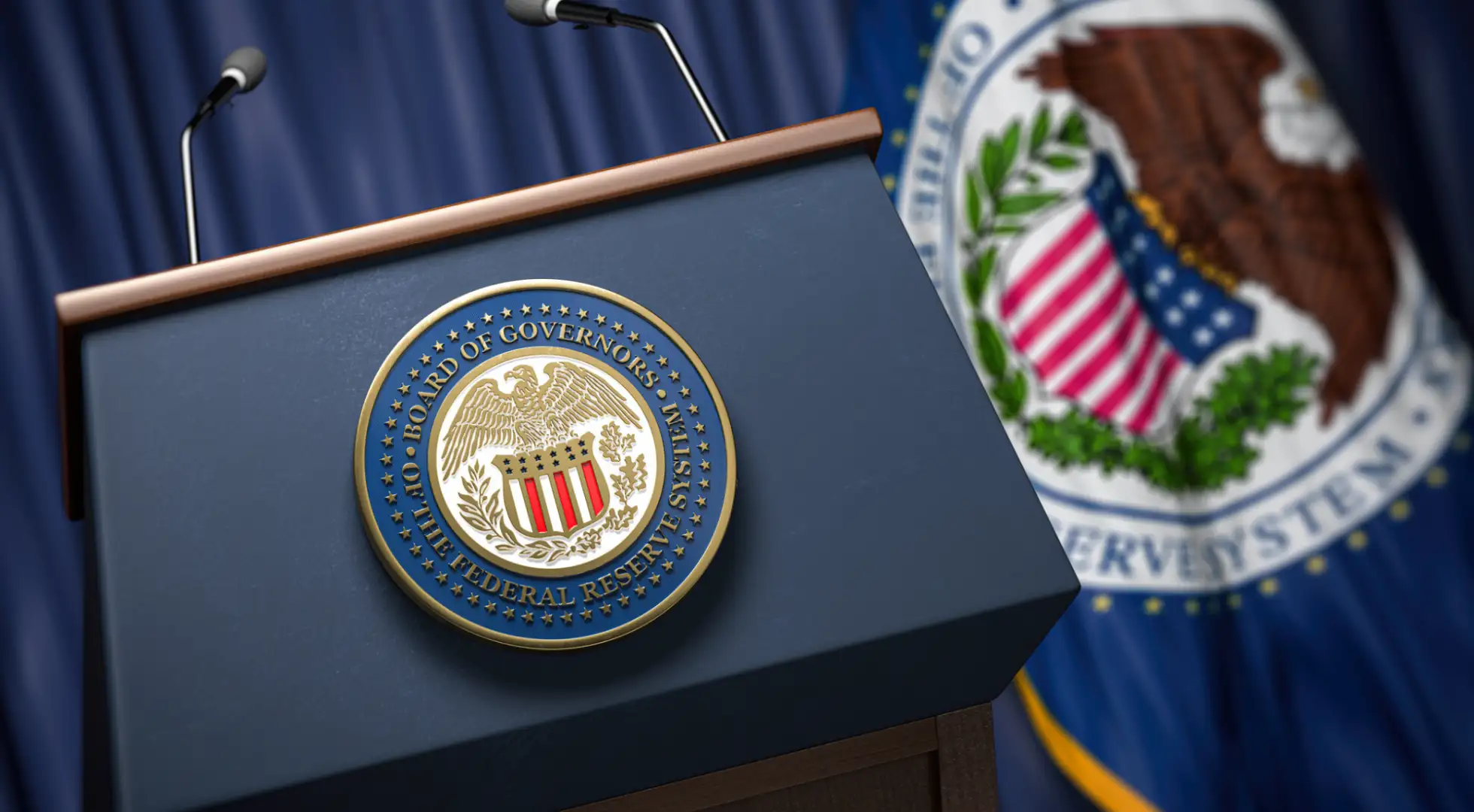
Last week, the U.S. Senate confirmed President Donald Trump's nominee as the new Fed chair, Kevin Warsh. As of Monday, Warsh was still divesting himself of his personal financial assets but was expected to attend his official commission-signing ceremony very soon.
The president originally nominated Warsh on Mar. 4 because he was impatient with the slow rate at which the Federal Reserve was cutting general interest rates. He believed Warsh was the man to shake things up and deliver more cuts more quickly.
However, the economic landscape has changed unrecognizably since that original nomination. And few now believe that any cuts will be possible for several months, possibly until well into 2027.
New Fed Chair's Inflation Challenge
Last week's inflation reports for April showed prices rising much faster than the Fed's target of 2% annually. The consumer price index (CPI) indicated that all prices were up 3.8% year over year.
Worse, rises were bad in spending categories that few consumers can avoid:
- Food up 3.2%
- Gas up 28.4%
- Electricity up 6.1%
Last week's producer price index (PPI) for April was even worse. This measures price changes in the wholesale phase of the supply chain, so increases in the PPI are likely to show up in future CPIs.
"On an unadjusted basis, the index for final demand rose 6.0 percent for the 12 months ended in April, the largest 12-month increase since moving up 6.4 percent in December 2022," said the Bureau of Labor Statistics in its report. Late 2022 was during the period of global supply chain bottlenecks resulting from the COVID pandemic, which drove prices higher across the world.
Most economists agree that the current higher prices are a result of the Strait of Hormuz's closure. Even if it's reopened soon, it will likely take many months for trade flows to get back to normal, including those for sulfur (necessary for some fertilizers and EV batteries) and methanol (necessary for plastic and some chemical production), as well as oil and liquified natural gas.
"The Federal Reserve works to promote a strong U.S. economy," says the Fed itself. "Specifically, Congress has assigned the Fed to conduct the nation's monetary policy to support the goals of maximum employment and stable prices. Those two goals are often referred to as the Fed's 'dual mandate.'"
So, Warsh has a legal obligation to promote price stability, something the Fed manages during inflationary periods mostly by hiking or at least holding general interest rates. But his patron, the president, wants him to cut those rates quickly and sharply. That's not an enviable position to be in.
Other Challenges for Warsh
Warsh faces several other issues. To start with, the Fed's rate-setting body, the Federal Open Market Committee (FOMC), is deeply split.
This is unusual. For many years, FOMC members enjoyed a continuing consensus. But now "doves" are content to ride out what they hope will be a transitory bout of inflation without adjusting rates. However, "hawks" are skeptical that prices will moderate anytime soon and wish to see rate hikes.
So, it's perfectly possible that Warsh — who may be highly influential but who gets only one FOMC vote like everyone else — will have to preside over one or more rate hikes. And that will likely incur the wrath of the president.
Meanwhile, Warsh has called for new ways to measure inflation, beyond the existing price indices, at least as they're currently structured. That's fine, provided markets believe the data isn't being rigged to justify unjustifiable rate cuts. If that perception were to take hold, it could be bad for borrowing costs, including mortgage rates.
In April, Reuters reported: "The idea that a 'true' measure of underlying inflation is at hand and so far overlooked by the Fed, said Omair Sharif, president and founder of Inflation Insights, 'sounded like somebody [Warsh] who has not been in the building for a while and has not looked at inflation research since he left the Fed' in 2011 after a term as governor."
And Warsh also wishes to reduce the amount of "forward guidance" the Fed currently gives markets. For years, the Fed has helped markets to know what to expect with things like the "dot plot" and post-FOMC meeting news conferences.
Keeping markets in the dark may help reduce volatility between FOMC meetings. But it risks huge movements in bond prices and yields if Fed rate announcements shock markets.
Finally, Warsh has said that he wants to reduce the Fed's balance sheet by selling both government debt and mortgage-backed securities (MBSs), the type of bond that strongly impacts mortgage rates. Flooding the market with excess government and mortgage bonds could create a liquidity crisis that drives up borrowing costs.
Warsh isn't necessarily wrong in wanting new inflation gauges, less forward guidance, and a smaller Fed balance sheet. But he will have to handle their implementation with great care.
"In all these areas, Warsh could come up against institutional resistance from Fed staff or Fed governors and presidents, and from markets that are accustomed to how the Fed does business and [are] generally averse to change," said CNBC on March 27.
How the New Fed Chair Could Affect Mortgage Rates
The Fed doesn't directly determine mortgage rates. But it does influence them.
It's the bond market in which mortgage-backed securities are traded that actually dictates those rates, at least 90-odd percent of the time. And that market is influenced by the same things that make the Fed hike or cut general interest rates.
Regardless of Fed monetary policy, bond investors are highly sensitive to overheating inflation. That's why we doubt we'll see mortgage rates fall back below 6% for 30-year fixed-rate loans anytime soon, and probably not in 2026. We think the inflationary effects of the Middle East crisis will probably last at least that long.
As for the new Fed Chair himself, his challenges risk pushing mortgage rates even higher. But that's not inevitable.
If Warsh takes markets with him as he implements the changes he wants, those changes might have little impact on mortgage rates. It's only if he's careless of markets' needs that we should get worried.