

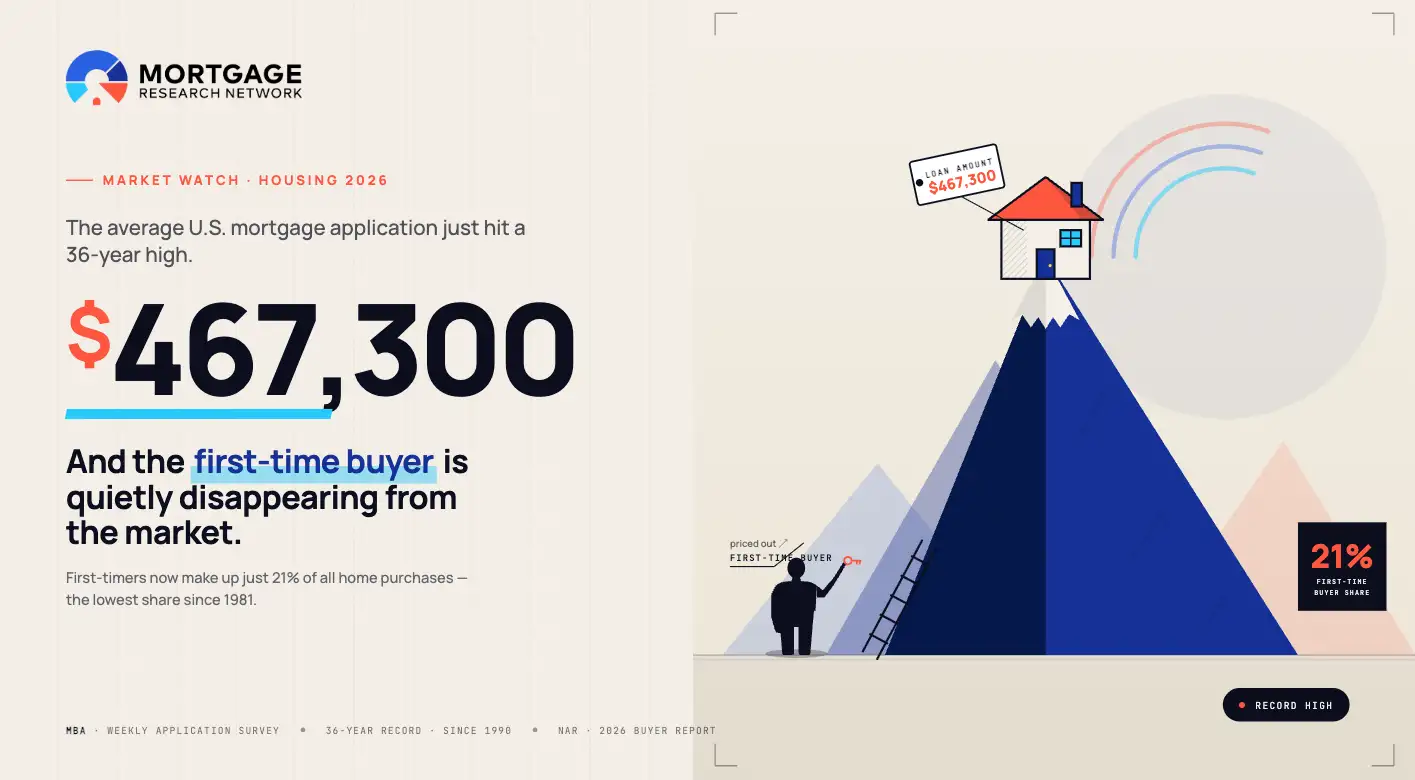
The average mortgage application in the United States just reached $467,300, the highest dollar amount recorded since the Mortgage Bankers Association began tracking the data in 1990.
That number might sound like a dry statistic. But buried inside it is a warning sign for anyone hoping to buy their first home: the entry-level buyer is disappearing from the market.
What the record really means
When the average loan size climbs to a 36-year high, it doesn't just mean homes are expensive. It means the buyers still completing transactions are overwhelmingly wealthier, repeat purchasers: people trading up, moving equity from one home to another, or buying with substantial down payments.
First-time buyers, who typically need smaller loans and have less financial runway, are quietly stepping aside.
The numbers tell the story:
- First-time buyers now represent just 21% of all home purchases, the lowest share since NAR began tracking the metric in 1981.
- Before the 2008 financial crisis, first-timers consistently made up about 40% of the market. That figure has been cut nearly in half.
- The typical first-time buyer is now 40 years old according to NAR, also an all-time record.

Why it's happening now
The record average loan size is partly a reflection of stubborn home prices and partly a self-selecting market.
Here's how the filter works: As affordability tightens — with 30-year mortgage rates hovering around 6.45% — buyers on the financial edge simply stop applying. The ones who remain can absorb higher costs. That pushes the average loan figure up, even as total application volume falls.
- Total mortgage applications dropped 4.4% in a weekly gauge, in early May 2026.
- The average loan size isn't rising because everyone is borrowing more. It's rising because those who can't are gone.
What this means for you
If you're a first-time buyer, this market isn't working in your favor, but you're not without options:
- FHA loans allow down payments as low as 3.5%.
- State and local housing finance agencies still offer down payment assistance programs in many areas.
- Midwest markets like Kansas City, Pittsburgh, and Cleveland are offering more inventory and more competitive pricing than coastal or Sun Belt metros.
If you already own a home, the record loan size data is a reminder that your property may be worth more, but fewer buyers can afford it. In most markets, that's fine for now. But it's worth watching as affordability pressure continues to build.
The bottom line: The market isn't broken yet. But it is narrowing. And first-time buyers are bearing the cost.