


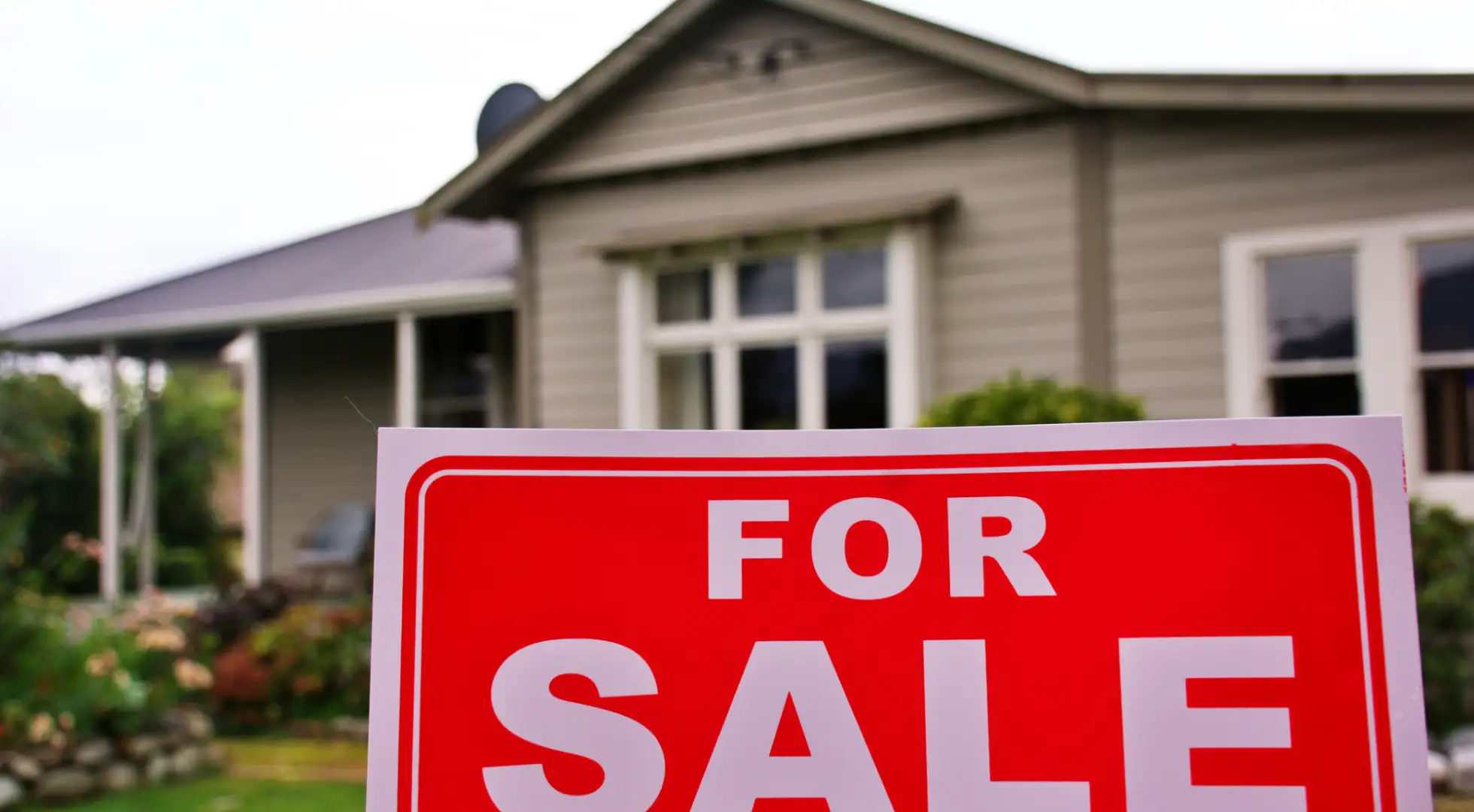
Most home buyers have experienced it. They get really excited about an amazing, affordable home, only to discover when they view it in person that it is nothing like what they expected. Agents' listings rarely lie, but they can sometimes be highly deceptive.
Don't Expect Brutal Honesty
In 1960s London, England, British real estate agent Roy Brooks tried the brutal honesty route. One ad, for a home very near London Zoo, read:
"WILL ANYONE TAKE PITY ON A NASTY OLD HOUSE adj. REGENT'S PARK TERRACE. On still nights, the friendly howl of the Hyaena floats over the Mappin terraces & one can, maybe, imagine oneself far away from our acquisitive society. 9 rms., 2 bathrms., kitchen. All in pretty foul order. Will only sell for single occupancy to gentlepeople. Ground Rent GBP70. Lease about 75 yrs. GBP7,250 (I expect we'll see it resold, done up, in a year or so for about GBP14,000)." [Lightly edited to expand abbreviations.]
Amazingly, Brooks' approach worked. His humor made his ads iconic, and he sold loads of homes. However, no other agents dared copy his bluntness.
Instead, in many ways correctly, agents around the world present each listing in the best light possible. After all, one can't sell a home unless they get people to view it.
Red Flags in Listing Photographs
Roethel warns to look out for what's not included. Listings can include dozens of photos. So, why isn't there one of the basement or the driveway? Do both need repairs or maintenance?
Watch out, too, for corners of rooms rather than pictures that capture them entirely. Real estate photographers typically use wide-angle lenses to show as much of each room as possible.
However, be aware that such lenses can be misleading themselves. To get the widest appropriate angle, they must distort the image with a certain amount of stretching.
And that can make a room look larger than it is. If someone finds themself asking whether something is a chair or a small couch, or why a dishwasher seems exceptionally wide, that's likely because a lens is making them look bigger than they are.
"Seeing the space in person allows you to confirm natural light, room sizes, and condition in a way no listing can," says Roethel. "In markets where homes move quickly, it is common for buyers to feel pressure to act fast. However, taking the time to understand a property beyond the online listing can save you from making a rushed decision," she concludes.
Agents' Listings Are Marketing Documents
Roethel's point applies to a listing's description as much as its photographs and videos. Caveat Emptor (let the buyer beware) should be the abiding principle.
Agents' listings are marketing documents, and their job is to help sell the home, not inform the buyer. Sensible agents don't actively mislead prospective purchasers but their duty is always to the seller.
When this writer was a rookie real estate agent, his mentor used an example of where good agents draw the line. A former colleague was selling a home whose only outlook was over the local cemetery. He described it as having "delightful views across granite-studded parkland."
That was a spin too far, and the guy soon found a job in another field. But, if a home does overlook a cemetery, don't expect that to be mentioned in the listing.
Just remember: It's much more likely that a feature doesn't exist than that the agent forgot to mention it. Don't assume.
Research to Avoid Disappointment
Look at the incontrovertible facts in an agents' listing. For example, see what the square footage of the home is and its lot size.
They should give clues about whether the photos and description are exaggerating how big the rooms and yard are.
But go further. Explore the home's location on Street View. What condition are the adjacent properties in? Are the other homes and any common areas in the neighborhood also properly maintained? Are there signs of any major construction projects nearby?
Meanwhile, track housing trends in the city, county and, if possible, neighborhood. Are prices rising or falling? How long are homes remaining on the market? What developments are underway nearby?
Knowing these things, all of which can be discovered from the comfort of your own home, gives an advantage because an informed buyer will know which homes to view and what prices are realistic or bargains.