



As a real estate professional, I spend my days helping people find the right home. Of course, “the right home,” depends on the person.
Your first step as a buyer is to define the home type and features that will serve your immediate needs as well as potential needs in the future.
Tip 1: Define ‘The Right Home’: What Does It Really Mean Today?
The process begins at our initial conversation. I ask about your current lifestyle (or the lifestyle you want to have), your motivation for moving, and the financial component. These are the three key pillars that influence the entire search process.
We have a really deep conversation at the beginning, because house hunting is a matter of balancing wants and needs.
Here’s how help my clients figure out how to narrow down their options.
Tip 2: Narrow Down Your Options
I use the information you give me about your priorities to curate a very tight list of homes that meet your criteria. I will filter it down to the point where it meets the three things that we talked about: why you're moving, what you need in your new home, and what you’d like to spend.
Buyers will sometimes text me a listing that doesn’t meet those criteria we talked about, and I’ll say, “I saw that — here’s why I filtered it out.” And they’ll say, “Oh yes, that’s right.”

Buyers will sometimes text me a listing that doesn’t meet those criteria we talked about, and I’ll say, “I saw that — here’s why I filtered it out.” And they’ll say, “Oh yes, that’s right.”
Or they may say, “I've been rethinking my criteria.” I say, “Tell me more. Why have you decided that you want to change your criteria?” If you have decided to change, you need to let me know, because I'm very focused on looking for what you told me.
Changing your criteria just a little bit can also be a great way to get what you really want. I have a client right now who is experiencing this. The homes that meet her criteria exactly are coming on the market and getting multiple offers. But if we broaden the search just a little — I’m talking one neighborhood over — we can find what she’s looking for. The property you’re describing may not exist in the area you’re focused on, but it may exist ten blocks east.
I brought her for a tour and she said, “Wow. I didn't think this neighborhood was really a neighborhood I was interested in. But it's got great shopping, it's got great restaurants, it's close to transportation, and I feel like I'm getting more value for my money, because now I'm in the building that has all the bells and whistles.” Sometimes it's a give and take, and if you give just a little in one area, you get to take a lot more in others.
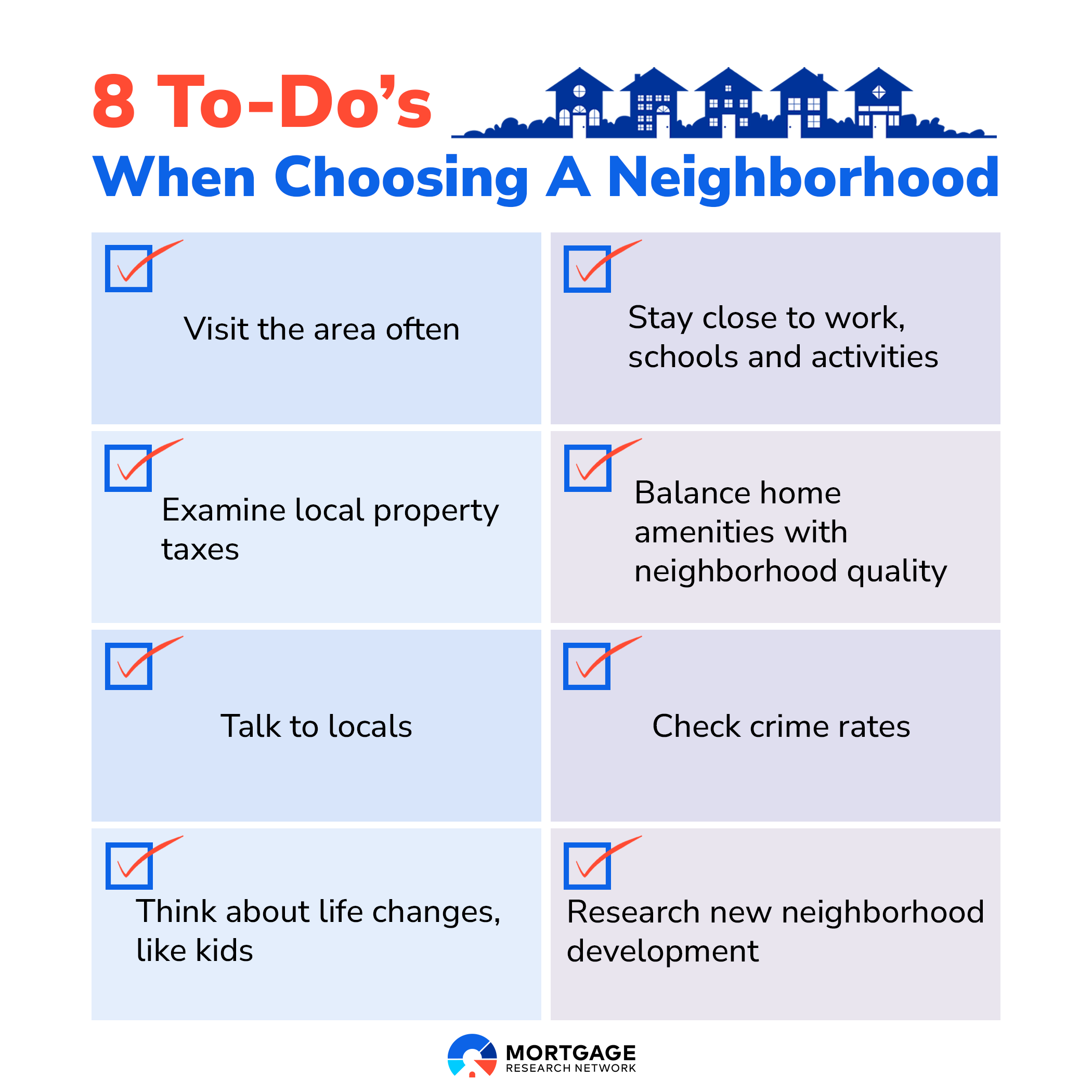
Tip 3: See The Home In Person
People don’t always realize how much psychology plays into your selections. It’s one thing to see a listing online that looks great, ticks all your boxes, and fits your price range. But pictures can be misleading. I’m a fan of going in person as soon as possible or, at the very least, doing a live video tour. The way you physically react to a space tells me more than any search filter ever could.
Your real estate agent might send you listings over text or email, or use a portal to share listings with electronically, and I love how convenient that is. But I do think it’s important to stand in the space you’re considering.
Buying sight unseen works only in very specific use cases — like new construction, or when someone has lived in the exact building and layout before. With certain long-term clients, I know exactly what works for them, so a FaceTime tour can work. But in general, you’re always going to want to view homes you’re serious about in person.
Tip 4: Don’t Forget About Your Must-Haves
The other thing that I’ve seen happen is people fall in love with a space, and they completely forget what they’ve told me about their long-term lifestyle shifts. I had a client who walked through a space and they thought it was amazing. They were like, “This is great. It's a location I really want to be in.” I said, “Okay, that's great. However, you told me both you and your partner work from home, plus you’re planning to move your parent in with you, and this place only has two bedrooms. Does that still matter to you?” I had to remind them of the long-term shifts they already told me about.
They said, “You know, that's actually a really good point.” So they decided that in some neighborhoods, they would be willing to compromise on space because it's a neighborhood they really want to be in, and that's a trade-off that's worth it. On the flip side, they would be open to other neighborhoods they wouldn't ordinarily consider if they were going to get substantially more space. But that was a reminder they needed when faced with something they instantly fell in love with.
You could argue I was talking myself out of a transaction, but no. I’m guiding them to a transaction that makes sense long-term. My job isn’t just to get you into a home — it’s to get you into the right home for your future.

Tip 5: Don’t Assume The House Is In Tip-Top Shape
When you start touring, you might not know what you should be looking for, and that’s normal. That’s why you have a real estate professional guiding you. Here’s what I suggest thinking about.
Since I’m based in New York and many of the properties my clients tour are condos and townhomes, I focus a lot on the interior of the home. I recommend looking at floors, walls, and ceilings, looking for imperfections — and signs of water damage in particular. If you can see it, it’s going to be much, much worse under the surface, and that could be a major problem down the road.
Tip 6: Make Plans To Use All the Space
Another thing we see often is, let's say, non-traditional spaces, as you often get in older buildings. When there’s a space that you're not quite sure what you would do with it, we should talk about it. You might be able to put it to good use as a workout area, for example. Or if there are properties with really high ceilings but not a lot of square footage, we can start talking about utilizing the vertical space, maybe doing some custom storage. Sometimes you have to think outside of the box.
Tip 7: Don’t Speak. The Seller Could Be Recording You
The one regret I see most often with clients is the negotiation. Buyers have shot themselves in the foot by how they behaved during negotiations.
My favorite thing to say now: Don’t say anything when you’re in the property. There may be recording devices. If you gush, that can be used as negotiation leverage. If you insult the property, the seller can hold that against you.
Basically, don’t talk in the home — observe. And take notes. We can text or use a shared note so you can react without saying anything inside the property. Keep everything close to the vest until you close.
Don’t say anything when you’re in the property. There may be recording devices. If you gush, that can be used as negotiation leverage. If you insult the property, the seller can hold that against you.
Tip 8: Plan For Life Changes
The most important thing in your house hunting process as a first-time buyer is to remember that you’re preparing for your future — and we don’t always know what that’s going to hold. I had a couple as a client 15 years ago; he was living in a studio, and she was living with a roommate. They were engaged and looking for the home they’d move into after they got married. Since it was going to be the two of them in New York City, they were looking at one-bedrooms. They didn’t know if they were going to have kids, but they figured if they did, they would move.
I said, “What if you have kids earlier than you thought? Let's see if there are apartments where, if you should happen to get pregnant, you could live there with the baby and then make the decision to move.”
I’m telling you, they stayed in that apartment for at least 10 years.
First they had their daughter. Then a few years later, they had a son. They renovated the apartment twice. They always thought they were going to leave and go to the suburbs. They ended up moving not even 20 minutes away, to a three-bedroom a couple of years ago because of Covid. Ultimately, they were able to stay in that space for such a long time because it gave them something to grow into.
Tip 9: Look At Homes That Aren’t Selling
House hunting is your chance to cut through the noise and find the right home for your life, your plans, and your budget. When homes are lingering on the market, you may have more negotiating power there. Use that to your advantage. Don’t assume something’s wrong — maybe it actually works perfectly for you.
Successful buyers communicate clearly, they’re open to refining criteria, and they show up prepared. After each property, recap the top three things you liked and didn’t like. Use every showing to refine your process and get closer to what matters most. None of us knows what the future holds, but you can set yourself up for success with a little planning ahead.