


Home tours aren't just walkthroughs. Looking past surface appeal to spot red flags – such as an awkward layout or signs of water damage – can save buyers time, money, and future frustration.
Touring a home seems simple, right? You walk through the property, maybe open a few closet doors, and admire the marble countertops. You either like it or you don’t. Well, not so fast.
I’ve done thousands of home tours over my 20 years in real estate, and I can tell you that most buyers are looking at the wrong things. Instead of seeing a home tour as a casual walkthrough or another step to check off your list, I consider it one of the most important fact-finding missions in house hunting.
What I’ve noticed over the years, though, is that when people fall in love with a home, they start to overlook some serious red flags. My job is to help you pinpoint those major issues so you can either leverage them to your advantage or use them as a reason to cross that property off your list.
Here’s how I tackle the top warning signs I see when touring properties with my clients.
Red Flags to Watch for When Touring a Home
Stains and Water Damage
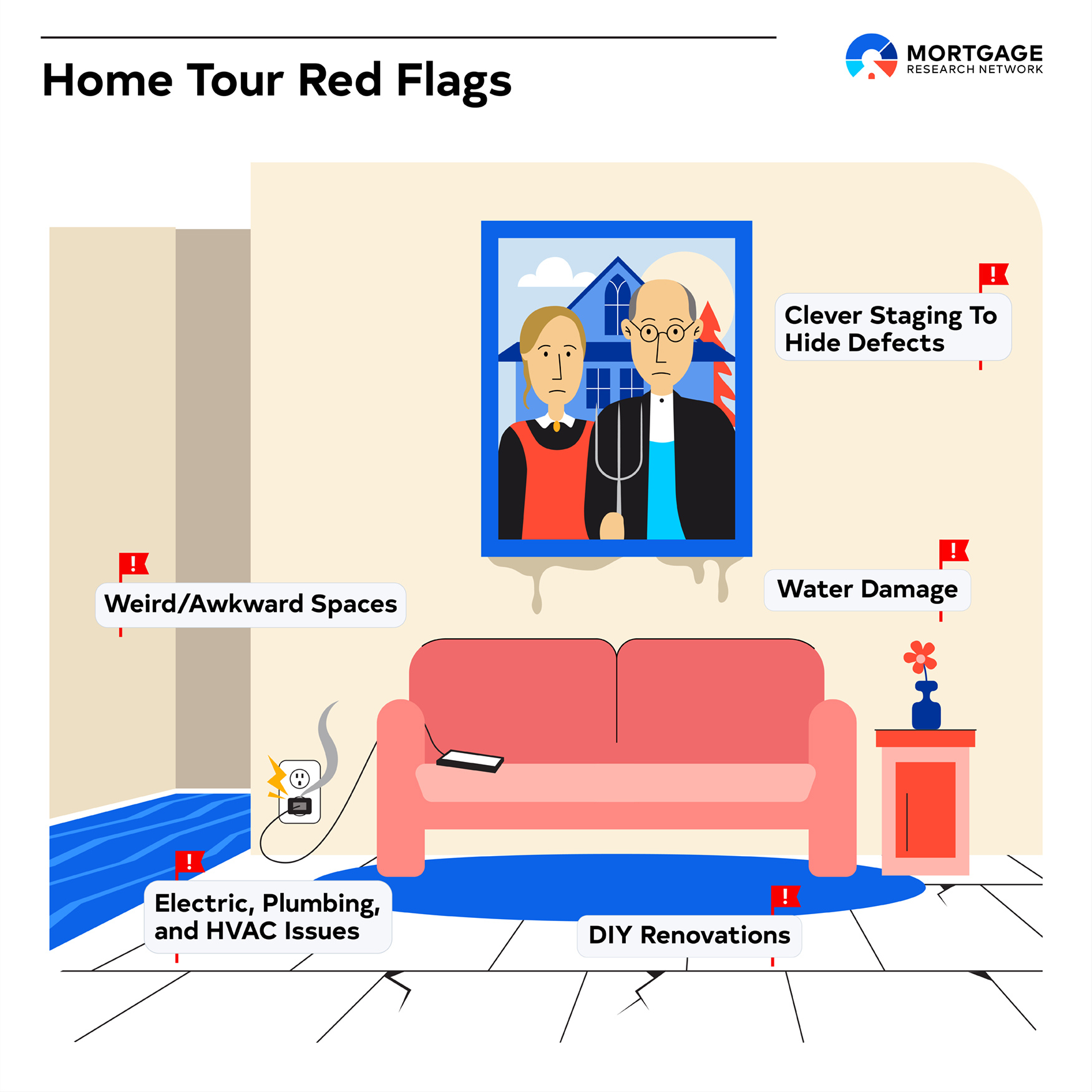
While you’re looking at the kitchen cabinets and deciding where the air fryer will go, I’m scanning the ceiling, walls, and floors. These are the top places where water damage shows up.
Water is one of the most expensive and complicated problems a homeowner can face. It can rot walls from the inside out and cause thousands of dollars in pricey repairs.
When we tour a home together, I’m looking for the signs of water damage:
Weird stains
Bubbling paint
Musty smells
Rippling floors
Even if you don’t catch it, I will. But instead of talking about it on the tour, what I might do is add a line to our shared Notes document. That way, we can chat about it later, where the sellers or their agent can’t hear us. I always try to stay quiet during home tours so we don’t give away any unnecessary fuel for negotiations.
Weird or Awkward Spaces
Another thing I’ll always notice during a home tour is when a property has an awkward layout. Nobody wants to pay for wasted space — but that’s what will happen if you don’t have a plan for that weird nook or corner.
In my experience, I've found that if you don’t immediately have an idea of how you’d use an awkward space or unusual layout, that’s usually a sign it’ll probably frustrate you later.
Wonky Electric, Plumbing, or HVAC
These systems are where the real money goes when things break — and they always break at the worst possible time.
I had a client once who woke up freezing one morning because his boiler had failed overnight while he was sleeping. He said, “I wasn't planning on doing this, but I clearly now need to invest in a new boiler, because it’s the middle of winter and I can't live like this.”
It’s always better to inspect these systems during the home tour, before they cause you a lot of expensive trouble. I also strongly recommend having an emergency fund that can help you cover these kinds of big-ticket emergencies if they do happen.
DIY Renovations
One small detail I like to check on is whether all existing permits are closed. In other words, if there was work done, is it up to code? Has it been completed and inspected?
The reason I check on this specifically when we’re ready to tour a home is because unpermitted work or poorly executed DIY renovations can derail a future transaction. Or you might find yourself having to spend a lot of money after closing to get things done properly. It’s best to go into it with eyes wide open so you know exactly what you’re dealing with.
Clever Staging
Staging can help show off a property to its best potential, but it can also be a distraction. Sometimes you have to look at what the staging is distracting you from.
It can also be tough for a buyer to envision their own belongings or possessions in that space, especially if it’s been really well-staged. During the home tour, you sort of fall in love with the idealized version in front of you instead of how you’ll actually be living.
One thing I tell my buyers is that if something is staged in the home and you love it, go ahead and ask whether it can be included as part of the purchase. Maybe you can even buy it separately.
In fact, when you're at the point that you are negotiating, there are some things the seller may have already decided are being included or left behind. Pictures, chandeliers, even TV mounting brackets.
You always want to confirm whether any of that stuff conveys. What if you fall in love with a beautiful lighting fixture, but then, when you come for your final walkthrough, it's not there; it has been replaced by something else. Better to spell it out clearly in the contract if it’s an item you really want.
Your Reaction
One of my favorite parts of being a real estate agent is touring homes with my clients. While you’re evaluating the home, I’m evaluating your reaction — whether the space lights you up or makes you want to run away.
I notice these cues sometimes before you even open your mouth: the way you smiled as you walked into the kitchen, or how your energy dropped when you opened the door to the bedroom.
Paint can be changed, furniture can be rearranged, but your instinctual reaction in a particular space tells me, on a gut level, whether you’ll actually be happy there.

Paint can be changed, furniture can be rearranged, but your instinctual reaction in a particular space tells me, on a gut level, whether you’ll actually be happy there.
Turning Red Flag Into Green Lights
The reason I always harp on red flags is that spotting problems ahead of time helps avoid a lot of heartbreak down the road.
Most people are risk-averse. If there's something that they feel is going to be too much of a challenge, it’s better to know that and make a plan for it up front.
As your agent, I’m here to help you negotiate from a place of strength. Sometimes what we thought was a deal-breaker actually turns out to be leverage — as long as we can pinpoint it ahead of time.
If the property has a red flag but is otherwise perfect, well, we can use that to your advantage. Sometimes that’s what it takes to get you into the right building or the right neighborhood, and on your way to owning the property that’s actually going to fit your lifestyle.