


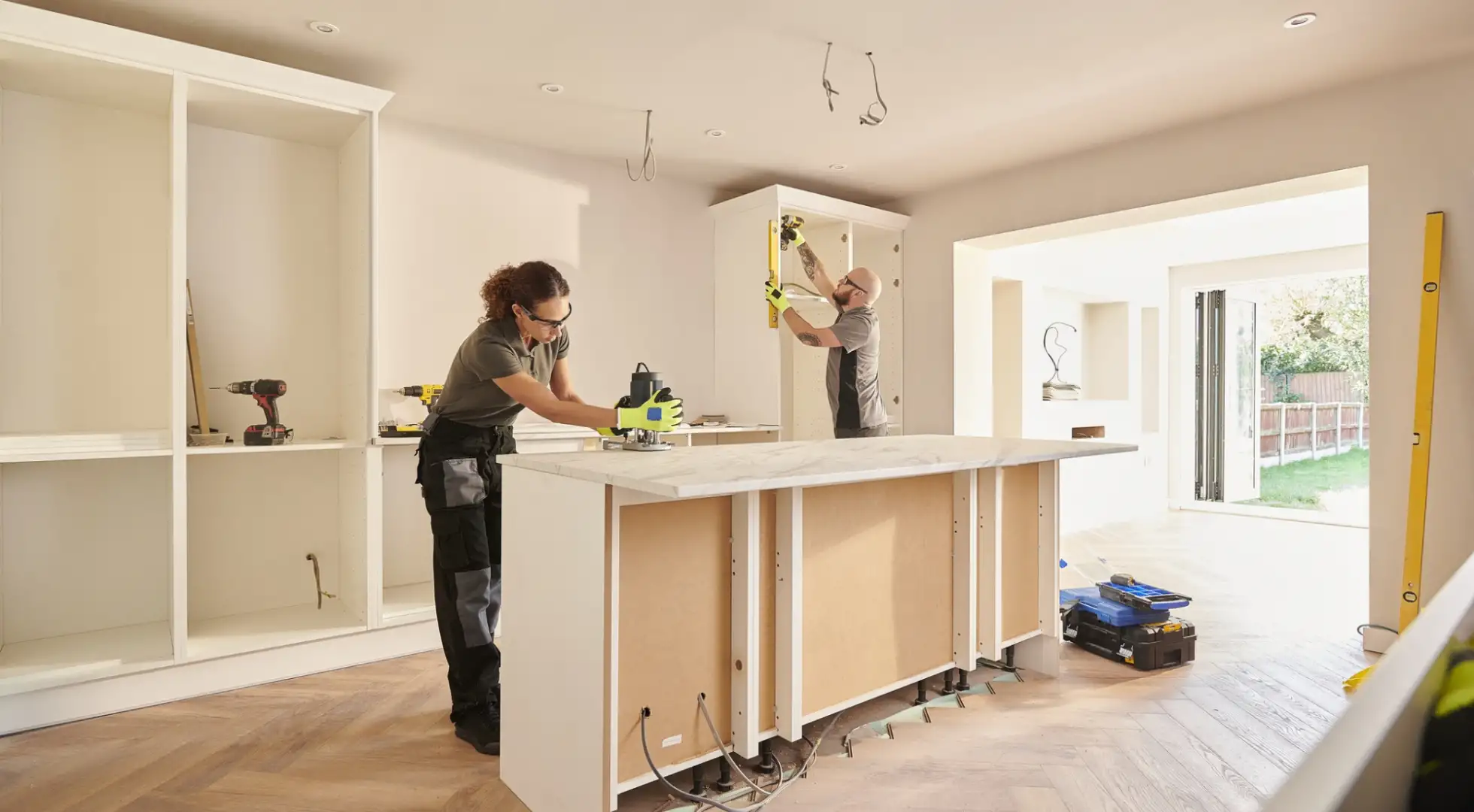
Home flipping is slowing, according to a March study from ATTOM, a leading provider of property data and real estate intelligence. Nationwide in 2025, some 297,045 single-family homes and condos were flipped, which was the fewest since 2020.
Back in 2020, it was the COVID-19 pandemic that slowed the process of flipping. This time, it seems to be squeezed profit margins that are deterring the companies and individuals who flip.
Why Profitability Is Down
Home prices have a big effect on the profitability of flipping. When those are rocketing higher, it's easy to make money. Even if flippers pay too high a price for the property or overspend their budget, rapidly rising home prices soon rescue them from almost any blunder.
However, things are very different when home prices are plateauing or falling. And they fell a little in 2025, according to the Federal Reserve Bank of St. Louis' (FRED's) median sales price of houses sold chart. They were at $405,300 in the fourth quarter of 2025, compared with $423,100 in the first quarter of that year.
Meanwhile, construction materials have become more expensive. FRED's producer price index for construction materials read 352.208 in February 2026, compared with 329.203 in February 2025. That's a roughly 7% inflation rate, way higher than consumer price rises.
As importantly, immigrants, both documented and undocumented, make up a disproportionately large part of the construction labor force. "The concentration of immigrants is particularly high in construction trades essential for home building, such as plasterers and stucco masons [61%], drywall/ceiling tile installers (61%), roofers (52%), painters (51%) and carpet/floor/tile installers (45%)," says the National Association of Home Builders using 2023 figures.
Mass deportations and documented immigrants' fear of wrongful detention may well have caused labor shortages in certain construction trades in some areas, many of which were already struggling to fill jobs. Naturally, labor shortages lead to higher wages for those available to work, and those translate into higher costs for construction companies, contractors, and flippers.
Falling home prices and rising costs for materials and labor are bound to adversely affect flippers' bottom lines.
A Way Ahead as Home Flipping Slowing?
"Flippers are having to get more creative to maintain profitability," said Rob Barber, CEO of ATTOM, in a news release. "That could include taking on older homes, as the median flipped property in 2025 was built in 1978, the oldest since we began tracking, along with tighter cost control and more disciplined renovation strategies."
That may well work for seasoned investors who have masses of experience and have built close relationships with suppliers and contractors. However, it may (and perhaps should) deter newbies who have little idea of the pitfalls they could face.
Still, flippers who are able to be highly mobile might still be able to make good profits. That's because flipping remains a thriving business in some parts of the country.
Geographical Variations
ATTOM found that the home flipping business slowed most in Salisbury, MD; Tallahassee, FL; Lafayette, IN; Evansville, IN; and Warner Robins, GA.
But conversely, flipping grew in other places, most notably Binghamton, NY; Boulder, CO; Greeley, CO; Lexington, KY; and Scranton, PA.
So, despite the nationwide trend, pockets of the country can still provide profitable opportunities for flipping.
"The largest increases in profit margins were in Peoria, IL (up from 61.2% in 2024 to 91.4% in 2025); Huntington, WV (up from 50.6% to 77.2%); Lake Charles, LA (up from 121.3% to 146.2%); Cedar Rapids, IA (up from 29.7% to 49.6%); and Tuscaloosa, AL (up from 9.3% to 26.4%)," says ATTOM.
We'd suggest that, before embarking on a flipping project, readers should carefully research the housing market in which they plan to operate. And, if the local market is a tough one, consider relocating to somewhere where home flipping isn't slowing because highly profitable opportunities do still exist in some areas.