


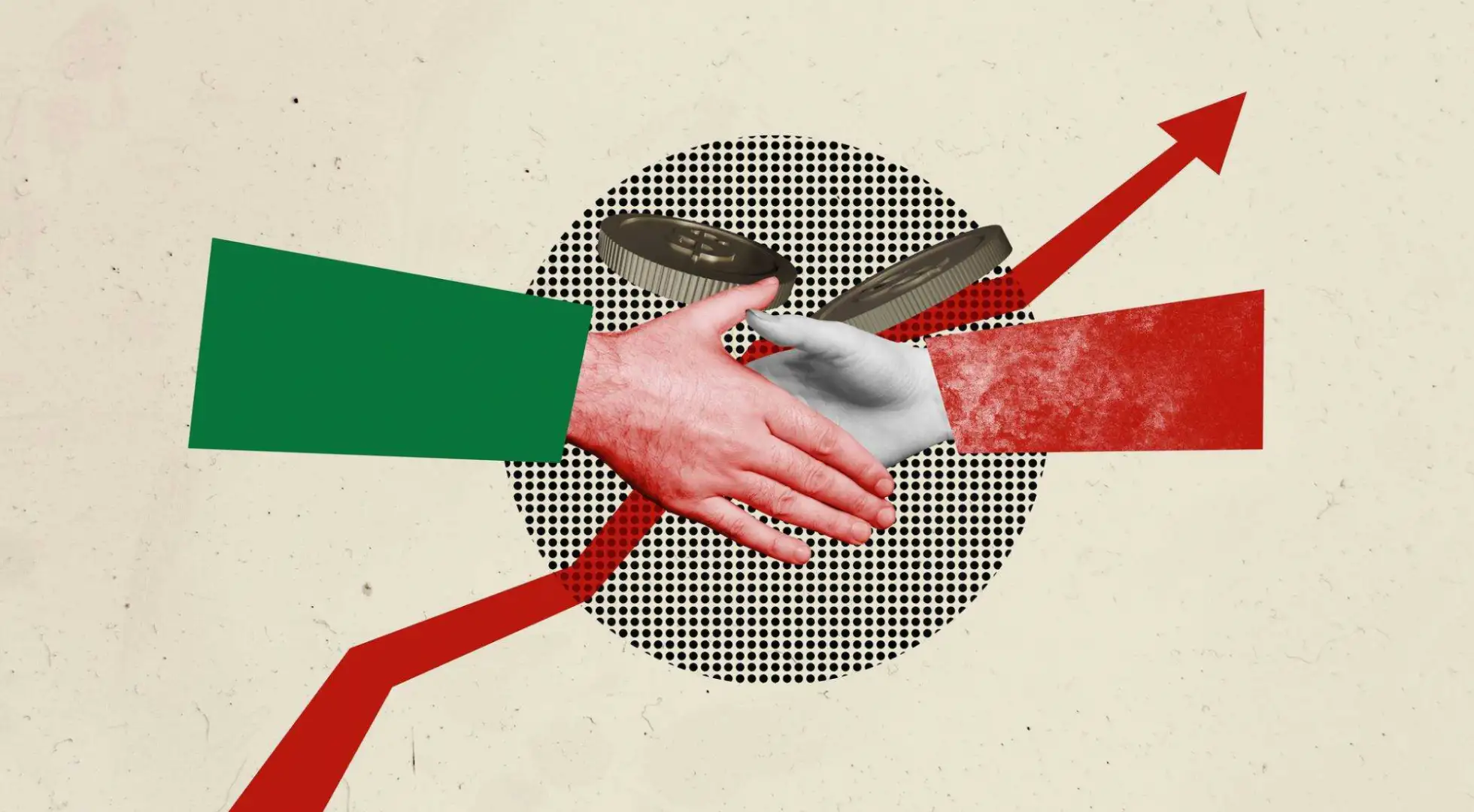
For the first time, Fannie Mae will accept cryptocurrencies instead of dollar down payments. The crypto must be put in a trust (a bit like a mortgage escrow) for the duration of the loan, after which it is returned to the owner.
"The mortgage-finance giant Fannie Mae will soon accept so-called crypto-backed mortgages for the first time, the latest expansion of cryptocurrencies into mainstream financial transactions," reported The Wall Street Journal on Mar. 26.
There are three main advantages for borrowers. First, they don't have to sell their crypto assets to get the dollars they need for the down payment. That way, they retain any further growth in the value of their currency. Secondly, they avoid any capital gains tax liabilities that would arise were they to sell now. And thirdly, they remain as cash-rich as they currently are.
How These Crypto Mortgages Will Work
For Fannie, there is still a dollar down payment. The borrower takes out a second loan for that, which is secured by the crypto. In other words, the crypto acts as collateral for the second loan, which is in dollars.
If the value of the cryptocurrency in trust falls below the amount of the second loan, that isn't a problem, and there are no margin calls. Only if the borrower falls behind with payments on the first mortgage or second loan will the lender come knocking.
Crypto mortgages have been around for a while. But this is the first time a government-sponsored enterprise (GSE) such as Fannie, which is heavily regulated by the Federal Housing Finance Agency (FHFA), has been able to back them.
Fannie doesn't lend to consumers. Instead, it undertakes to buy mortgages from lenders, providing the loans conform to Fannie's rules. That's why GSE mortgages, which are a type of conventional loan, are called "conforming" mortgages.
For more information on the situation preceding Fannie's announcement, read Can Homebuyers Use Crypto As a Mortgage Down Payment?
Who Will Benefit?
Anyone with acceptable crypto holdings can take advantage of the new offering. But it may benefit young home buyers more, simply because they're more likely to have such balances.
"Homeownership has traditionally favored older generations and is increasingly out of reach for younger Americans, due largely in part to the divergence of home prices versus income," says BusinessWire. "According to Coinbase’s 2025 State of Crypto Report, 45% of younger investors say they already own crypto, compared with 18% of older investors, making younger generations 2.5x more likely to be token holders."
Surely, helping younger people to become homeowners can only be a good thing. Given that the typical age of first-time home buyers reached an all-time high of 40 years in 2025, according to the National Association of REALTORS®, younger generations deserve a leg-up.
Which Lenders? Which Cryptocurrencies?
Initially, Fannie will deem only loans from Better Home and Finance using Coinbase Global currency as conforming with its new rule. Coinbase partners with USD Coin, which is a "stablecoin," a regulated cryptocurrency, pegged to the U.S. Dollar.
Other lenders will likely develop their own products over time and be added to the list. And those lenders may work with other cryptocurrency platforms.
However, we suspect that Fannie will insist that only stablecoins should be used as collateral for down payments. Other cryptocurrencies may be regarded as too volatile.
Fannie Mae's little brother is Freddie Mac. It, too, is a GSE regulated by the FHFA.
Typically, a change in government rules that allows Fannie to do something also applies to Freddie. So, we may soon see a new cryptocurrency product from Freddie.
What Could Go Wrong?
Under the new rules, Fannie (and therefore the taxpayer) appears insulated from cryptocurrencies' volatility. Typically, the mortgage lender shoulders the risk for the second loan that pays the down payment.
That's because the GSE buys the first mortgage, not the second loan.
Yes, there's a slippery slope risk. The government is heavily invested in promoting cryptocurrencies and may be tempted to further loosen mortgage rules.
For example, it could extend eligible sources of collateral to include more volatile currencies, which could threaten the stability of participating mortgage lenders. Or it could allow GSEs to buy the first mortgage and second loan together as a package. That could put taxpayers at risk.
But, as it stands, the current rule seems to have more upsides than downsides.