


Many renters plan to be homeowners one day. And those saving for a down payment and closing costs often cut their outgoings wherever they see the opportunity. But skimping on your renters insurance may be a false economy, according to a new report from the Harvard Joint Center for Housing Studies (HJCHS).
Risk Management
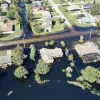
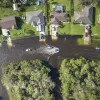
The Harvard study is particularly concerned about renters being left vulnerable to the financial impact of natural disasters. Roughly 41% of all occupied rental units are in counties that the Federal Emergency Management Agency (FEMA) regards as at high risk. That's about 18 million rental homes nationwide.
You can check whether your location is at high risk using FEMA's National Risk Index maps.
The main purpose of a renters insurance policy is to protect personal possessions within a building owned by a landlord. But a good one should also protect tenants from other costs incurred when a rental unit becomes uninhabitable.
This coverage is called "additional living expenses," usually said as ALE.
"Many people don’t know that Additional Living Expenses coverage ... is included in a renters insurance policy," says the Insurance Information Institute (III). "If your home is destroyed by a disaster that your policy covers and you need to live elsewhere, renters insurance covers your additional living expenses. Policies will generally reimburse you the difference between your additional living expenses and your normal living expenses. ALE covers hotel bills, temporary rentals, restaurant meals and other expenses you have incurred while your home is being rebuilt."
How many renters have found their home down payment savings eaten away by those sorts of costs after a natural disaster?
How Much Is Renters Insurance?
Online insurance company Lemonade reckons the average cost of renters insurance in August 2025 was $23 a month. But it can be worth paying a little more than that for a policy that provides the coverage a tenant needs.
In particular, many policyholders get caught out by cheap policies that provide "actual cash value" cover on possessions. This pays only the second-hand value of lost items — not much more (if any more) than you could get for the goods at a garage sale or when selling them on eBay.
Many renters must regret not opting for "replacement cost" coverage, which, on average, costs only about 10% more than the basic premium, according to the III. That provides the money for buying brand-new replacements of goods lost during an insured event.
"Insured event" is an important concept. "Standard renters insurance protects your personal belongings against damage from fire, smoke, lightning, vandalism, theft, explosion, windstorm, water and other disasters listed in the policy," says the III. But not for flooding or earthquake events.
"Flood coverage is available from the National Flood Insurance Program [NFIP] and a few private insurers. You can get earthquake insurance as a separate policy or have it added as an endorsement to your renters policy, depending on where you live," it says elsewhere on the III's website.
As with other forms of insurance, policyholders can opt to lower their premiums by agreeing to pay a deductible. Supposing a policy covers $5,000-worth of goods. If the tenant decides to pay the first $500 of each claim herself, she could receive a maximum of $4,500 on a total-loss claim. But she'd be rewarded for shouldering some of the risk with a lower premium.
Renters should think through what coverage they need and then comparison shop between different insurers for the lowest quote that meets their requirements.
The Flood Trap
A renters insurance policy won't protect against risks it doesn't cover. And those include flooding.
The NFIP does protect against flooding risks, but only for the loss of possessions. It won't cover additional living expenses after a flood. Those who are likely to need ALE following a flood should talk to their insurers or mortgage brokers to see if there's a workaround open to them.
FEMA May Not Ride to the Rescue This Time
"Federal supports, such as FEMA’s Individual Assistance Program, can provide resources to renters for temporary housing in the wake of presidentially declared disasters, but such resources are not always available due to program eligibility criteria," writes Steve Koller, a postdoctoral fellow in climate and housing at the HJCHS and the report's author. "Following Hurricane Helene in 2024, more than 26,600 displaced renter households received support for 'transitional sheltering assistance' (i.e., motel or hotel stays) from FEMA. More than 12,100 received rental assistance to pay for alternate rental housing. However, among all renter households registering for FEMA assistance in connection with Hurricane Helene, only 2.6 percent reported having any type of property insurance. This suggests many renter households can expect neither an insurance payout nor federal support during smaller-scale disasters which do not qualify for FEMA aid."
However, this year, FEMA itself has seen its funding cut. "As of October 2025, at least 12 state requests for aid had been denied since [January], over a dozen approvals were still pending, and denials of specific parts of requests — such as Hazard Mitigation Assistance (HMA) or an increase in federal cost sharing — were piling up," says the Center on Budget and Policy Priorities.
FEMA's staff has been cut by 9.5% this year, and its acting administrator resigned last month, according to the Center. So, it's probably unwise for those affected by a natural disaster to rely on timely federal assistance, while state-level responses can be patchy.
What Should Happen Next?
Koller has ideas for how vulnerable renters could be better protected in the future:
- Improvements to buildings that reduce physical risk
-
New financial products designed specifically for renters
-
Updates to disaster-assistance programs