

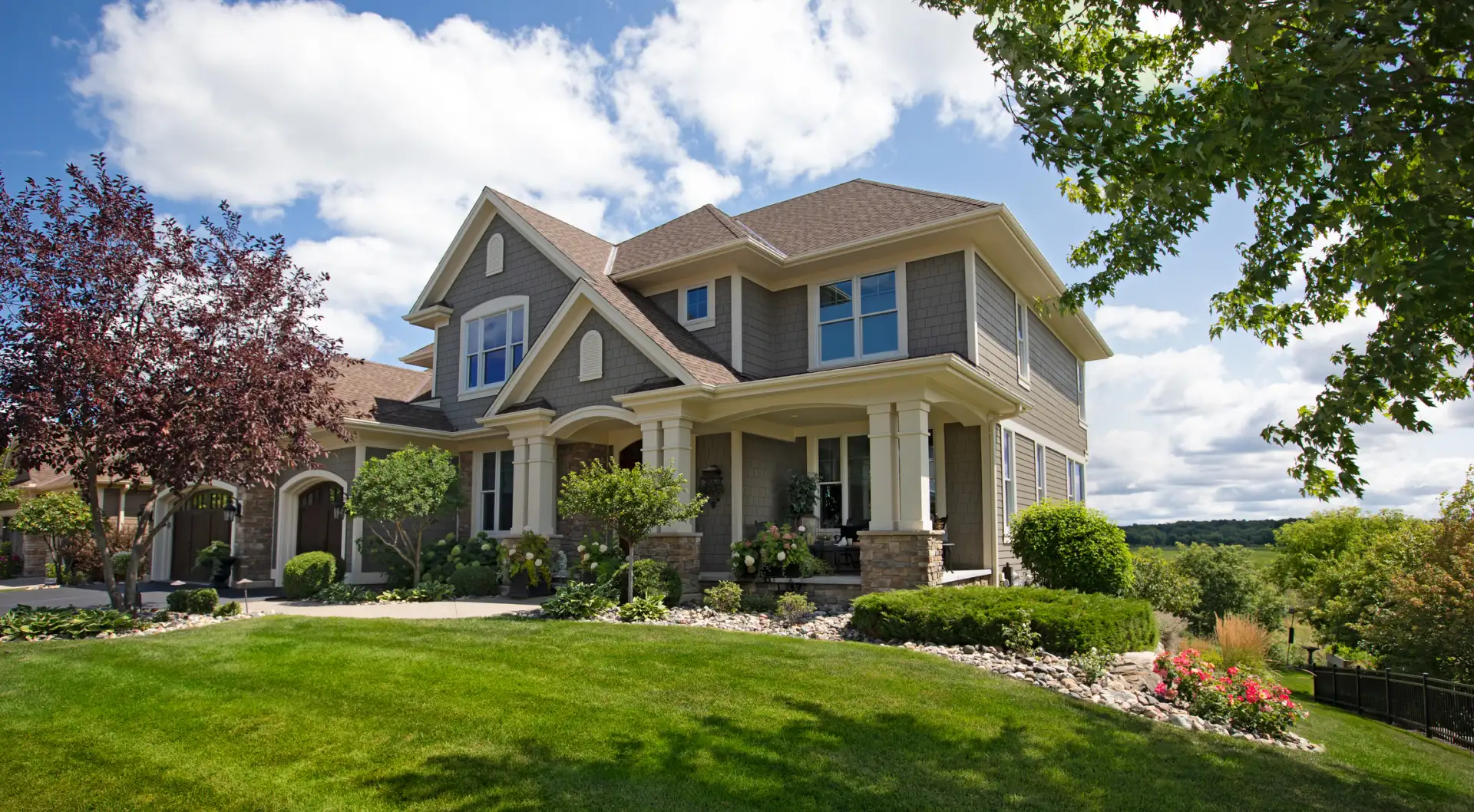
A $1 million conventional loan isn't uncommon and is available in over 100 high-cost areas in the U.S.
With the rapid rise of home prices over the past few years, more buyers than ever are seeking out mortgages of $1 million or higher. Many opt for jumbo loans, but getting a Fannie Mae- or Freddie Mac-backed conventional loan greater than $1,000,000 is possible in over 100 areas of the country.
Here’s how to get a $1 million conventional loan.
Conventional Loans Over $1 Million Are Available in Many Areas
In most areas, the lending limit for single-unit conventional loans is $832,750. The Federal Housing Finance Agency (FHFA) sets this maximum loan amount and reassesses it annually based on changes to the FHFA House Price Index.
In some high-cost areas, however, the FHFA allows for larger loans. In these communities, the maximum loan equals 115% of the median home value. This can be as high as $1,249,125, which is 150% of the baseline limit.
Loans larger than the standard limit are called high-cost or high-balance loans. You'll sometimes see them referred to as super-conforming as well.
There are over 100 high-cost areas throughout the country where you can get a single-unit conventional loan of more than $1 million, including the entirety of Alaska, Hawaii, Washington DC, Guam, and the US Virgin Islands.
Tip: Conventional loan limits are on loan amount, not purchase price. You could buy a $3 million home in an area with a $1 million loan limit by putting $2 million down.
$1 Million Conventional Loans for 2-4 Unit Properties Are Available Everywhere In the U.S.
Conventional loans aren't just limited to single-family homes; they can also be obtained for residential properties with up to four units. Baseline limits for 2-4 units are above $1 million in all areas of the U.S. as of 2026.
Suppose you're eyeing a 2-, 3-, or 4-unit property. In that case, you can take out a conventional loan for more than $1,000,000 anywhere in the United States.
| Units: | Conventional Loan Limit (Baseline): |
|---|---|
| Two | $1,066,250 |
| Three | $1,288,800 |
| Four | $1,601,750 |
Getting a 2-4 unit property with a conventional loan requires a
larger down payment than a single-family home or condo. However, new
rules state you can put as little as 5% down.
Conventional loans require private mortgage insurance (PMI) with a down payment of less than 20%.
What About $2 Million Conventional Loans?
Assuming you qualify, you can get a $2 million mortgage on a four-unit property in over 100 areas around the U.S. Lending guidelines allow for a maximum loan amount of $2,402,625 for four units. Putting down the minimum required 25% in these markets would let you purchase a fourplex valued at about $3.1 million with a conventional loan.
How To Get a $1 Million Conventional Loan
Even though conventional loans allow you to borrow over $1,000,000 to buy a single-unit property in certain areas, approval can be more complicated than loans at or below the standard limit of $832,750.
A few conditions on high-balance loans include:
Loans must be eligible for Fannie Mae software-based underwriting system. If this system can’t approve the loan, a human is not allowed to override the decision (a.k.a. a “manual underwrite). However, Freddie Mac guidelines allow manually underwritten borrowers to qualify for high-cost loans.
All borrowers must have a credit score to qualify. Unlike standard-limit loans, you cannot use a nontraditional credit history.
High-balance loans have a max LTV of 95%, even when using low-down-payment options like HomeReady, which typically allows an LTV of up to 97%.
Income Needed for a $1 Million Loan
Even if you’re in an area that allows $1 million conventional loans, you’ll still need to qualify with an income that supports your monthly payments.
Here are a few example scenarios, calculated at an example 7% interest rate, and how much income you’d need to support each one:
| Loan Amount | $1,000,000 | $1,500,000 | $2,000,000 |
|---|---|---|---|
| Principal & Interest | $6,653 | $9,980 | $13,306 |
| Taxes (est.) | $1,000 | $1,500 | $2,000 |
| Insurance (est.) | $292 | $438 | $583 |
| PMI (est.) | $417 | $625 | $833 |
| Total Monthly Payment | $8,361 | $12,542 | $16,723 |
| Monthly Income Required | $27,870 | $41,807 | $55,744 |
| Annual Income Required | $334,440 | $501,684 | $668,928 |
Monthly payments are estimated with the MRN Conventional Loan Calculator. Your costs may vary.
Income requirements are based on a DTI of 40% with a 30% housing expense ratio. All figures are for example purposes only.
Advantages of a Conventional Loan Over a Jumbo Loan
While many buyers looking to purchase a $1,000,000-plus property may find few lending options apart from a jumbo loan, those in high-cost areas will likely be better off with a high-balance conventional mortgage.
A few of the advantages of high-cost conventional loans over jumbo loans are:
Lower Down Payment Requirements: You can get a super-conforming loan with as little as 5% down. While there are no industry-wide guidelines for jumbo loans, you can expect to contribute a minimum of 10%.
More Flexible Credit Score: Conventional loans don't have a set minimum credit requirement, although some lenders may look for a score of 620 or higher. Lending requirements on jumbo loans are generally much tighter, with most lenders seeking a credit score of 700 or above.
Reserve Requirements Are Lower: With a conventional loan, you may be asked to have funds in reserve equal to six months of mortgage payments. In some cases, however, maintaining a reserve may not even be necessary. With jumbo loans, it is not uncommon for lenders to expect borrowers to have up to 18 months of payments on standby after paying the down payment and closing costs.
Conventional Limits Have Risen in 2026
FHFA has increase conforming loan limits for 2026. conventional loan limits will likely rise even further in 2026. In 2025, the conventional loan limit was $806,500, but rose 3.26% to $832,750 in 2026.
Get a $1,000,000 Loan Without Using Jumbo
With 100+ high-cost areas allowing single-unit conventional loans above $1 million (up to $2 million on some properties), making a big purchase without a jumbo mortgage is easier than ever. If you're seeking a high-balance loan, get in contact with a mortgage professional experienced in super-conforming and jumbo loans. These lenders can help you connect with the mortgage option that best fits your high-cost purchasing plans.