

The average 30-year fixed rate mortgage was 6.97% yesterday, unchanged since the day before. The 15-year fixed mortgage rate stood at 6.17%, the same as one the day before. The 30-year FHA mortgage averaged 6.37% yesterday, having stayed the same. Meanwhile, the 30-year jumbo mortgage rate was 7.1%, reflecting no change.
The bigger picture
Last week was a horrible time for mortgage rates. Our favorite source (ICB) says the average 30-year fixed-rate mortgage rate started the week at 6.792% and ended it at 6.968%. The drivers of the increase piled up, but mainly were bad inflation data, worse news from the Middle East, and higher oil prices, which were still rising overnight.
We hope this week will be better, although pressure on oil prices looks likely to remain. And there are two red flags on Wednesday. First, the Federal Reserve will announce whether it will hike interest rates that day, and most think it will. And, secondly, we're due retail sales data that morning.
Scroll on down for much more on the forces affecting mortgage rates today. No economic reports are scheduled for today.
👉Stay ahead of the market. Subscribe to the Mortgage Research Network Podcast
Mortgage Rate Trends: Past 90 Days
Purchase Rates
| Loan Type | Rate | APR | Daily Change | Monthly Change |
|---|---|---|---|---|
| 30-Year Fixed | 6.97% | 7.01% | +0% | +0.34% |
| 15-Year Fixed | 6.17% | 6.24% | +0% | +0.38% |
| 30-Year Fixed FHA | 6.37% | 7.58% | +0% | +0.34% |
| 30-Year Fixed VA | 6.45% | 6.61% | +0% | +0.34% |
| 30-Year Fixed USDA | 6.41% | 6.58% | +0% | +0.36% |
| 30-Year Fixed Jumbo | 7.1% | 7.12% | +0% | +0.37% |
| 5/6 Year ARM | 6.43% | 6.53% | +0% | +0.2% |
Refinance Rates
| Loan Type | Rate | APR | Daily Change | Monthly Change |
|---|---|---|---|---|
| 30-Year Fixed | 7.03% | 7.06% | +0% | +0.33% |
| 15-Year Fixed | 6.16% | 6.22% | +0% | +0.4% |
| 30-Year Fixed FHA | 6.35% | 7.55% | +0% | +0.3% |
| 30-Year Fixed VA | 6.51% | 6.6% | +0% | +0.38% |
| 5/6 Year ARM | 6.44% | 6.5% | +0% | +0.29% |
What's coming up?
Although economic reports are usually the main drivers of changes to mortgage rates, they're not the only ones. The general mood in markets and economically consequential news can also affect those rates. News items concerning the war, employment, inflation, tariffs, and deficit funding are especially influential at the moment.
The Fed
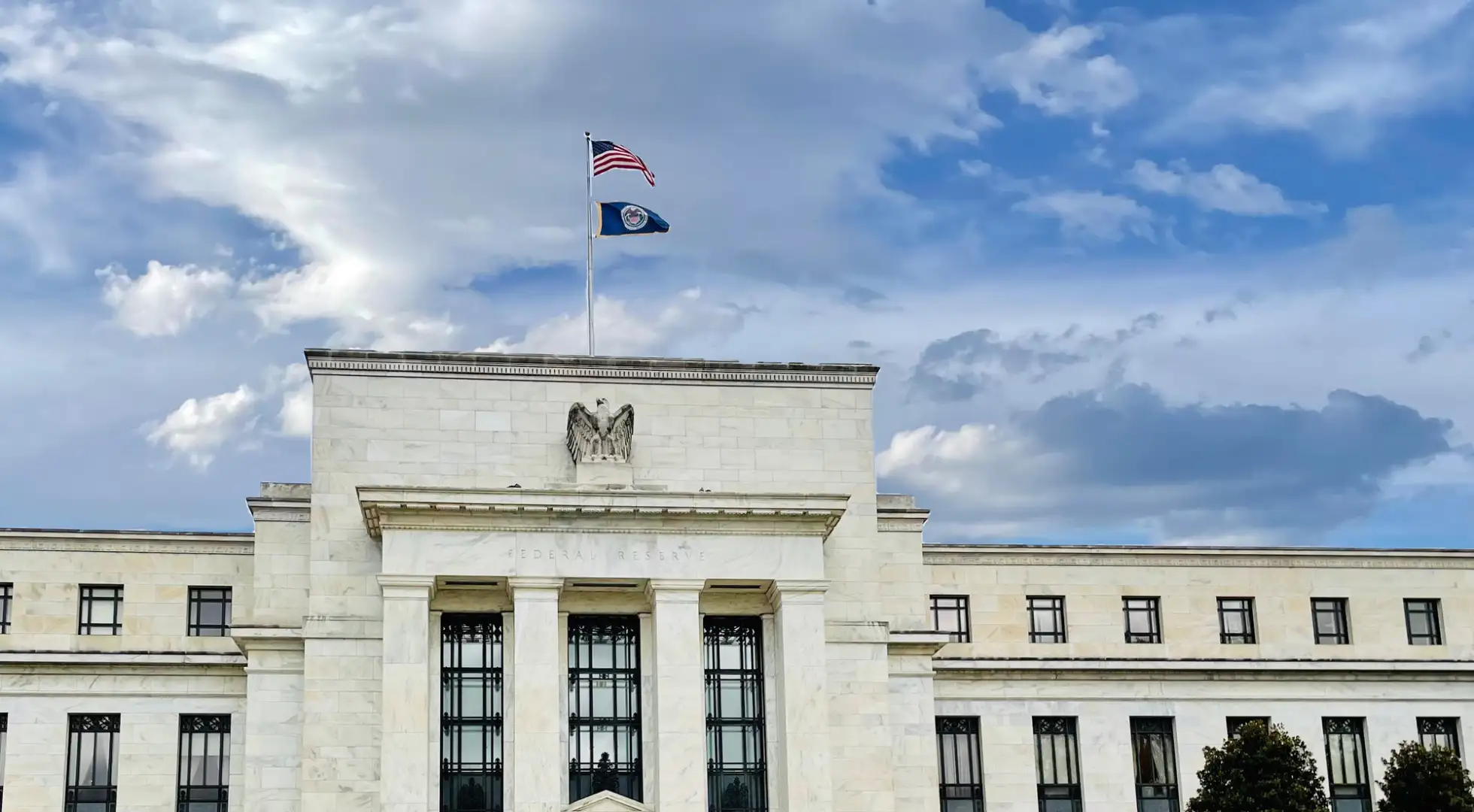
The Federal Reserve's rate-setting body (the Federal Open Market Committee or FOMC) left general interest rates unchanged at its last meeting on Jul. 29, as many expected. However, most specialist investors now think a hike is likely at the next FOMC meeting on Wednesday, according to the CME FedWatch tool.
The FedWatch tool yesterday soared to an 86.7% chance of a rate hike following Wednesday's meeting, way up from the 71.3% reading last Thursday. A month ago, those odds were 33.1%.
We think a small hike remains a sensible expectation for Wednesday. The prolonged partial closure of the Strait of Hormuz has apparently fueled inflation, and supply issues in the Middle East are getting worse rather than better. The main tool the Fed uses to rein in inflation is rate hikes.
We doubt that a 25-basis-point (0.25%) increase on Wednesday will have much effect on mortgage rates because almost everyone is expecting one. And they will have traded ahead of the announcement in anticipation of such a decision.
Things might be different if the Fed surprises markets. If the FOMC leaves general rates unchanged, that could be good for mortgage rates. However, a larger-than-expected rise of, say, 50 basis points (0.5%), might send mortgage rates sharply higher.
The FOMC doesn't directly set new fixed-rate mortgage rates. But the
factors that influence its decisions (and to a lesser extent the
decisions themselves) certainly do move those rates, usually in advance
of Fed rate-change announcements.
The war and mortgage rates
For the first time in a month, the U.S. mounted airstrikes on Iranian military targets in the small hours of Aug. 31, and followed up with bigger attacks the following afternoon. Iran retaliated against both waves, and intermittent airstrikes have continued on both sides ever since.
Over the Labor Day weekend, both sides again escalated tensions, sending oil prices higher on most days since. Last night, the price of global benchmark Brent Crude was still well over $100 a barrel.
On Sep. 11, Saudi Arabia shut down its major East-West pipeline, which it had been using to bypass the Strait of Hormuz, following an airstrike on it. "The incident comes amid a major advance by the Iranian-backed Houthi rebels in Yemen, putting more pressure on global oil shipping routes as the US-Iran war stretches into its seventh month," said the BBC.
Peace talks with Iran and mediators had already stalled before recent escalations, and President Donald Trump had adopted a new strategy of economic warfare on Tehran. "Treasury Secretary Scott Bessent said the U.S. is launching a new campaign to isolate the Iranian regime, warning that countries and companies that do business with Tehran will face the wrath of the Trump administration," The Wall Street Journal reported on Aug. 24. Some think that initiative has turned out to be a damp squib, but it's still early days.
Iran is certainly in a weak position economically, and waiting for it to buckle may have been a smart way to resolve the conflict. However, markets remain anxious for a rapid reopening of the Strait of Hormuz.
The war, oil prices, inflation and markets
Mortgage rates respond to war news because a prolonged closure (or partial closure) of the Strait of Hormuz could again choke off 20% of the world's oil supply, putting additional pressure on gas, diesel, fertilizer and many other prices. It would take years to build the infrastructure necessary to bypass the Strait completely.
"Vessel transits at the Strait of Hormuz fell to seven on Thursday from 11 the previous day, preliminary ship-tracking data showed on Friday, well below the 10-day average of 15," reported Reuters on Sep. 11. Before the war began, such traffic averaged more than 100 ships daily.
Strategic petroleum reserves in the U.S. and elsewhere globally are now at multi-decade lows, meaning there's less room to cushion consumers from rising gas prices. It may not feel like it, but this method of suppressing pump prices has been in place almost since the start of the conflict. And some observers worry that it will grow increasingly difficult to access remaining inventory for technical extraction reasons.
The U.S. Energy Information Administration says strategic petroleum reserve crude inventories fell to 285,360 million barrels for the week ending Sep. 4, marking the lowest level since 1983. The reserve stood at 415,064 million barrels before the Iran conflict began.
Meanwhile, many oil refineries in the Middle East and Russia are out of commission due to damage from the separate wars involving Iran and Ukraine. That began by sending oil prices lower on most days — though much less so recently. Still, why buy crude oil when you can't refine it?
Unfortunately, that has so far translated into gas prices that are significantly higher than a month ago, alongside record-high diesel prices. That's because a lack of refining capacity exacerbates rather than moderates supply issues for consumers and businesses, while demand remains fairly steady.
In his Substack post on Aug. 13, Nobel-prize-winning economist Paul Krugman backed up what we've been saying for some weeks. He referred to the "crack spread," which is the difference between the price of a barrel of crude oil and that for a barrel of "cracked" (aka refined) oil products, which he said had exploded by about $35 since the start of the Iran conflict.
"So while the price of a barrel of crude is up around $25, the price of the products refined from that barrel is up about 25+35=60 dollars per barrel," wrote Krugman.
Why? "The shortage of refining capacity has, in turn, held crude prices down: Buyers aren’t willing to pay extremely high prices for crude oil they can’t refine," continued Krugman. "Or to put it a different but equivalent way, the cutoff of oil shipments through the Strait of Hormuz in effect required a large rise in global oil prices to ration demand, but much of that rationing has taken place through a rise in the crack spread rather than a rise in crude oil prices."
Of course, any sudden good news from the Middle East could still send mortgage rates tumbling, regardless of that day's economic reports. Unfortunately, sudden bad news could — as we've seen in recent days — send them higher.
Why bond markets act differently from stock markets
Mortgage rates are largely dictated by the yields on a type of bond, the mortgage-backed security (MBS). So, we focus on bond markets.
On May 7, The New York Times explored why stock markets and bond markets have been behaving so differently from each other since the start of the conflict in the Middle East.
Investors in stocks have been wagering that U.S. companies will continue to generate large profits during the conflict. And the stock market typically cares only about whether dividends and company values will continue to rise.
"But the bond market is another matter," said The Times. "Bond traders have maintained a much sharper focus on risk. Yields remain correlated with shifts in the price of oil. As oil prices have spiked and inflation has risen, yields have risen and bond prices, which move in the opposite direction, have fallen."
More recently, bond yields (and mortgage rates) have risen on concerns about the level of government debt, too.
Mortgage rates today
There are no economic reports on today's MarketWatch economic calendar.
What's next?
This week's big event is the FOMC's rate announcement on Wednesday. We're also due retail sales data for August that day.
Other economic reports due during the week tend to have little or no impact on mortgage rates.