

The average 30-year fixed rate mortgage is 6.66% today, a decrease of 0.05% since yesterday. The 15-year fixed mortgage rate stands at 5.83%, down by 0.04%. The 30-year FHA mortgage now averages 6.07%, having dropped by 0.02. Meanwhile, the 30-year jumbo mortgage rate is 6.78%, reflecting a decrease of 0.01%.
The bigger picture
Last week, when The Wall Street Journal previewed today's big event, it wrote: "Minutes to the U.S. Federal Reserve’s meeting in July are due on Wednesday and could give clues as to whether interest rates might rise in September. Weaker-than-expected U.S. jobs data combined with a slight reduction in inflation have caused investors to pare back their expectations for when the Fed will hike rates."
However, by yesterday afternoon, The Journal was sounding less bullish: "A selloff in global bonds is driving up borrowing costs for governments, businesses and families across the developed world. Wall Street sees no end in sight.
"Bond yields are at 19-year highs, and investors are blaming the rout on everything from the continuing U.S.-Iran conflict, which has stoked inflation worries, to the deluge of tech-company bonds vying for debt funds’ cash," continued yesterday's Journal story. "They are also anxious about budget deficits and a lack of clarity from a new Federal Reserve chairman.
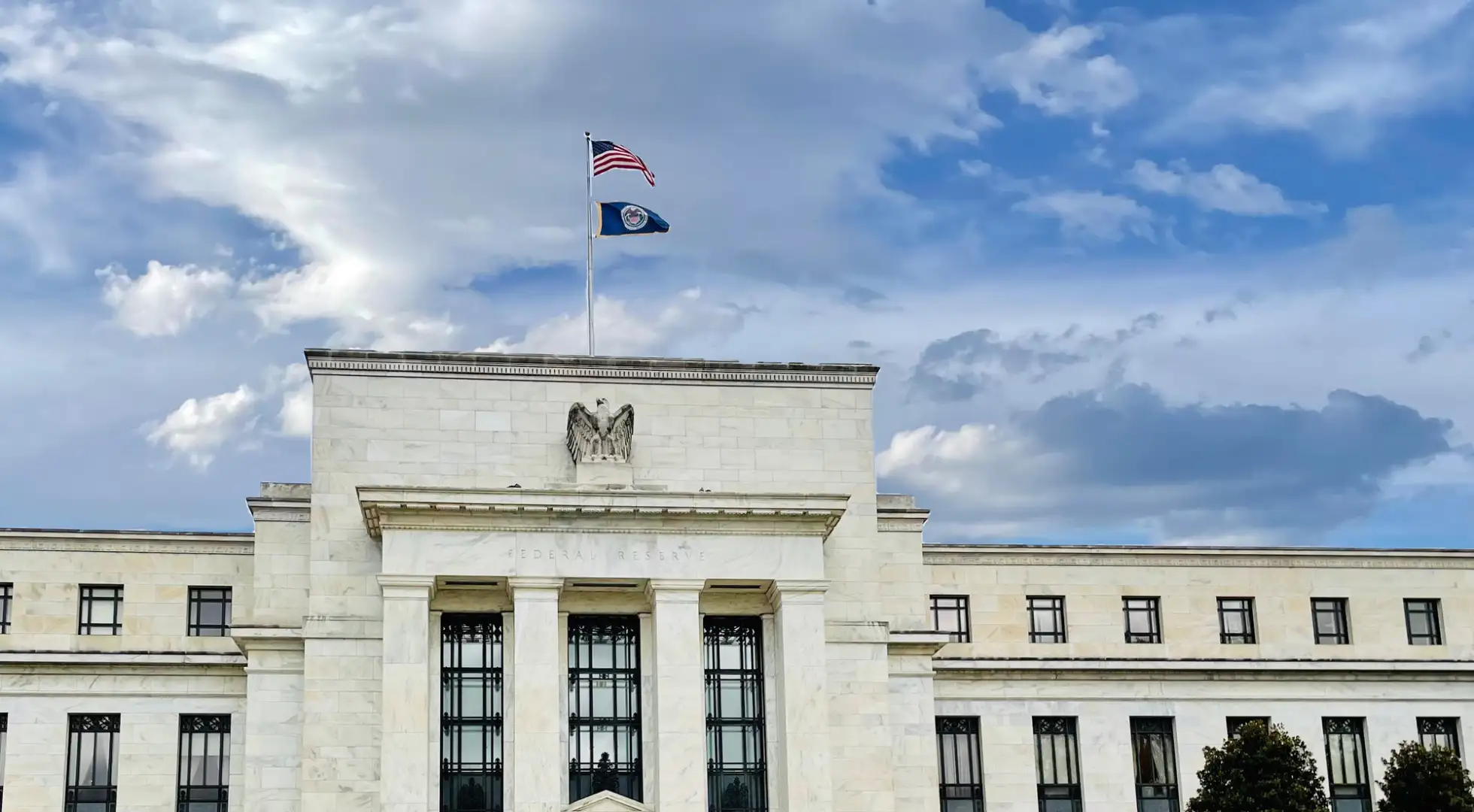
Today's Fed minutes could have a considerable impact on mortgage rates — depending on what they say. Scroll on down for more details.
👉Stay ahead of the market. Subscribe to the Mortgage Research Network Podcast
Mortgage Rate Trends: Past 90 Days
Purchase Rates
| Loan Type | Rate | APR | Daily Change | Monthly Change |
|---|---|---|---|---|
| 30-Year Fixed | 6.66% | 6.71% | -0.05% | +0.04% |
| 15-Year Fixed | 5.83% | 5.89% | -0.04% | +0.04% |
| 30-Year Fixed FHA | 6.07% | 7.29% | -0.02% | +0.12% |
| 30-Year Fixed VA | 6.14% | 6.31% | -0.04% | +0.08% |
| 30-Year Fixed USDA | 6.09% | 6.26% | -0.06% | +0.08% |
| 30-Year Fixed Jumbo | 6.78% | 6.8% | -0.01% | +0.06% |
| 5/6 Year ARM | 6.22% | 6.31% | +-0% | +0% |
Refinance Rates
| Loan Type | Rate | APR | Daily Change | Monthly Change |
|---|---|---|---|---|
| 30-Year Fixed | 6.72% | 6.76% | -0.04% | +0.04% |
| 15-Year Fixed | 5.8% | 5.86% | -0.03% | +0.05% |
| 30-Year Fixed FHA | 6.08% | 7.28% | -0.02% | +0.13% |
| 30-Year Fixed VA | 6.17% | 6.26% | -0.03% | +0.11% |
| 5/6 Year ARM | 6.75% | 6.82% | +0.57% | +0.56% |
What's coming up?
Although economic reports are usually the main drivers of changes to mortgage rates, they're not the only ones. The general mood in markets and economically consequential news can also affect those rates. News items concerning the war, employment, inflation, tariffs, and deficit funding are especially influential at the moment.
The war and mortgage rates
Peace talks with Iran or mediators have been underway since Aug. 1 and initially helped mortgage rates fall moderately. While we all know how fragile such negotiations are and how hard it is to make deals stick, markets seemed happy to work with the hope of an imminent end to the conflict. However, that hope seems to be fading.
"Over the weekend [Aug. 8-9], Mr. Trump said his new strategy was to be 'low-keying it' in Iran, a suggestion that he wants to pressure the country into making a favorable deal without taking major military action," said The New York Times on Aug. 10. That appears to remain U.S. strategy.
Iran is certainly in a weak position economically, and waiting for it to buckle may well be a smart way to resolve the conflict. However, markets are anxious for a rapid reopening of the Strait of Hormuz and seem to have taken the president's new position as a sign that the dispute could drag on for considerably longer than previously expected — hence the recent rise in oil prices and mortgage rates.
The war, oil prices, inflation and markets
Mortgage rates respond to war news because a prolonged closure of the Strait of Hormuz could again choke off 20% of the world's oil supply, putting additional pressure on gas, diesel and many other prices. It would take years to build the infrastructure necessary to bypass the Strait completely.
Strategic petroleum reserves in the U.S. and elsewhere globally are now at multi-decade lows, meaning there's less room to cushion consumers from rising gas prices. It may not feel like it, but this method of suppressing pump prices has been in place since the start of the conflict.
Trading Economics says, "US Strategic Petroleum Reserve crude inventories fell to 307.650 million [barrels, presumably] for the week ending July 24, marking the lowest level since 1983."
Meanwhile, many oil refineries in the Middle East and Russia are out of commission due to damage from the separate wars involving Iran and Ukraine. That began by sending oil prices lower on most days — though less consistently recently. Why buy crude oil when you can't refine it?
Unfortunately, that has so far translated into only moderately lower gas and diesel prices because a lack of refining capacity exacerbates rather than moderates supply issues for consumers and businesses, while demand remains fairly steady.
In his Substack post on Aug. 13, Nobel-prize-winning economist Paul Krugman backed up what we've been saying for some weeks. He referred to the "crack spread," which is the difference between the price of a barrel of crude oil and that for a barrel of "cracked" (aka refined) oil, which he said had exploded by about $35 since the start of the Iran conflict.
"So while the price of a barrel of crude is up around $25, the price of the products refined from that barrel is up about 25+35=60 dollars per barrel," wrote Krugman.
Why? "The shortage of refining capacity has, in turn, held crude prices down: Buyers aren’t willing to pay extremely high prices for crude oil they can’t refine," continued Krugman. "Or to put it a different but equivalent way, the cutoff of oil shipments through the Strait of Hormuz in effect required a large rise in global oil prices to ration demand, but much of that rationing has taken place through a rise in the crack spread rather than a rise in crude oil prices."
Of course, any sudden good news from the Middle East could still send mortgage rates tumbling, regardless of that day's economic reports. Unfortunately, sudden bad news could send them soaring.
The Fed
The Federal Reserve's rate-setting body (the Federal Open Market Committee or FOMC) left general interest rates unchanged on Jul. 29, as many expected. However, many now think a hike is likely at the next FOMC meeting on Sep. 16, according to the CME FedWatch tool.
Still, that's been changing. Last night, that tool showed a 35% chance of a small hike, unchanged from Monday night. A week ago, investors put that chance at 48.4%, and a month ago at 51.2%.
That big drop was down to markets hoping that last Wednesday's CPI and last Thursday's PPI would allow the FOMC to hold general interest rates steady at its next meeting, especially following disappointing employment figures in the previous week's jobs report. They won't harm those chances, but the Fed will have seen August's CPI, PPI and jobs report by the time the committee next meets. There was less optimism around Monday and yesterday.
Assuming that the war in Iran doesn't end quickly, we think a small hike remains a sensible expectation for Sep. 16. A prolonged conflict is likely to fuel inflation, and the Fed has a duty to maintain that at 2% annually, a goal reaffirmed by Kevin Warsh, the new Fed Chair, on Jul. 29. The main tool the Fed uses to rein in inflation is rate hikes.
Stand by for this afternoon's publication of the minutes of the FOMC's last meeting on Jul. 29. Depending on what those minutes reveal about the chances of a hike on Sep. 16, mortgage rates might rise or fall that day.
The Fed doesn't directly set new fixed-rate mortgage rates. But the factors that influence its decisions (and to a lesser extent the decisions themselves) certainly do move those rates, usually in advance of Fed rate-change announcements.
Why bond markets act differently from stock markets
Mortgage rates are largely dictated by the yields on a type of bond, the mortgage-backed security (MBS). So, we focus on bond markets.
On May 7, The New York Times explored why stock markets and bond markets have been behaving so differently from each other since the start of the conflict in the Middle East.
Investors in stocks have been wagering that U.S. companies will continue to generate large profits during the conflict. And the stock market typically cares only about whether dividends and company values will continue to rise.
"But the bond market is another matter," said The Times. "Bond traders have maintained a much sharper focus on risk. Yields remain correlated with shifts in the price of oil. As oil prices have spiked and inflation has risen, yields have risen and bond prices, which move in the opposite direction, have fallen."
More recently, on Aug. 17, MarketWatch confirmed The Times's view: "The major reason stocks are holding up near record territory 'is that earnings seem to be fine regardless of higher rates,' said Melissa Brown, managing director of investment-decision research at SimCorp. But someday that is going to change as companies need to refinance."
Meanwhile, on Aug. 18, an opinion piece in The Wall Street Journal noted that bond yields are simply returning to levels that were normal before the 2007 financial crash and subsequent Great Recession. While this will likely mean higher interest rates (including mortgage rates), it may not be as bad as that prospect appears.
"While it sounds frightening to say rates are higher than they’ve been in nearly 20 years, the past two decades are the era that was abnormal," wrote The Journal's editorial board. "The U.S. economy has survived — thrived, actually — during periods of higher interest rates. The return of normality augurs well for the productive allocation of capital, which is good for growth and job creation."
Comerica Bank's outlook for this week
On Monday, Comerica Bank published its weekly outlook:
"The minutes of the Federal Open Market Committee’s July meeting are expected to show that inflation remains policymakers’ foremost consideration ahead of the next decision. The committee wants evidence that inflation is trending lower — i.e., lower core inflation — to feel comfortable refraining from a rate hike. The July CPI and PPI reports narrowly met that bar, but are not the last word since the August CPI and PPI reports will be released before the September meeting.
"Industrial production is forecast to grow solidly in this release as the hottest July on record fueled utility demand. Manufacturing output likely rose moderately, supported by strong demand for defense products and the electronic, electrical, and construction materials used in data centers. Pending home sales likely rebounded after a drop in June, and rose moderately from a year earlier. The Services PMI published by S&P Global likely pulled back in the August preliminary release after the boost from the World Cup faded."
Comerica's forecasts are sometimes different from published market expectations, which are drawn from a broader pool of analysts' consensus forecasts.
Mortgage rates today
There are no economic reports on today's MarketWatch economic calendar. So, the FOMC will likely have Wall Street's undivided attention.
What's next?
This week brings way fewer important economic reports than last week did. With only minor reports scheduled for tomorrow, we're left with only a couple of purchasing managers' indices on Friday. And we'll be surprised if those move mortgage rates far.
So, if those rates do change much after today, it will likely be down to general jitters in bond markets.